Quakers Yard stations ,tracks tunnel and Viaducts
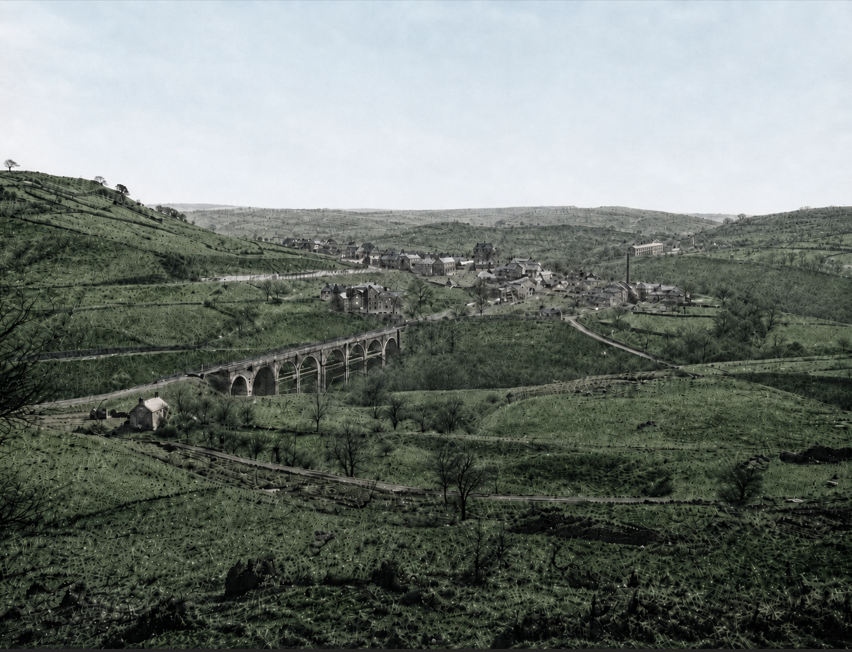
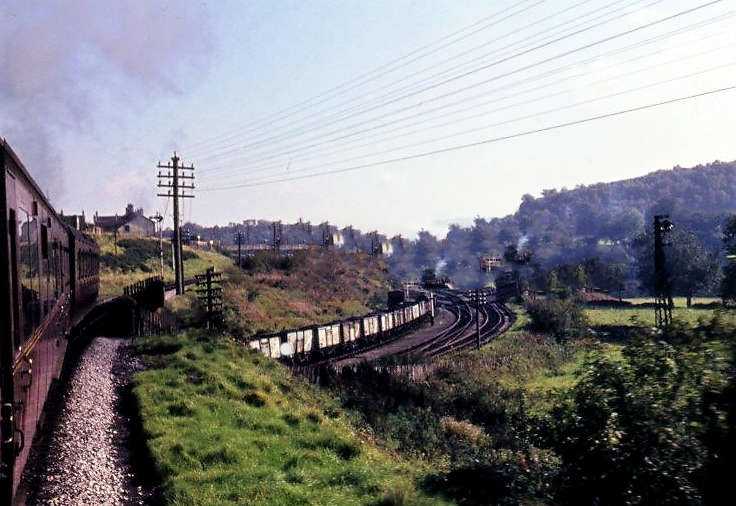
The network of lines leaving Treharris heading into Quakers Yard Low and High Level stations. Thanks to Lee Dare and Dilys Thorne for finding this one taken from the Quarry at Treharris Park.
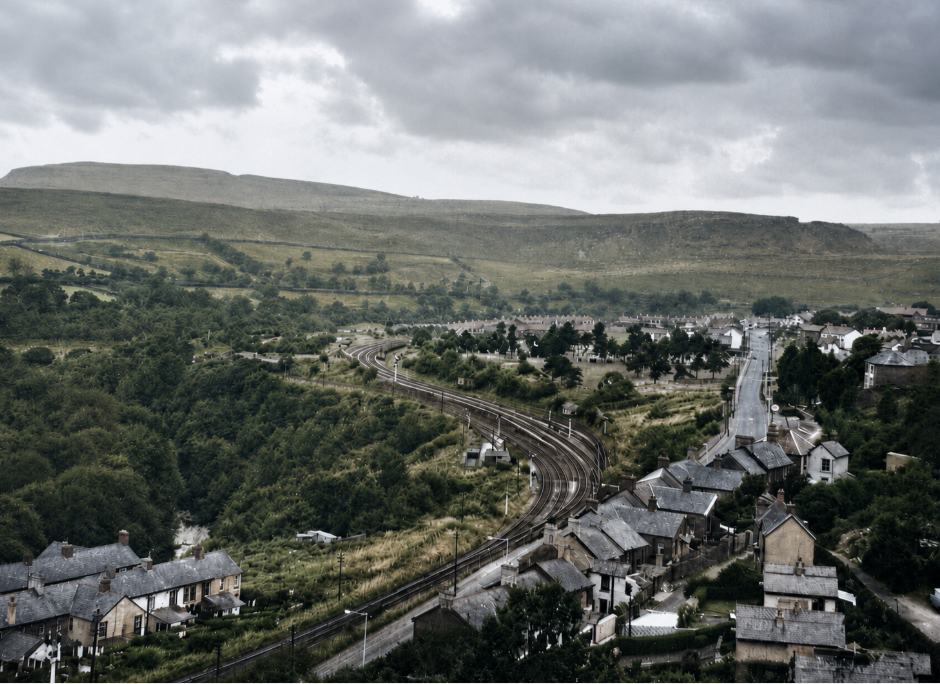
Quakers’ Yard in the Taff Valley was the location of an extremely busy railway junction from the middle of the 19th century until the period after World War II. It is so called as it was the site of a Quaker burial ground.
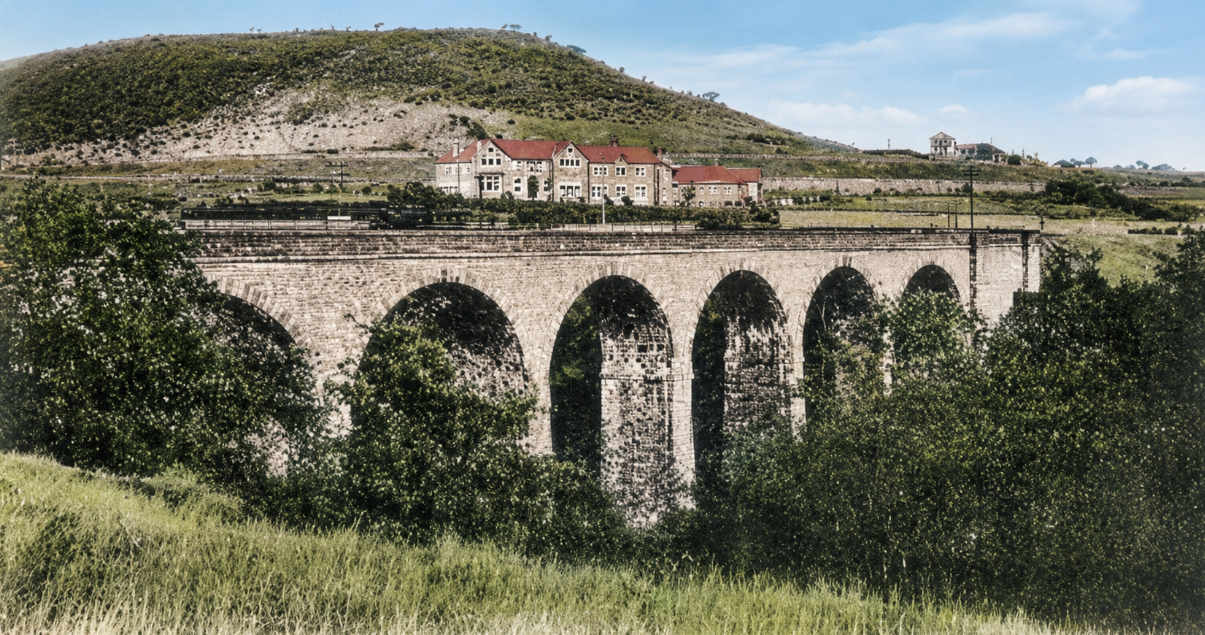
The Taff Vale Railway ran down the eastern bank of the Taff until it crossed it on an impressive viaduct designed by Brunel and built in 1840, with six broad arches. This viaduct still carries the railway between Cardiff and Merthyr and is the focus of this entry. The track of the Merthyr Tramroad also passed beneath it and is still visible from it. (see OTH entry Merthyr Tydfil)
Quakers’ Yard was the point where the Taff Vale Extension (TVE) of the Newport, Abergavenny & Hereford Railway met the Taff Vale Railway. It also continued past the Taff Vale over a second viaduct and penetrated the hillside in the Cefn Glas tunnel to emerge in the Cynon Valley below Aberdare. It then continued all the way to Neath and Swansea. As an east-west railway, it had to cross the South Wales valleys over bridges and through tunnels.
Subsequently, the Rhymney Railway built a line from the TVE at Quaker’s Yard up the west bank of the Taff to Merthyr, which entailed the building of a third viaduct, parallel to the second but curving away northward from it.
Quaker’s Yard had two stations, one on the TVE, ‘Upper’, and another on the Taff Vale, ‘Lower’. This is the only station surviving as both the TVE and Rhymney lines have been closed and their viaducts demolished.
During the summer of 2026 I decided to improve the quality of the photographs whilst kwwping them true to originals and I altered the layout of this page to make it easier to navigate .
- Quakers Yard High-Level Station
- Quakers Yard low level station
- The three Viaducts at Quakers yard station Edwardsville
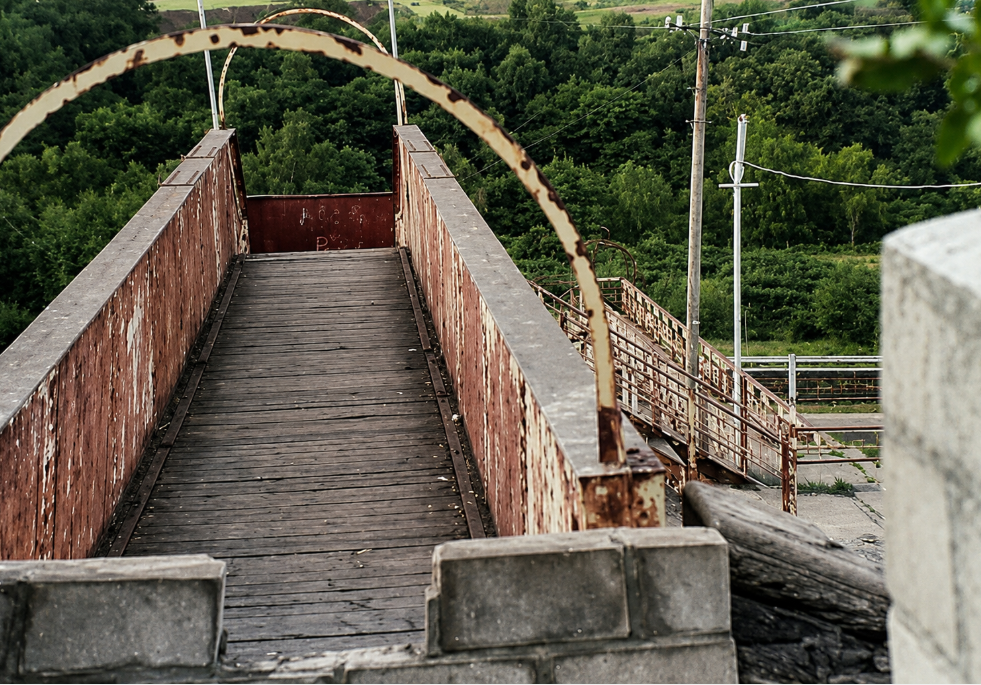
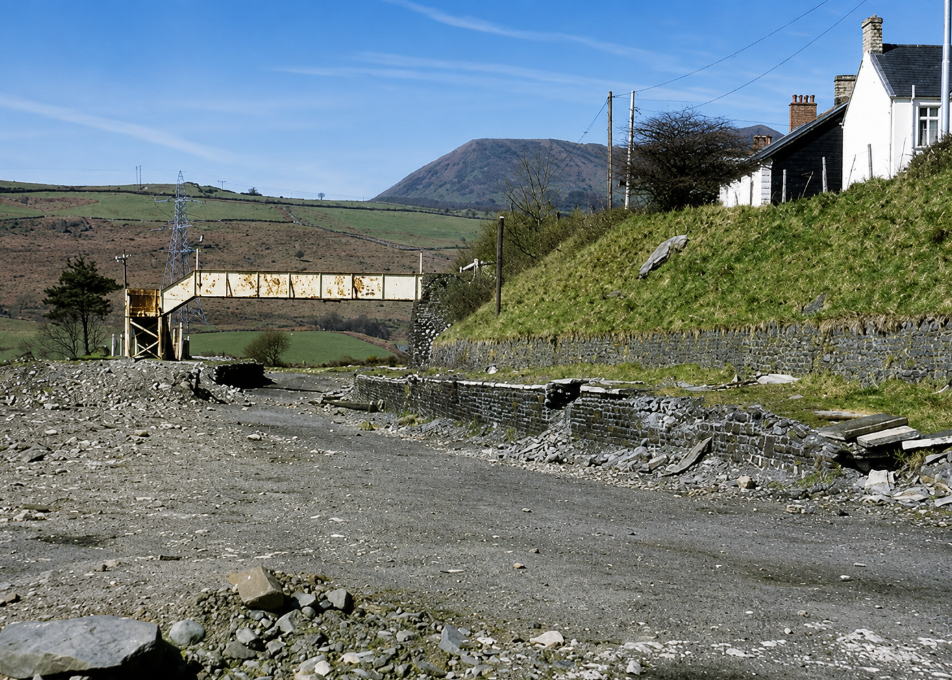
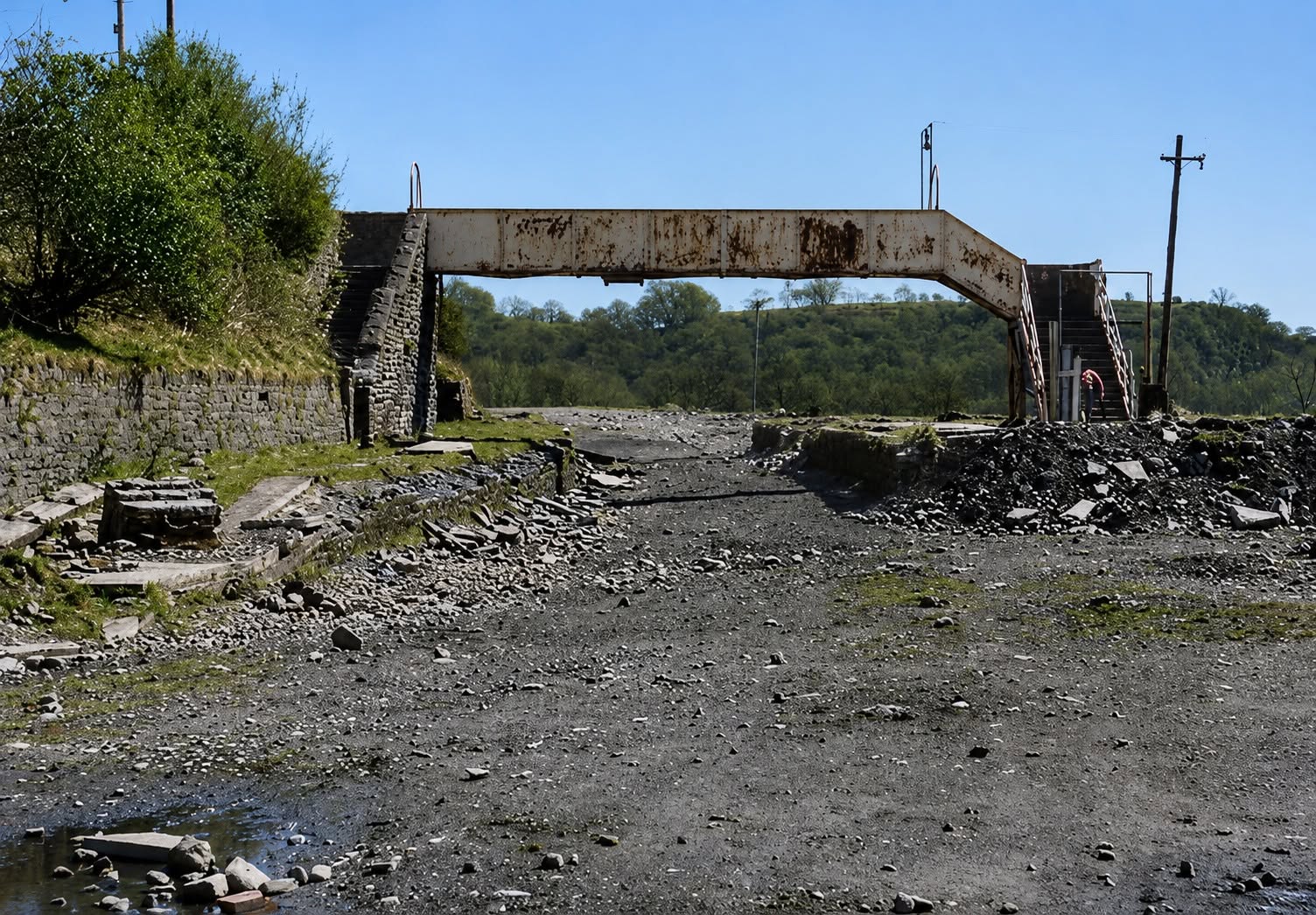
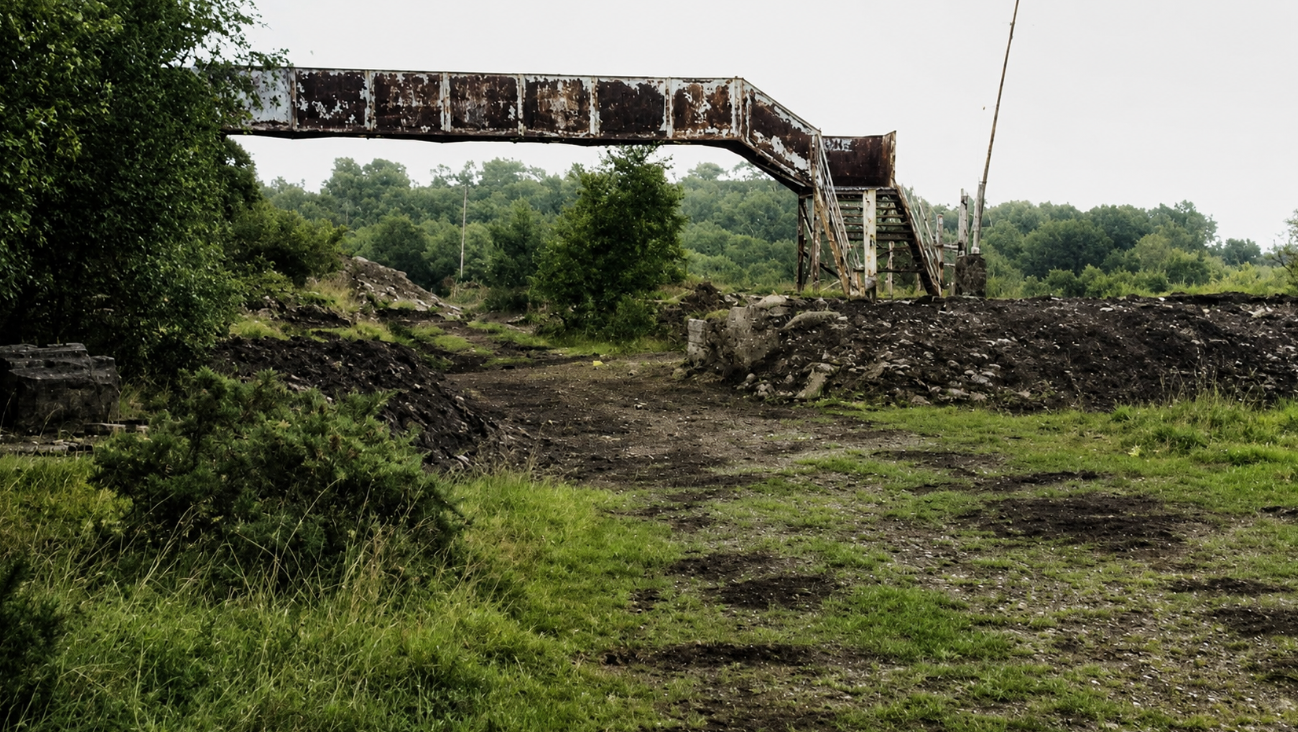
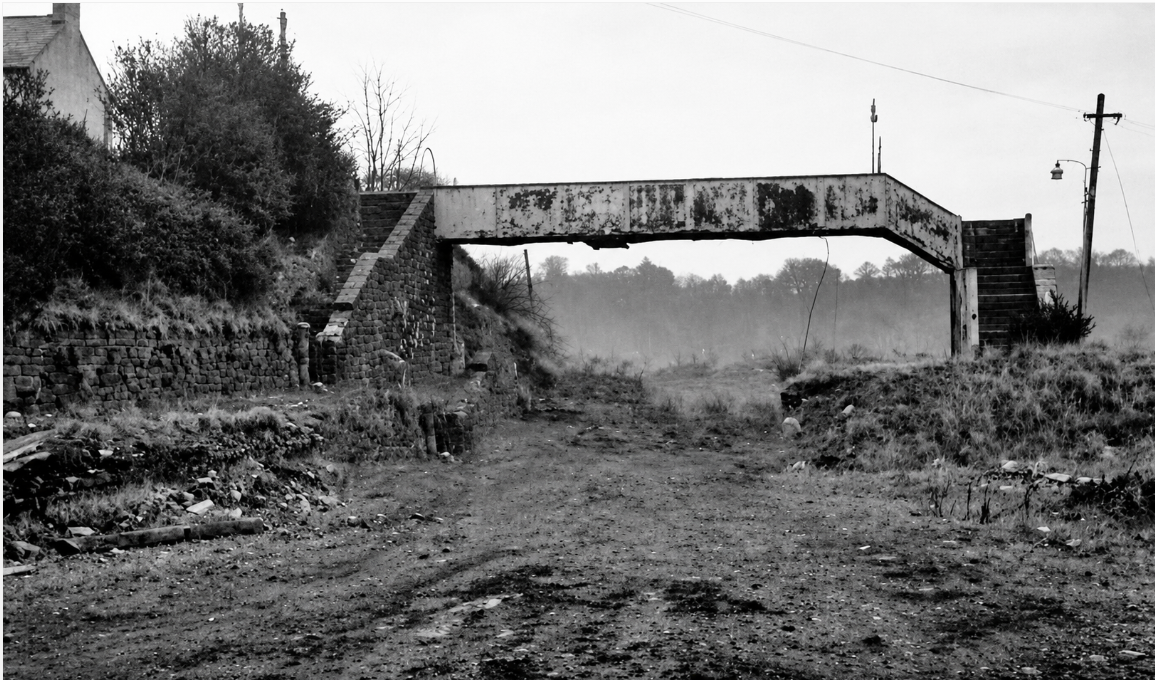
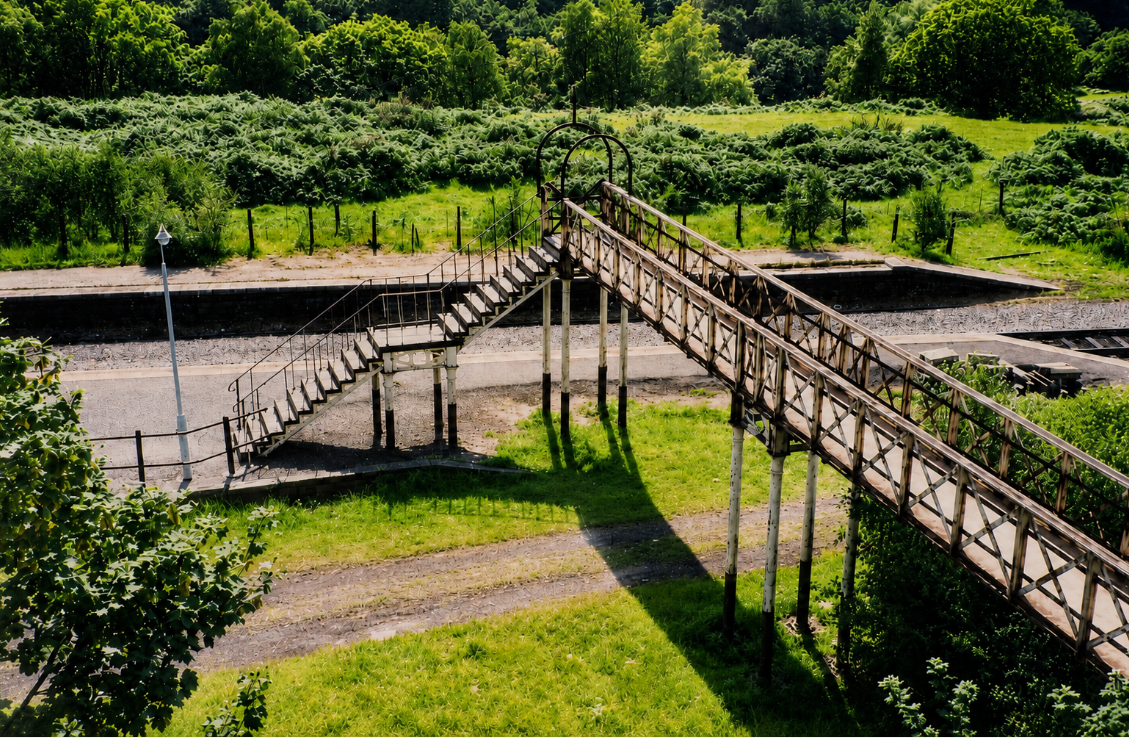
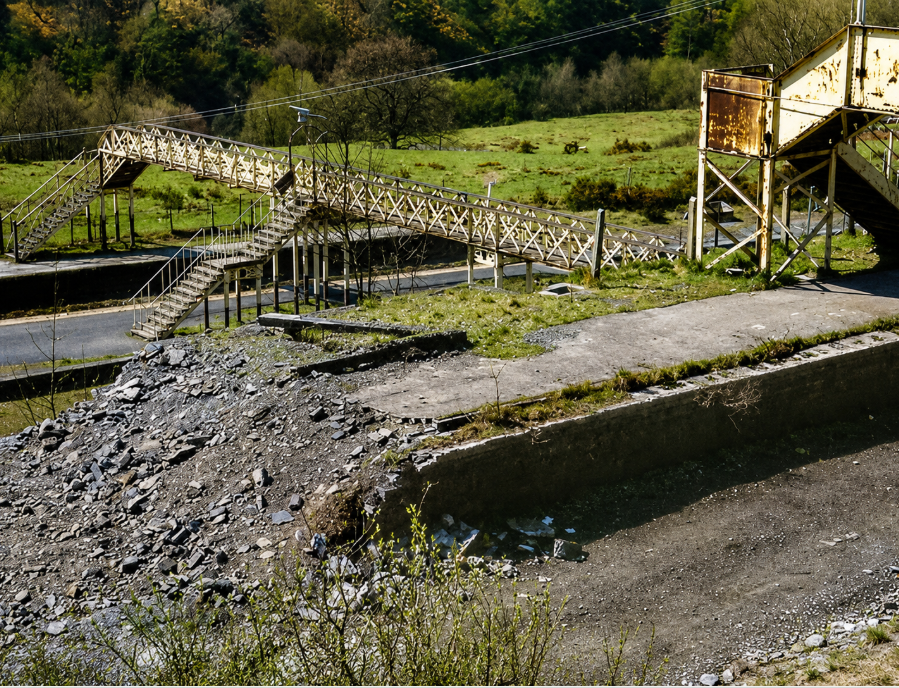
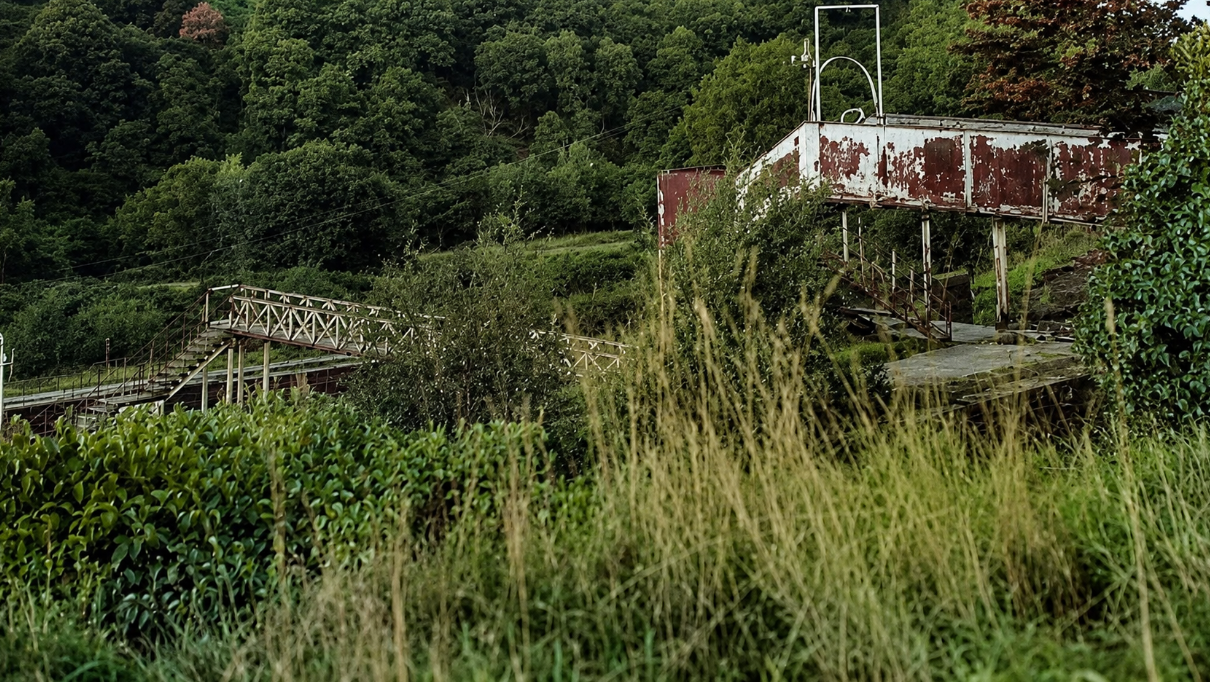
- The footbridges that have crossed the tracks throughout the eras
- Cefn Glas Tunnel GWR
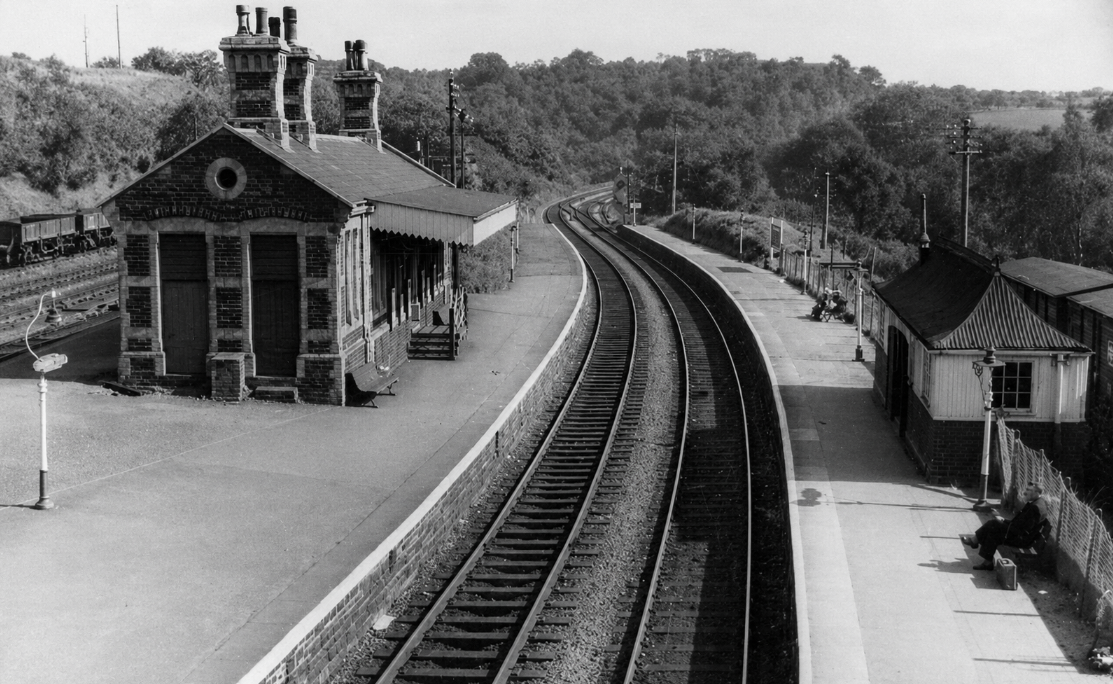
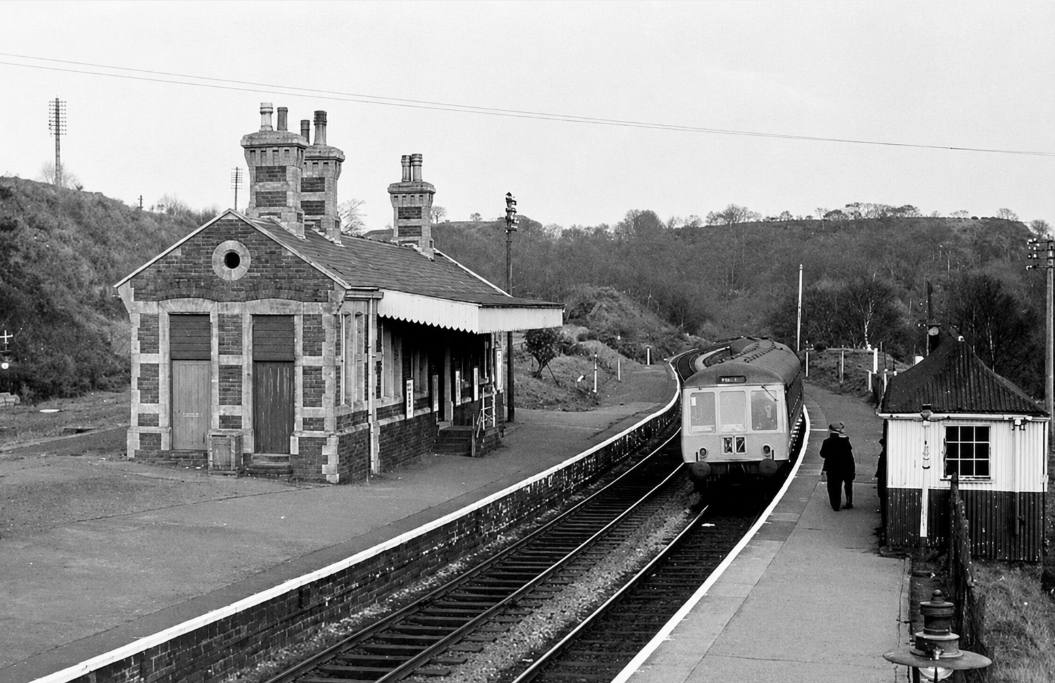
Quakers Yard High-Level Station
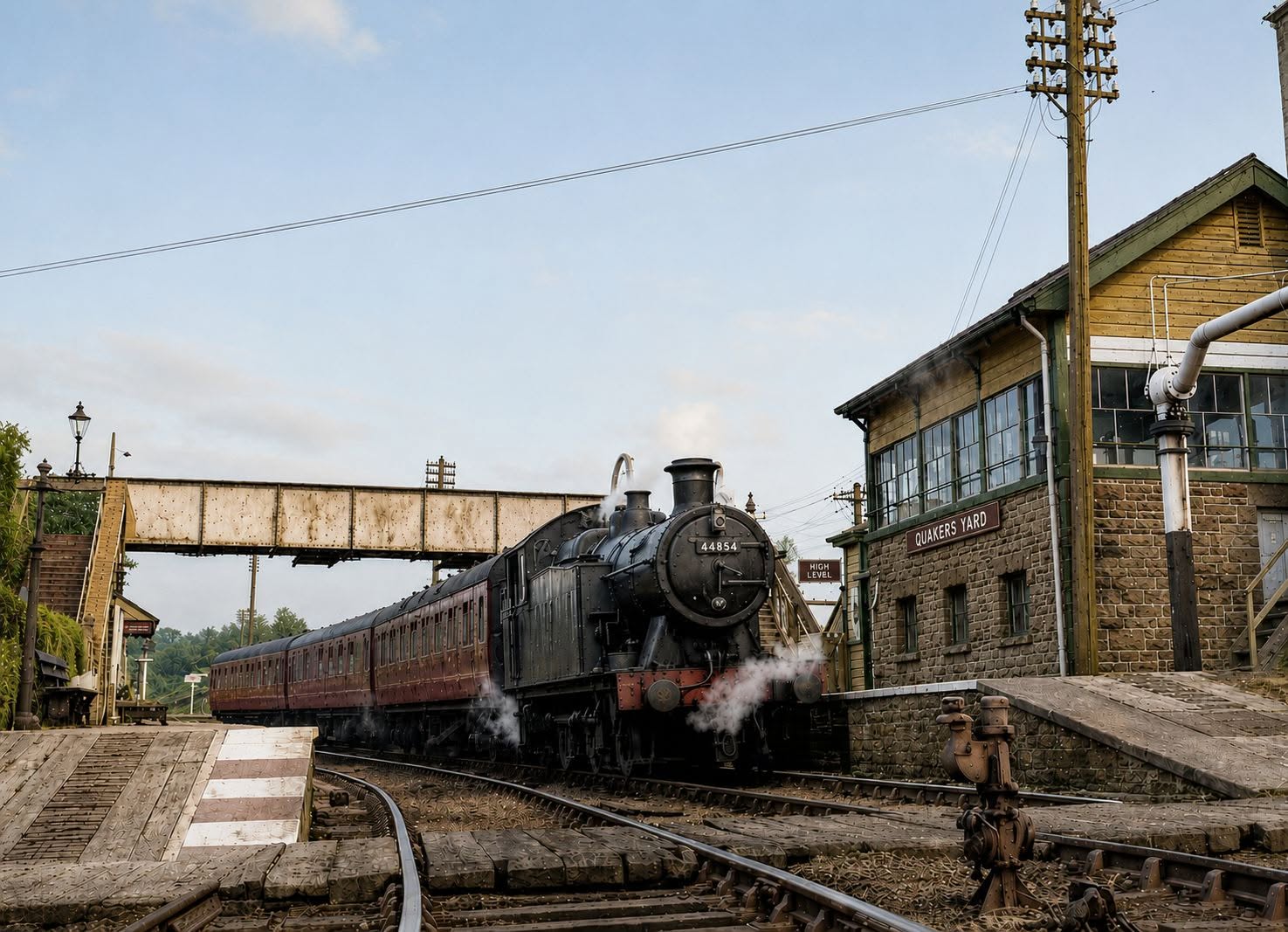
Date opened: 11.January.1858
Location: Just Below the Great Western hotel, Edwardsville:
Great Western Railway Date closed to passengers: 15.June.1964
Date closed completely: 15.June.1964
Company on closing: British Railways (Western Region)
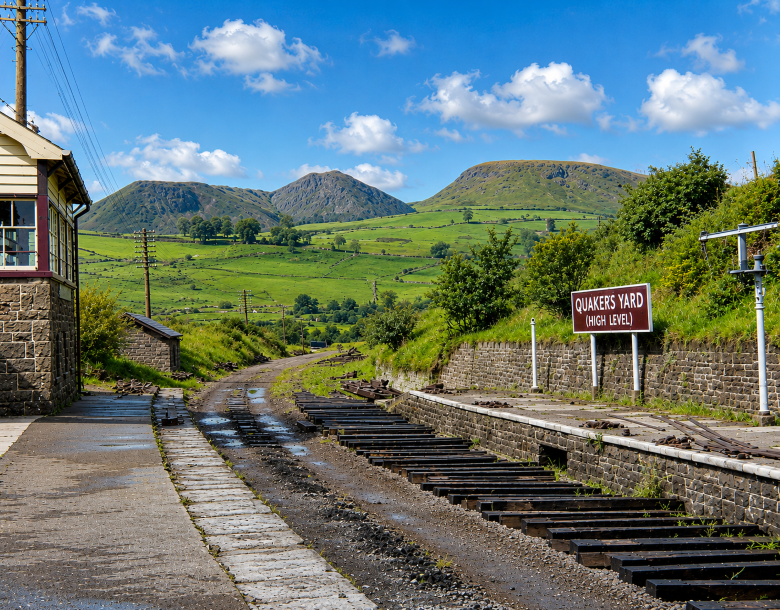
Present state: Demolished
Now a housing development called Taff Vale estate 2009
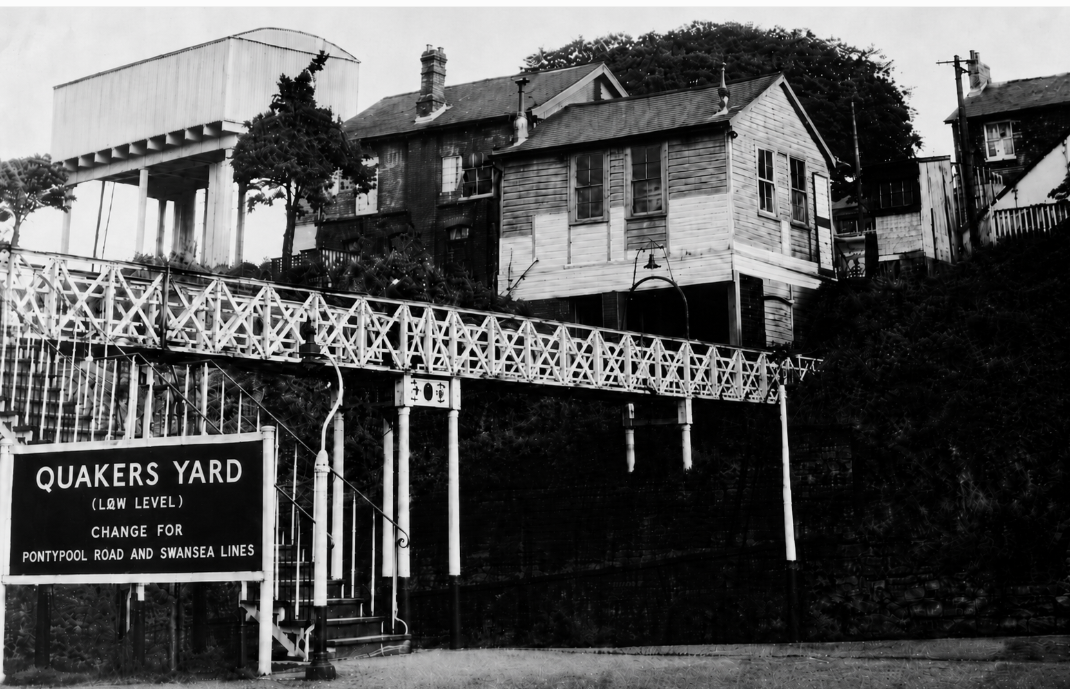
The station is actually situated in the small village of Edwardsville and the large Western Hotel stands at the entrance to the former High level part of the two level stations.
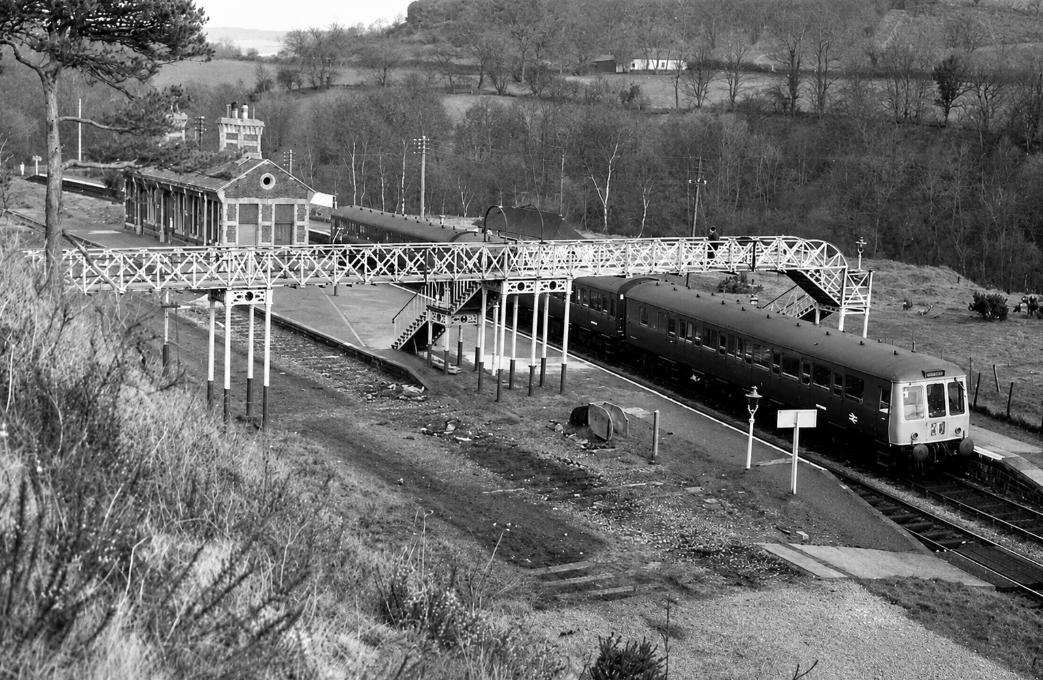
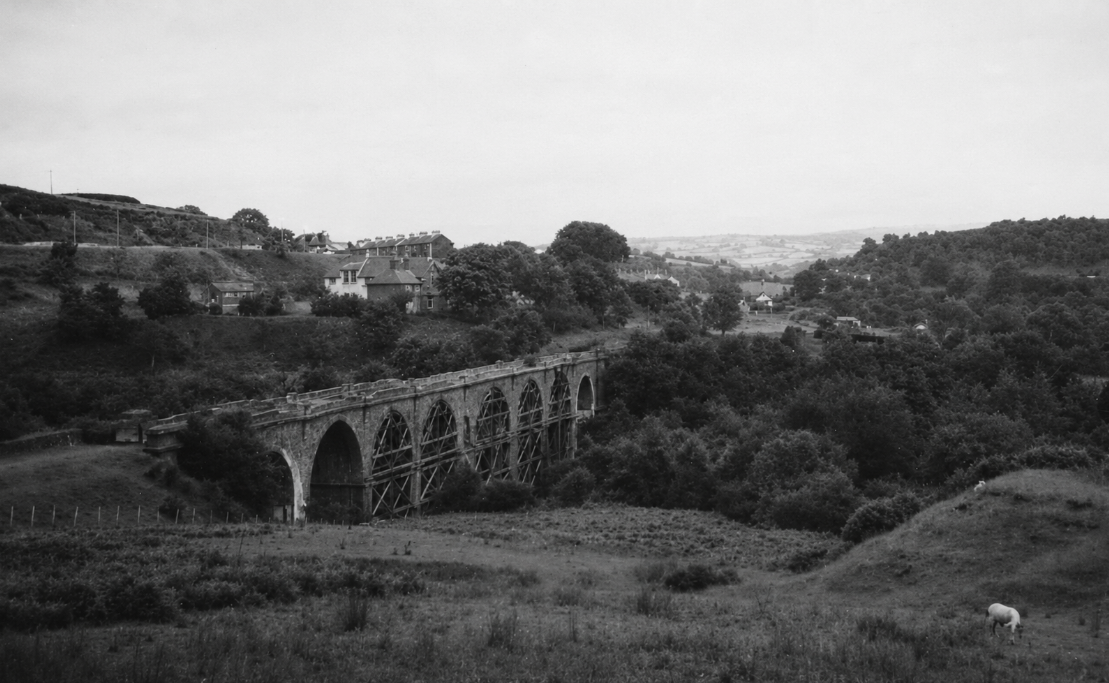
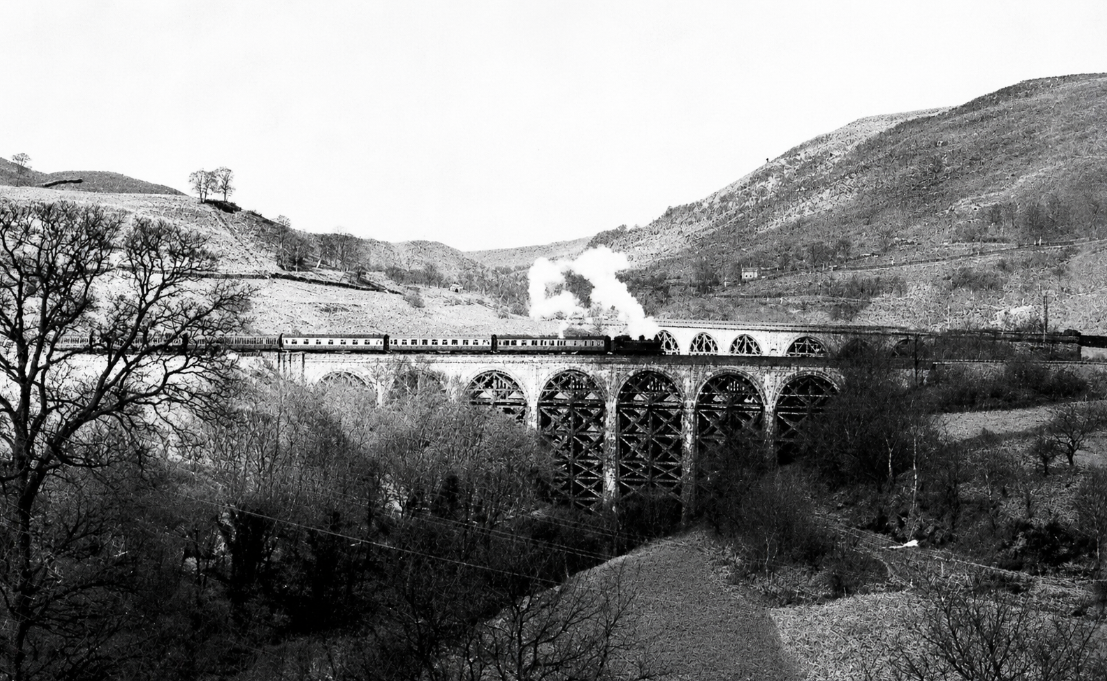
This High Level station was built to compliment the low level station when the Pontypool to Neath route was finally completed. Trains would leave the station and travel across two viaducts that straddled the valley. One leading to the Cefn Glas tunnel the other leading to the Quakers Yard and & Merthyr joint line that travelled on the opposite side of the valley and connected to Merthyr via Aberfan.
In 1951 the Quakers Yard & Merthyr line closed and that hastened the closure of one of the viaducts. The remaining viaduct across the valley was also suffering from mining subsidence and that was reduced to a single track.

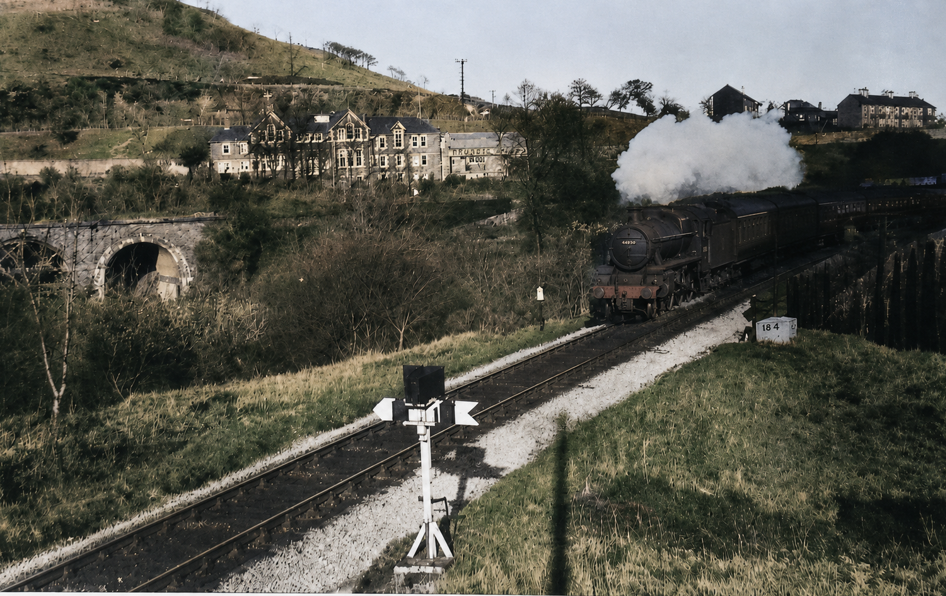
Train at the High level
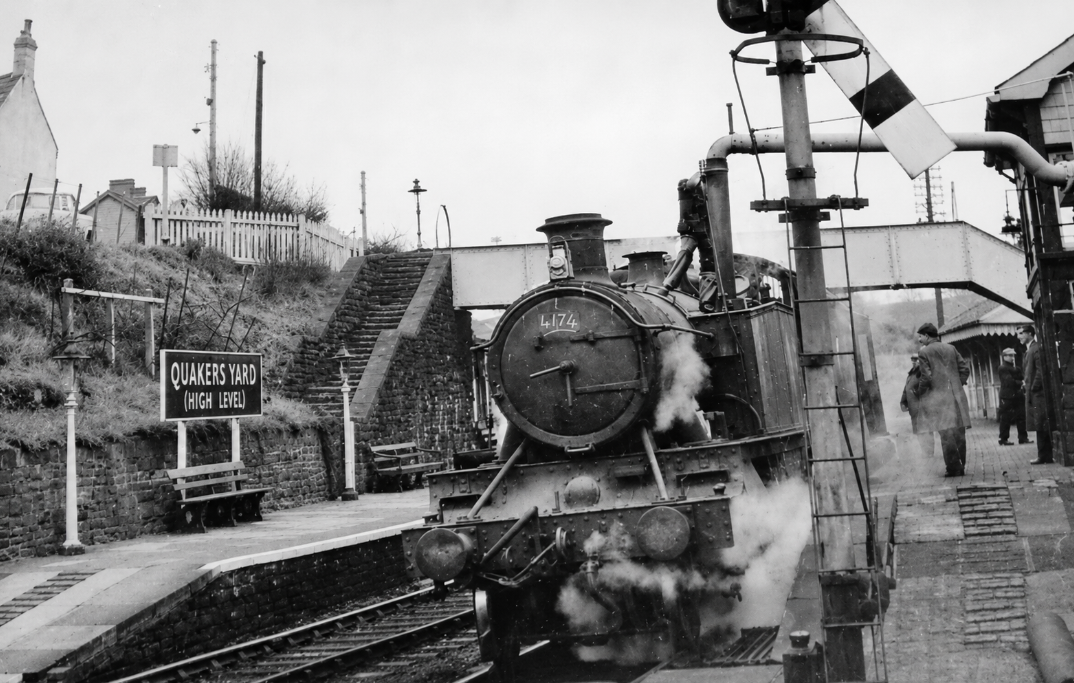
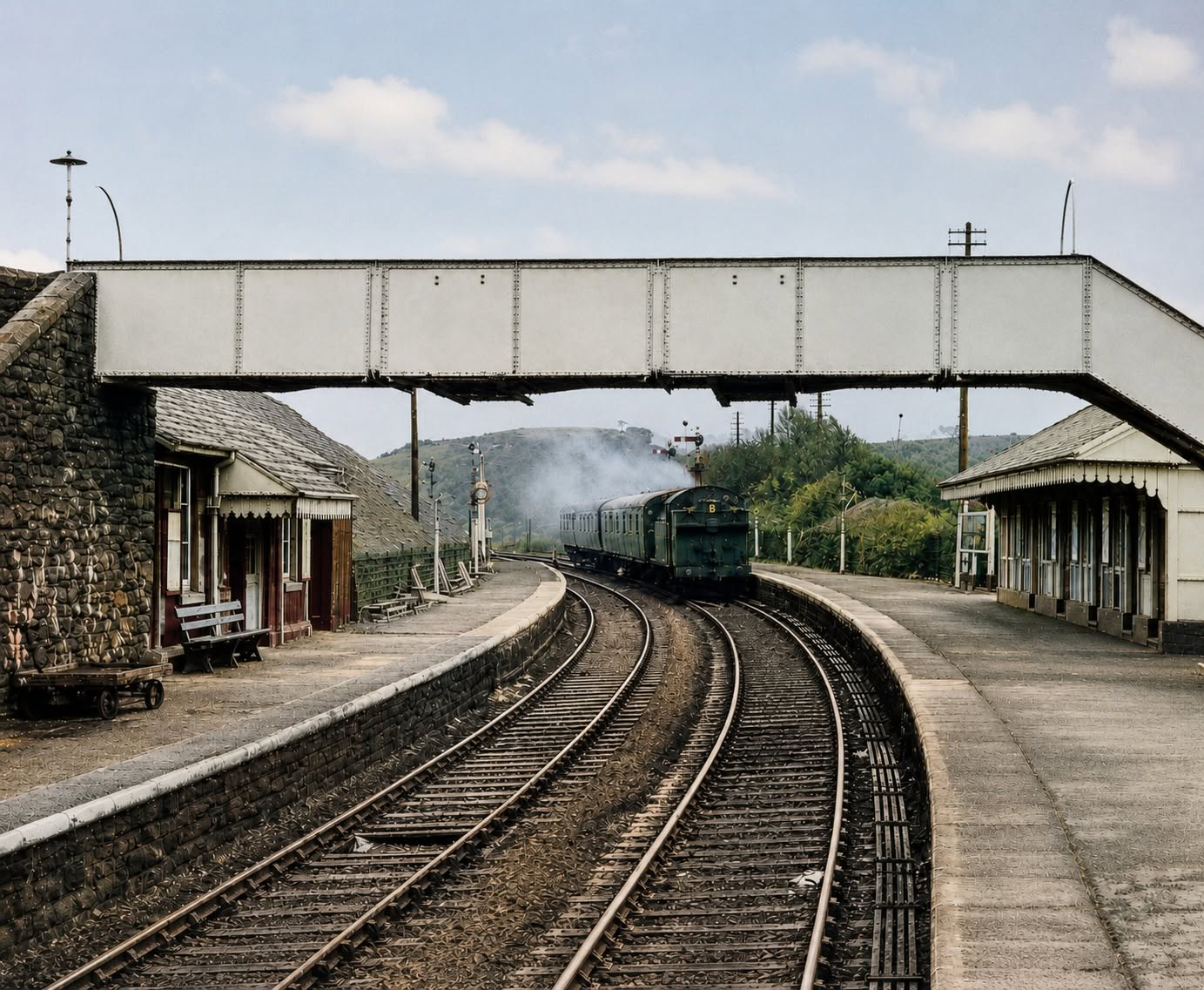
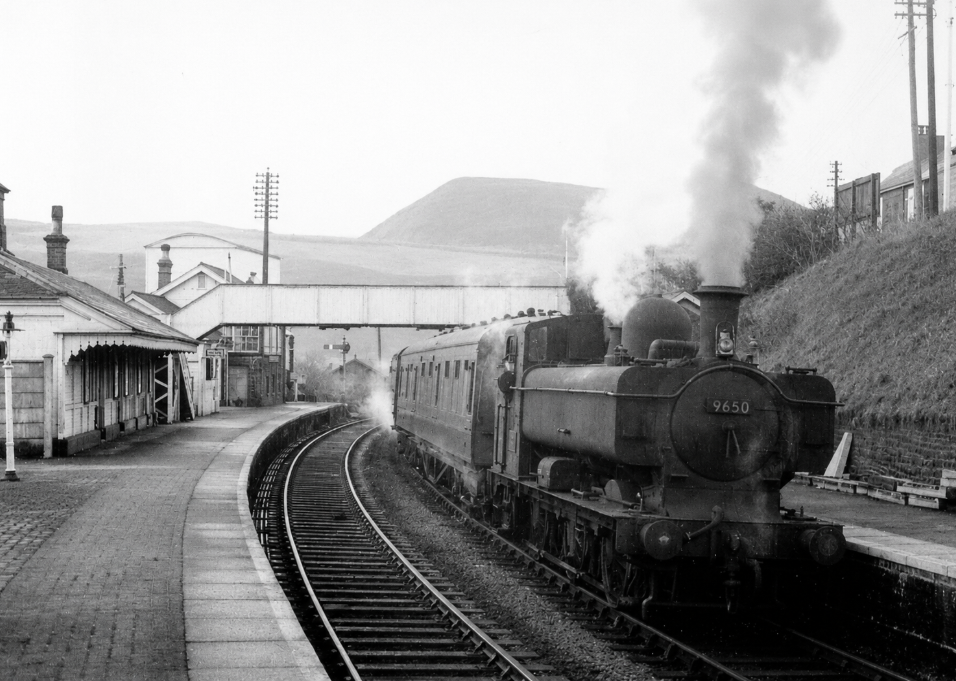
April 1964
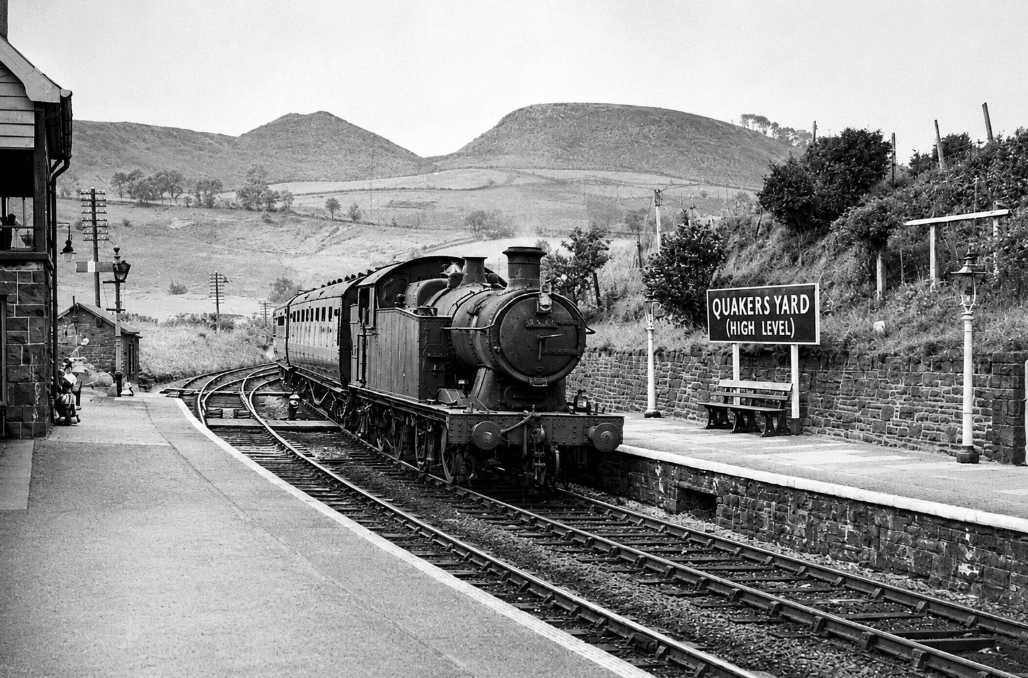
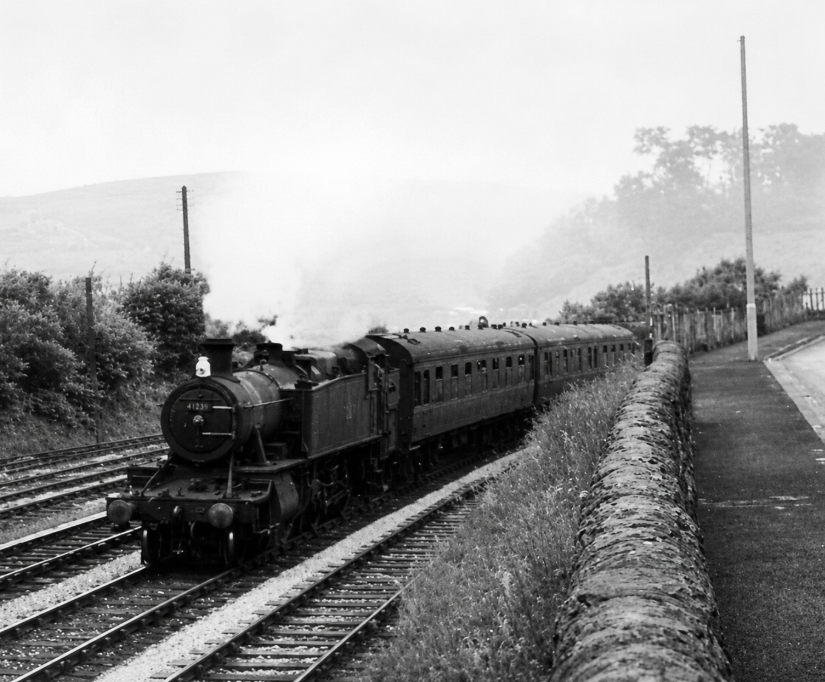
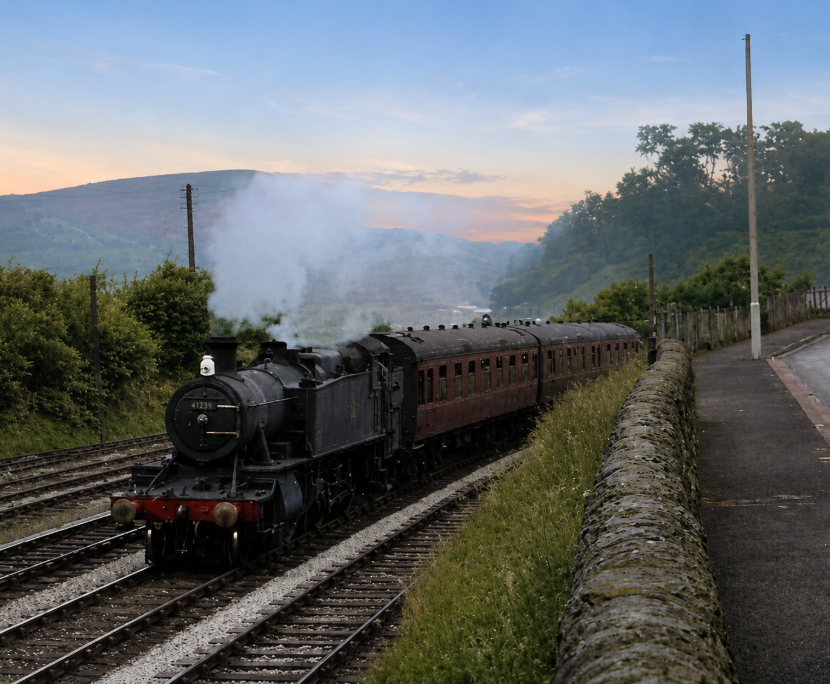
A Train at Quakers Yard station near Windsor road picture courtesy of Adrian Evans
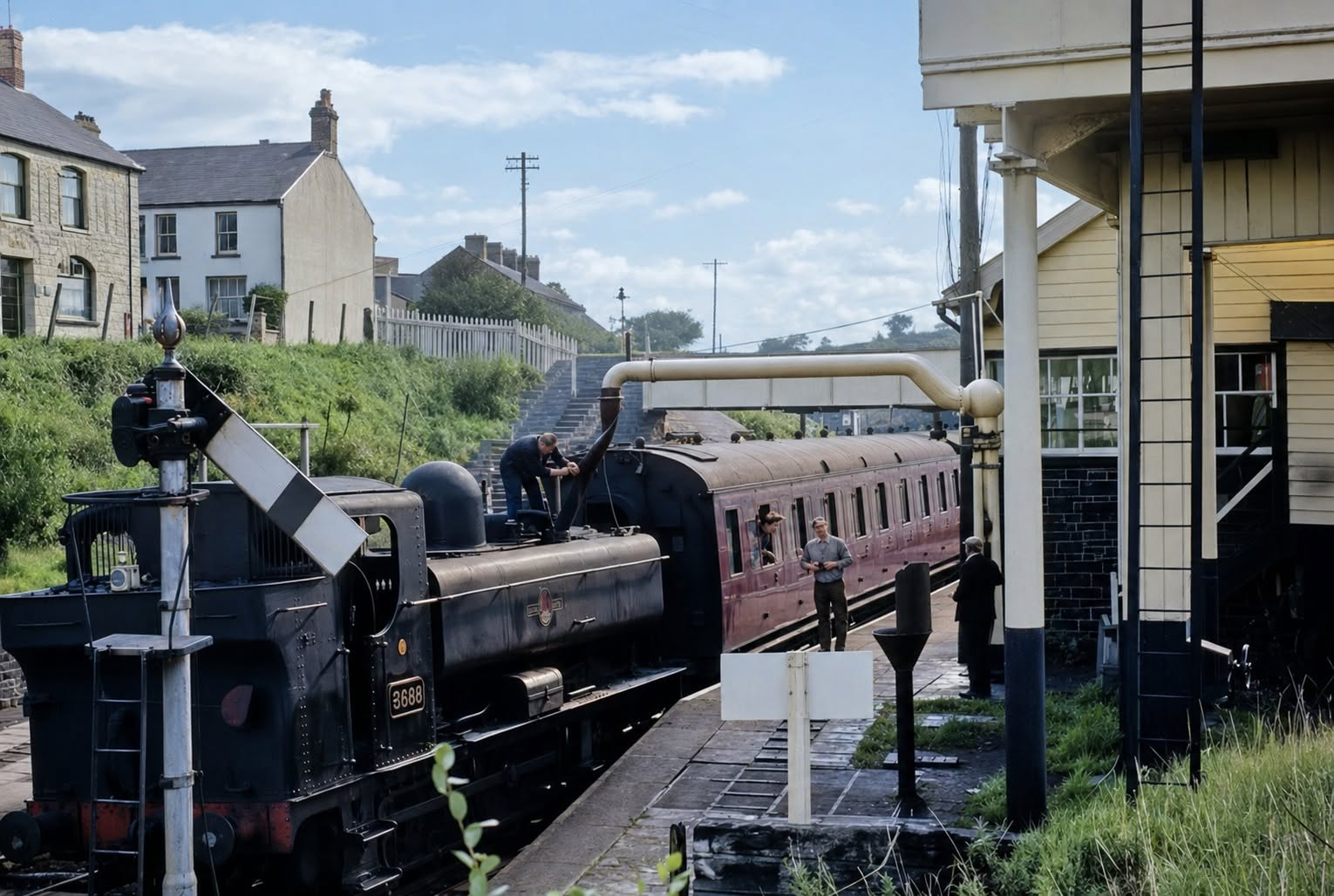
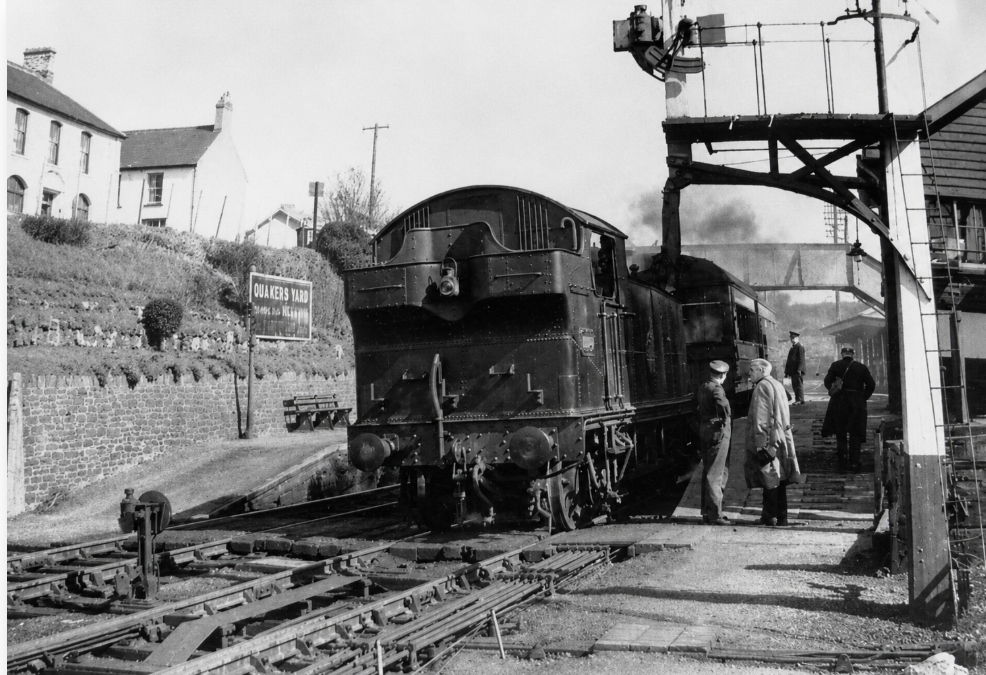
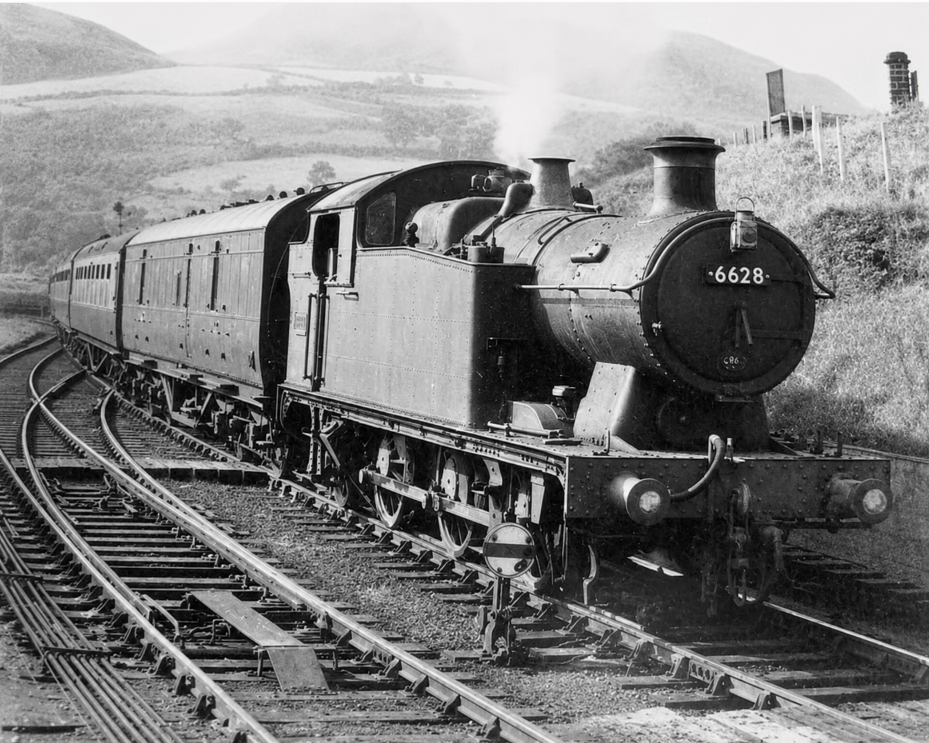
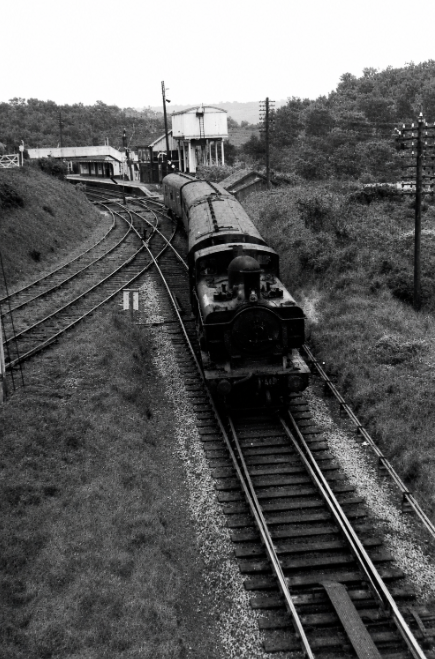
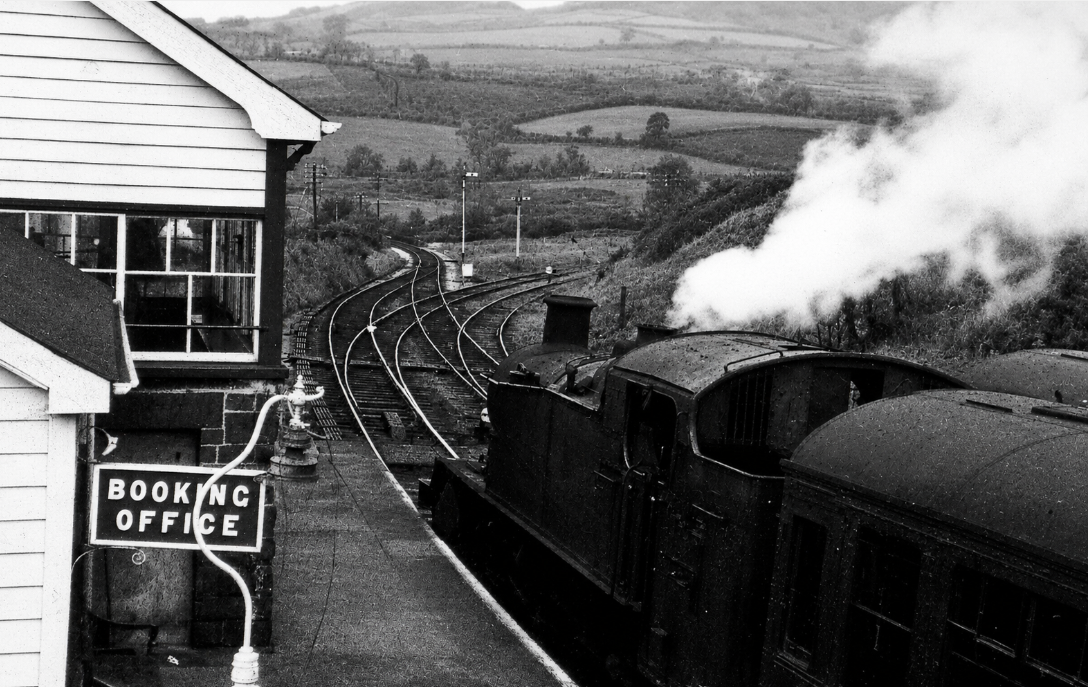
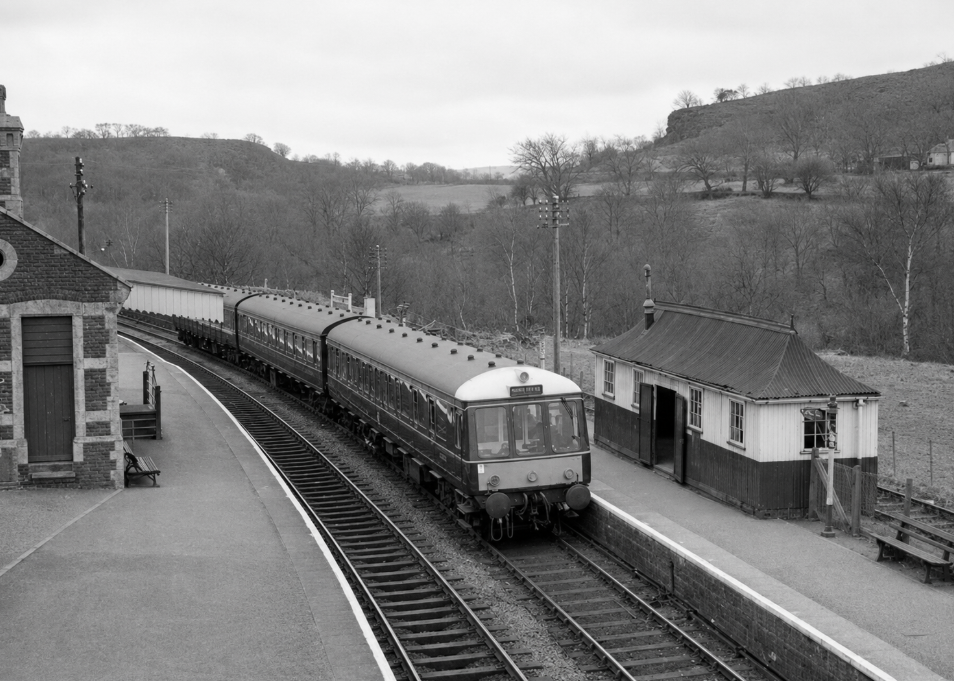
A train Passing Through the High Level (A Evans)

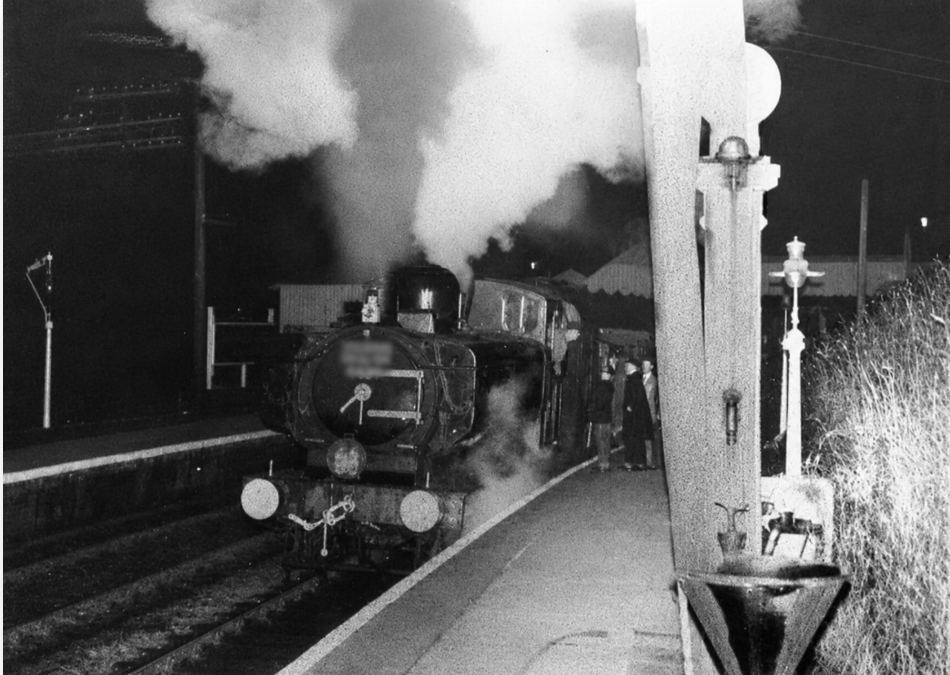
The last ever train at the High Level
Removed tracks from station
Quakers Yard low level
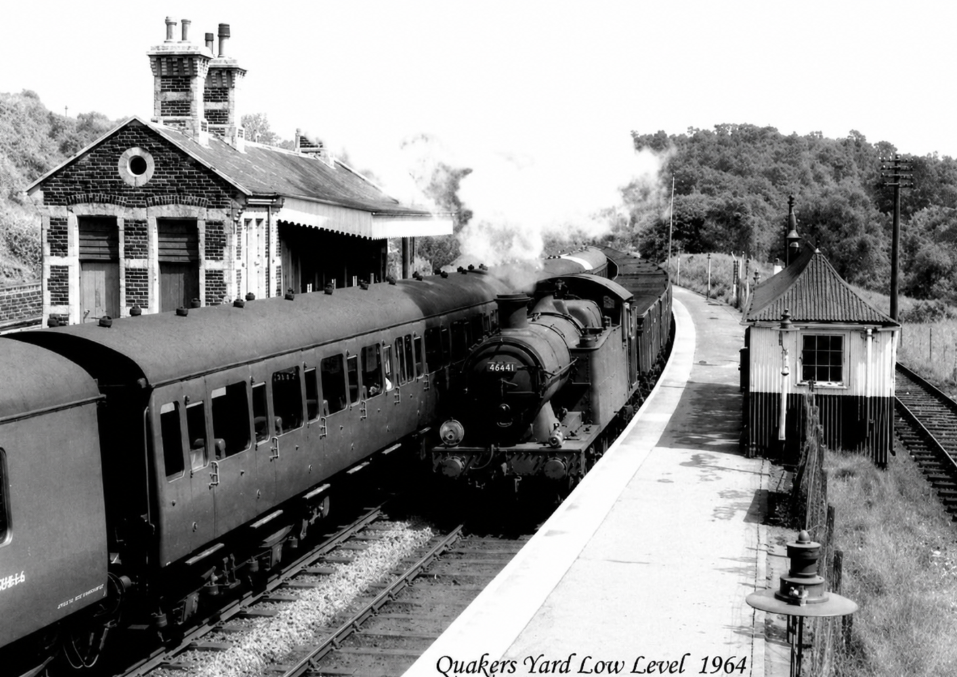
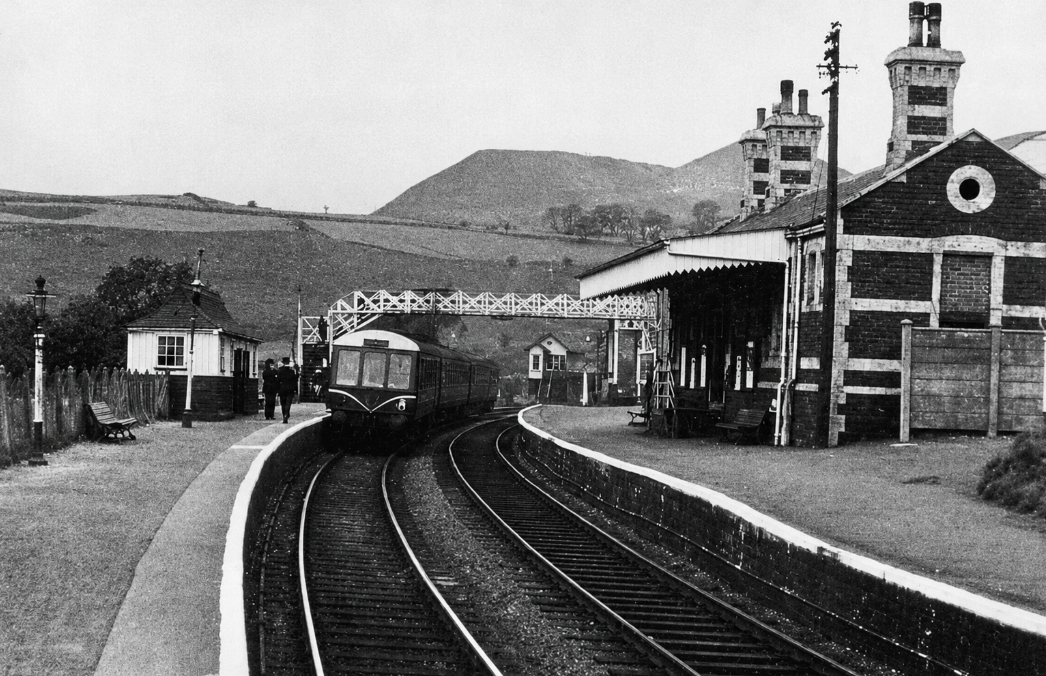
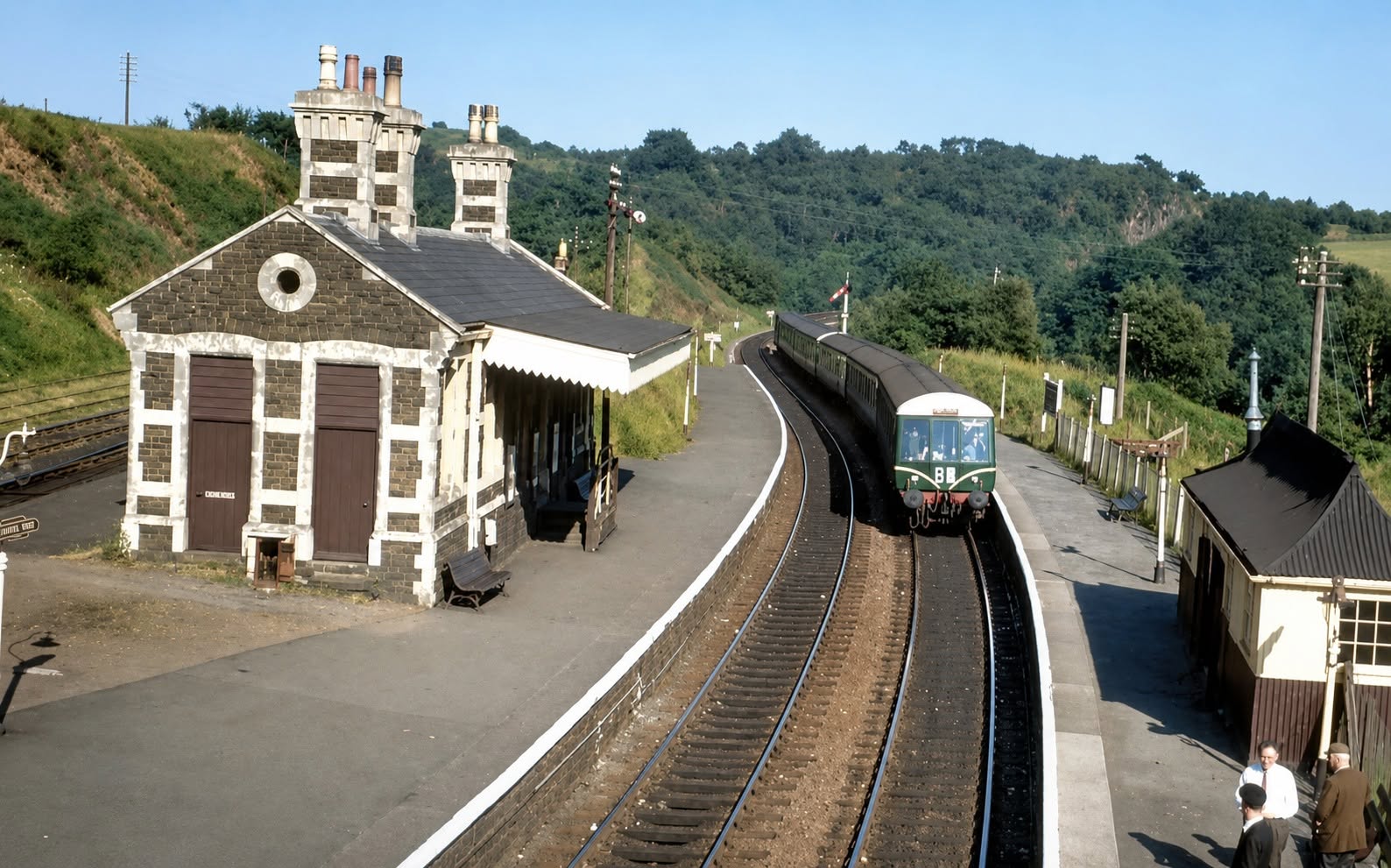
This is the original station and was built approximately 1841 on the main Taff Vale Cardiff to Merthyr line. Another viaduct was needed to reach this station from Abercynon and a great viaduct was built by Brunnel. Initially a single track led to a tunnel but later it was decided to build a second viaduct to take another track, and the tunnel was demolished and there was a cutting created to take the two tracks.This station is still in use today and the great viaduct is the last of the three Quakers yard viaducts to survive. It is a very small station now with no booking office and a small shelter. It is the only passenger station left in the Treharris district.
Great picture from 1965 a couple of years after they closed the line to the left of this picture, this is the Quakers Yard lower station and it still exists today but single track thesedays and no working platform to the right
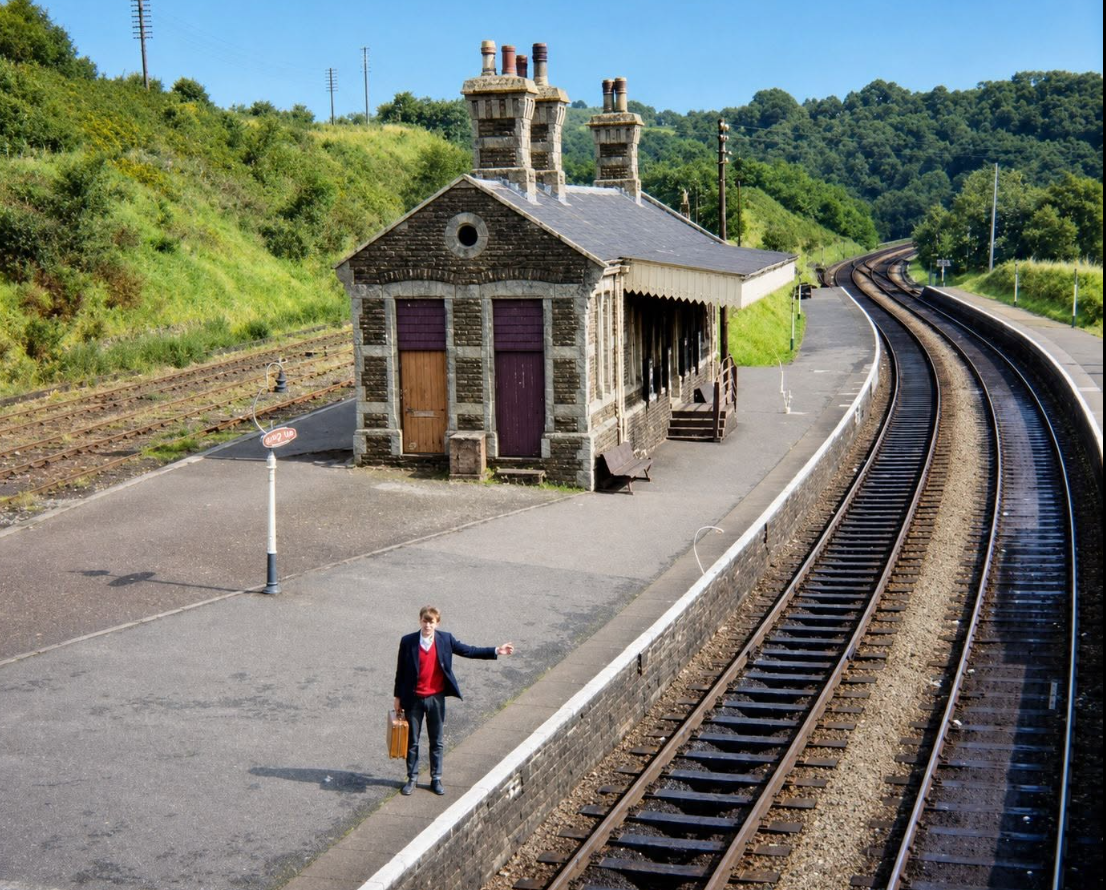
Norman P Spencer 1965 waiting for the train to arrive
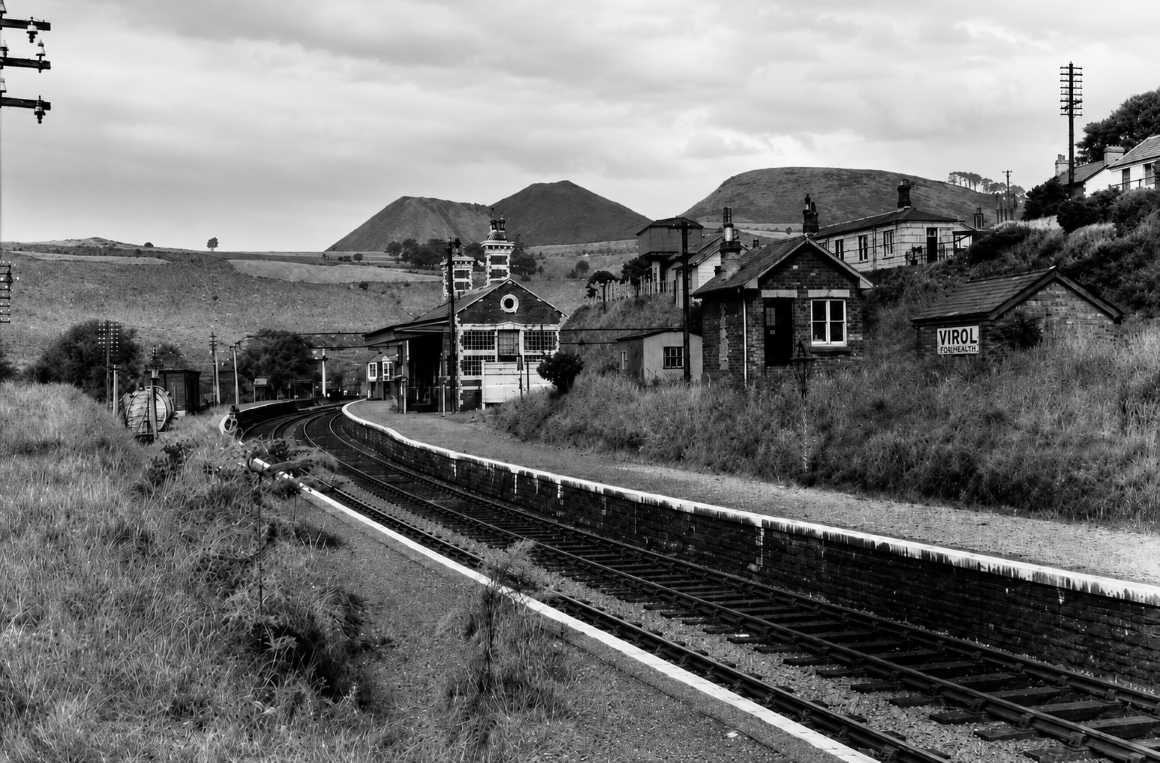
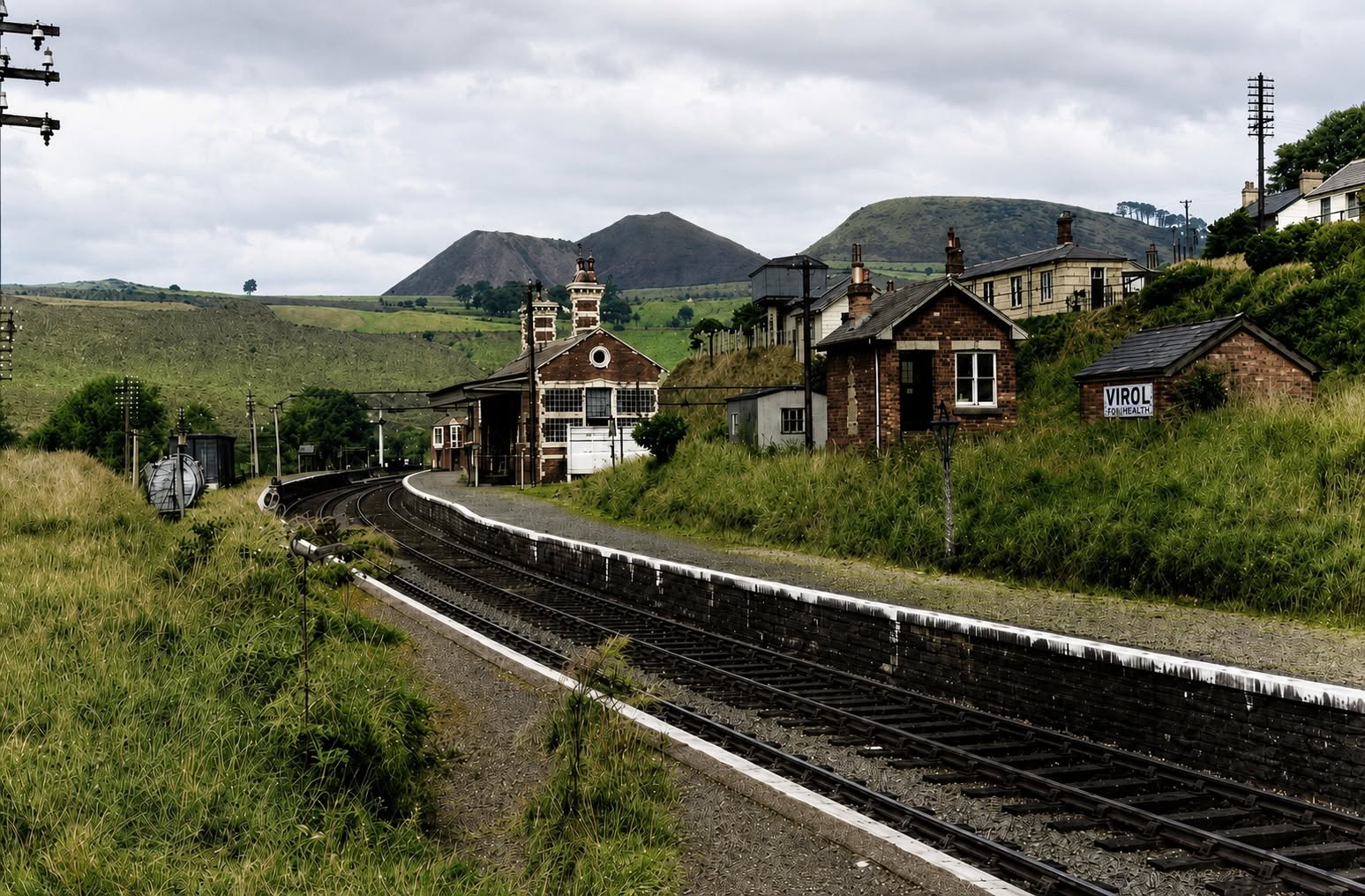
Photos courtesy of Adrian Evans, Edwardsville
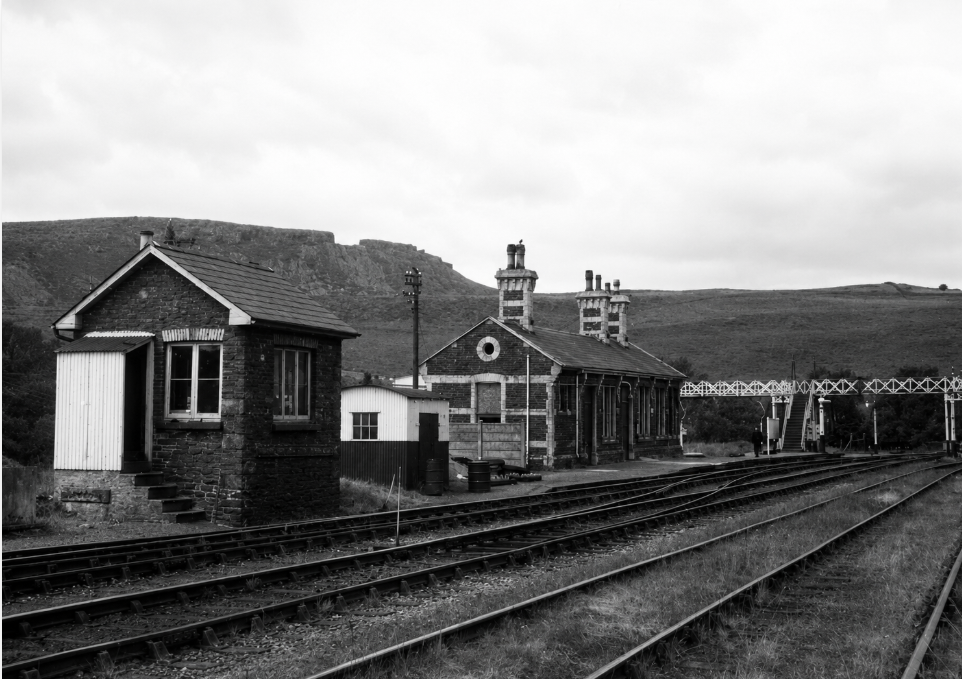
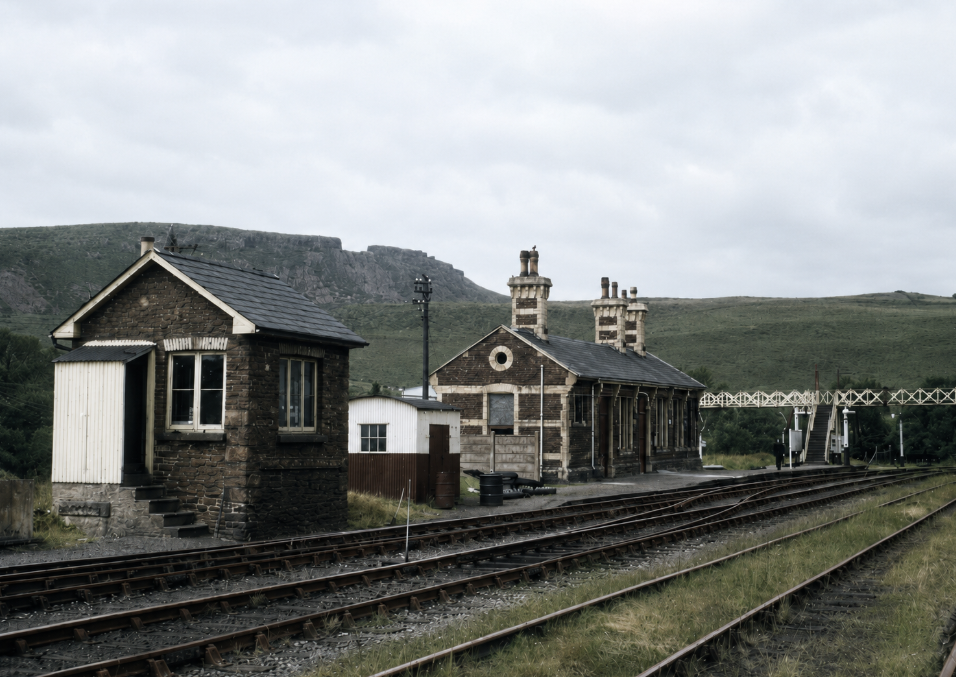

How it was in the 1960’s (picture by Graham Dale)
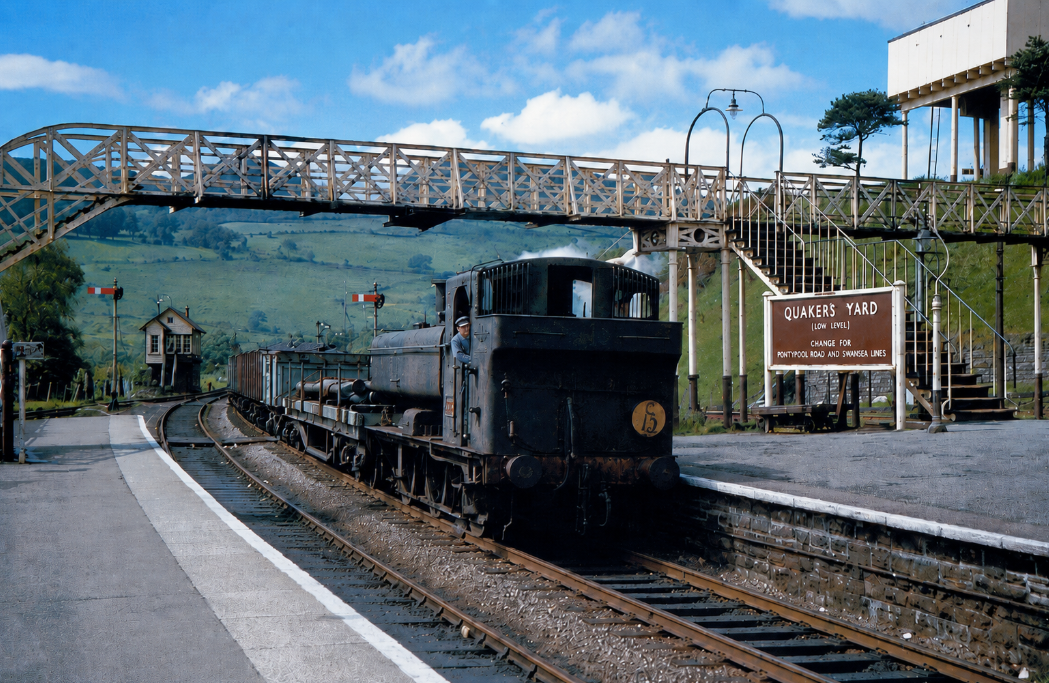
A photo courtesy of Alun Williams
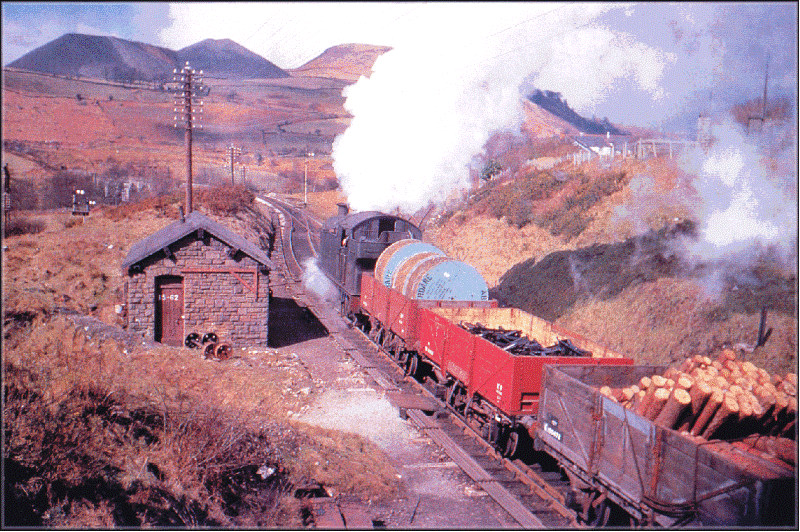
Haulage train leaving station

The low level station
Two photographs of a steam train passing through the station in 1991.
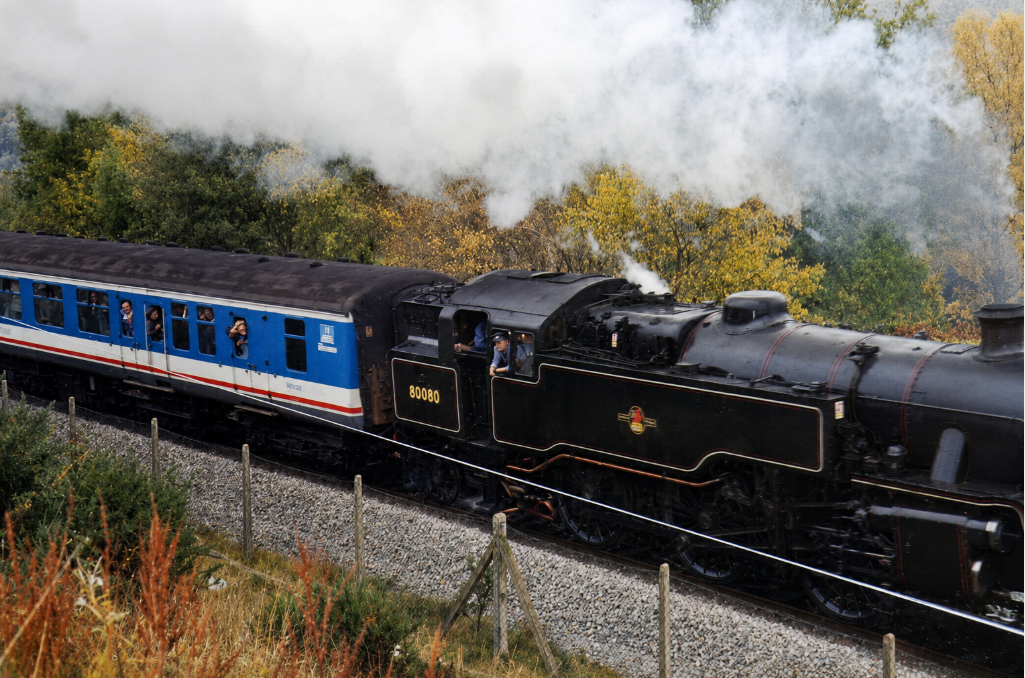
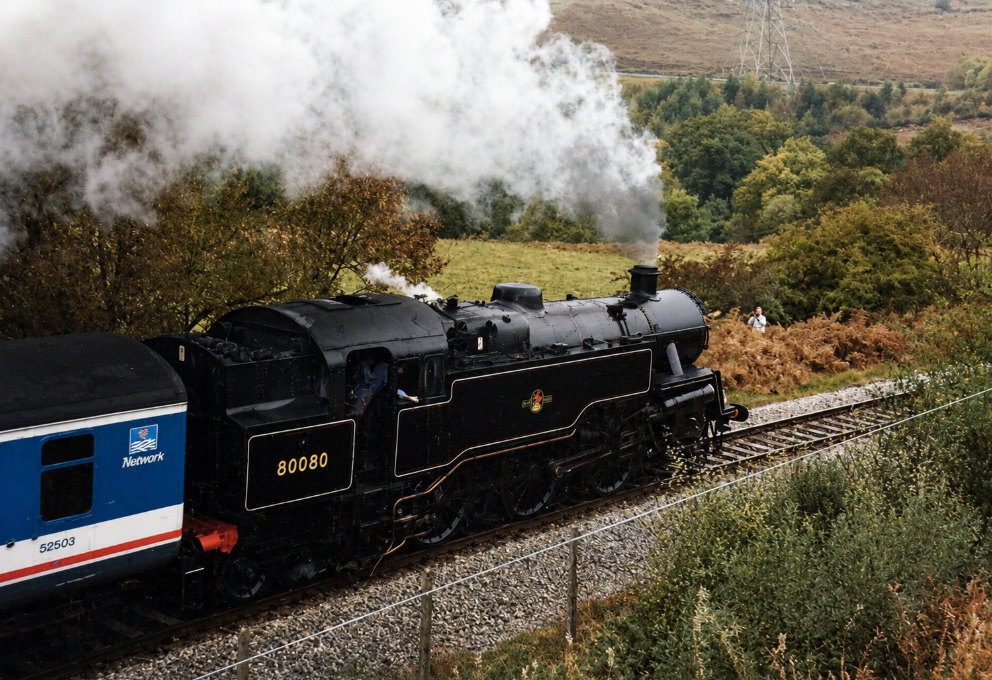
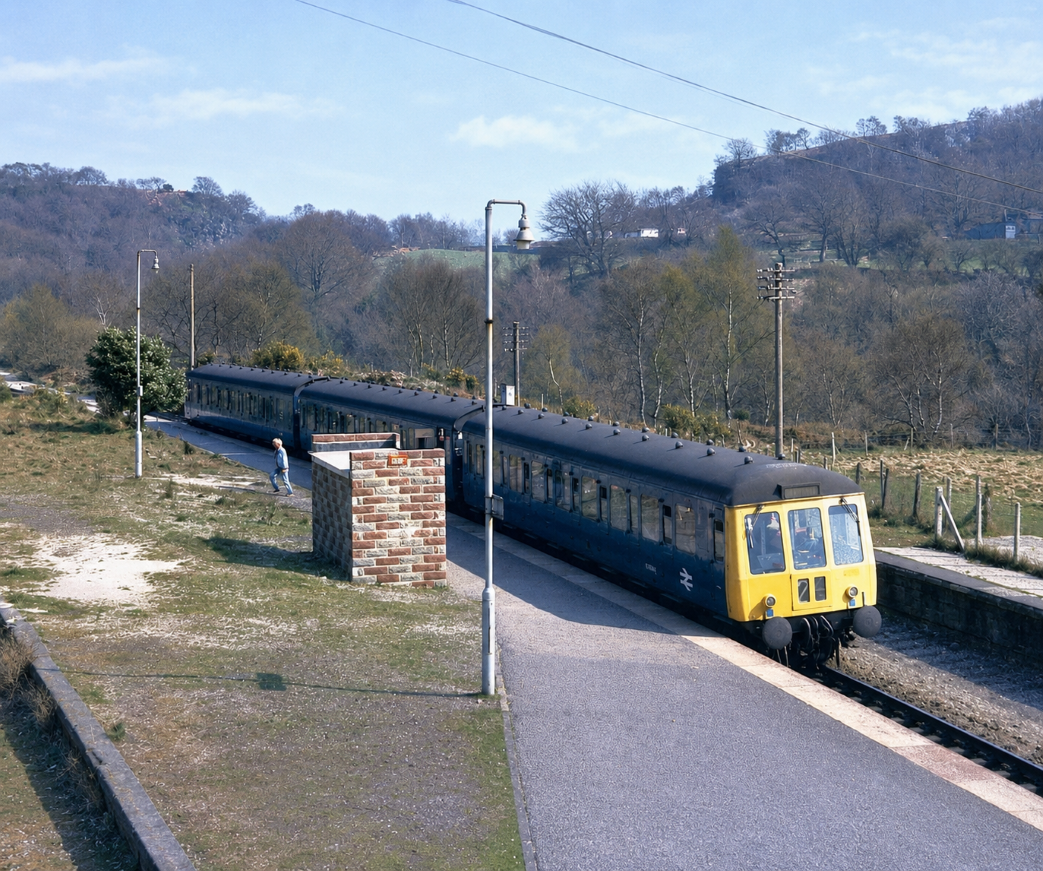

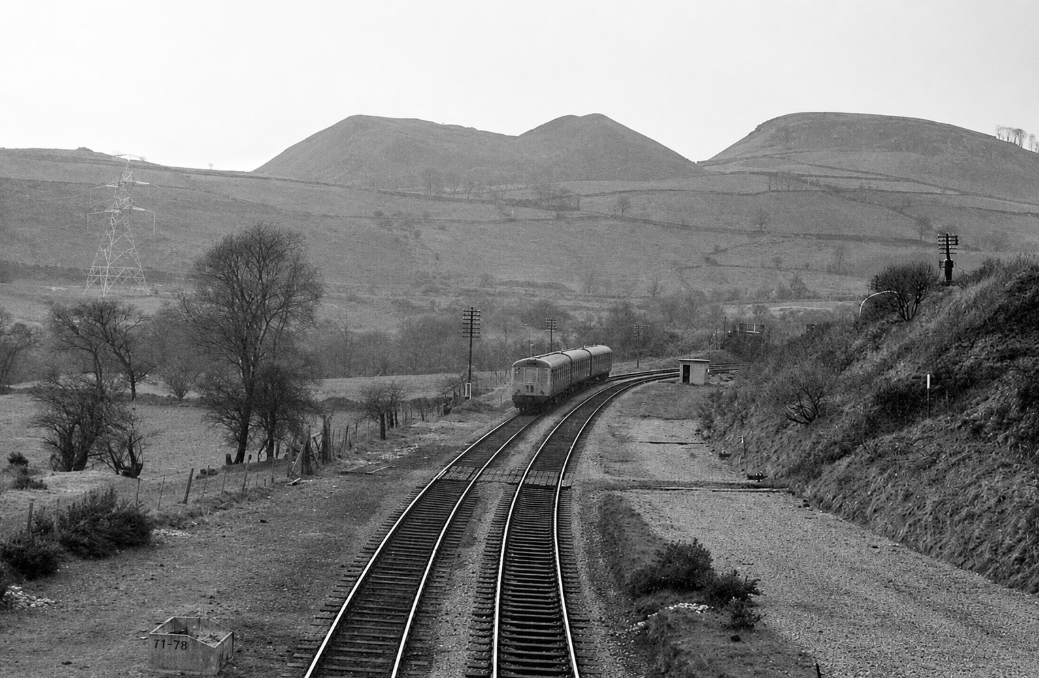
leaving from the station towards Merthyr or through tunnel to Cynon Valley
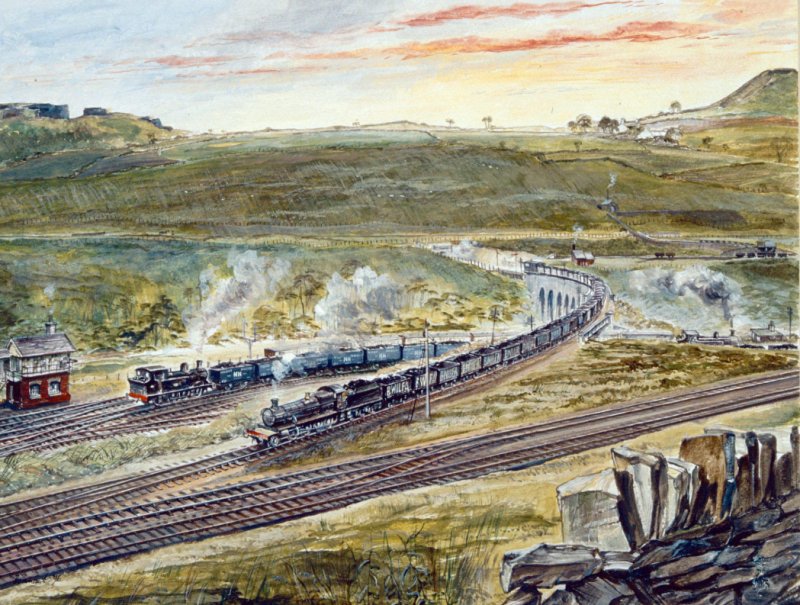
Artists impression of the viaduct
Taken approx 1970 and still a waiting room
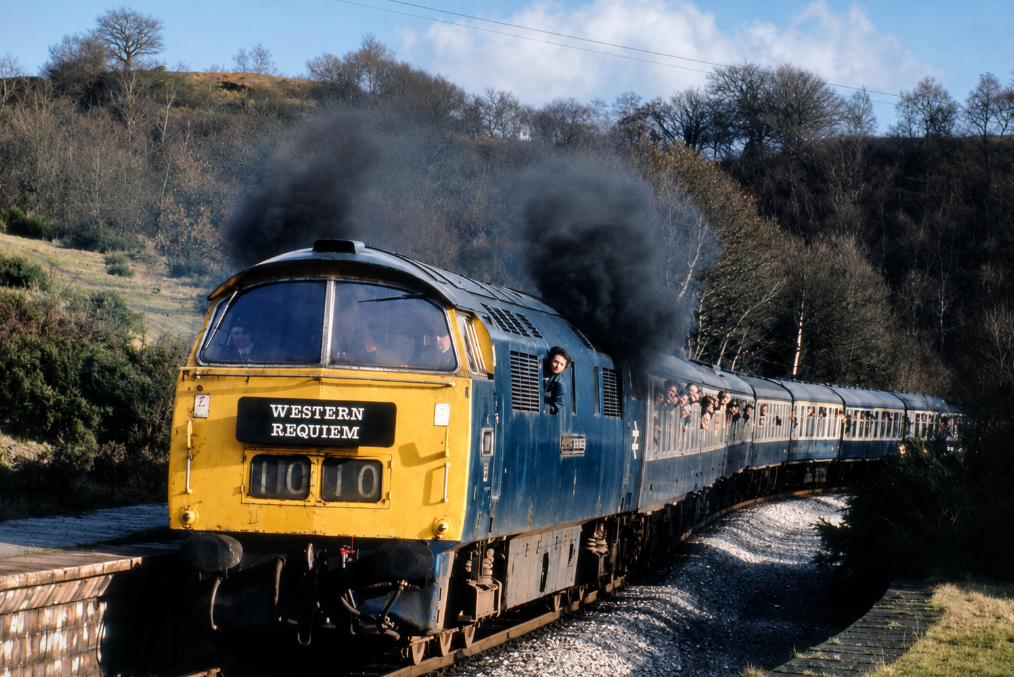
Another tourist train
Two trains arriving both Diesel
This one sees the station being repaired agian and not much left of it.
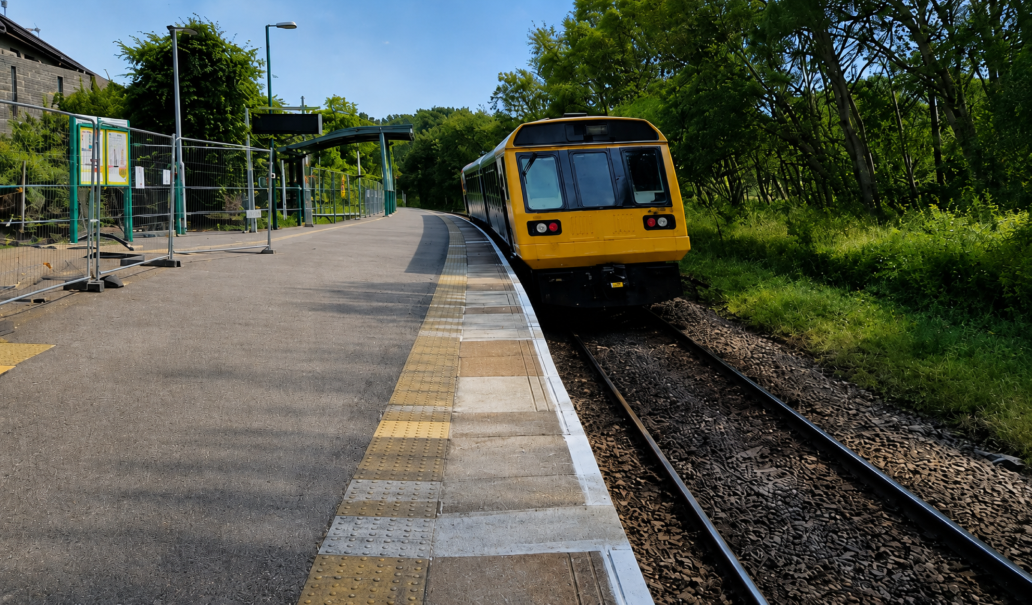


- More Trains: Service increases to four trains per hour in each direction.
- New Platform: A second platform accommodates the newly doubled tracks.
- Better Accessibility: A new ramped footbridge replaces the old track crossing.
- Staff Assistance: On-site staff help passengers navigate the station’s historical slope.
- Modern Amenities: Upgrades include new shelters, ticket machines, and cycle storage
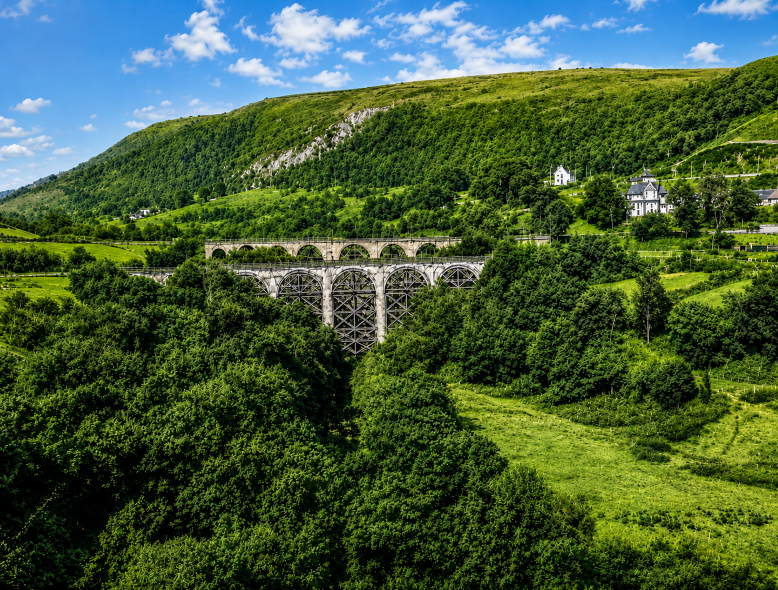
Here are some pohotographs I took during the hot summer 2026
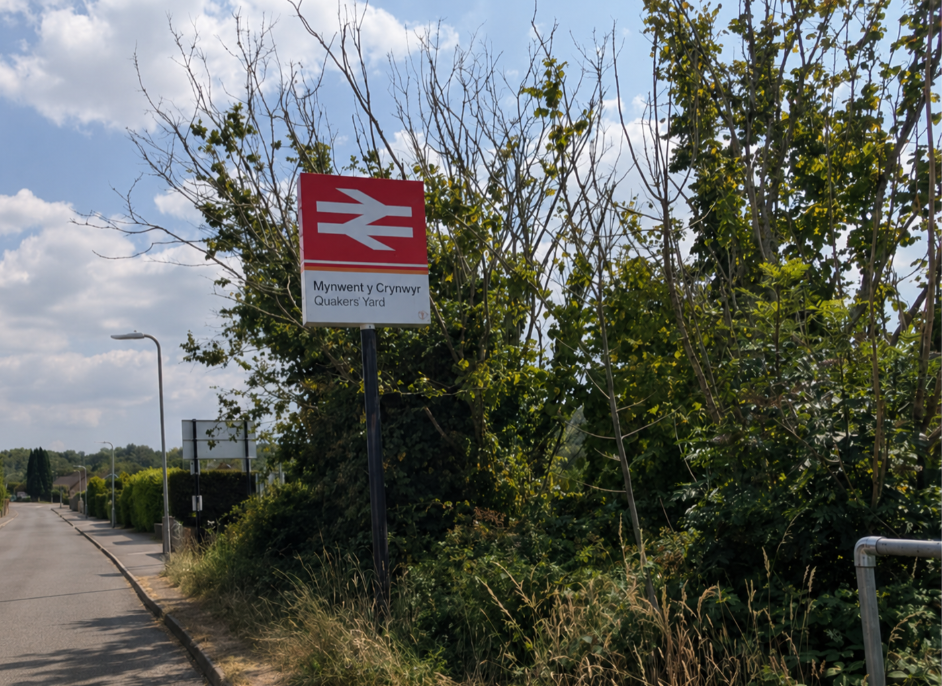
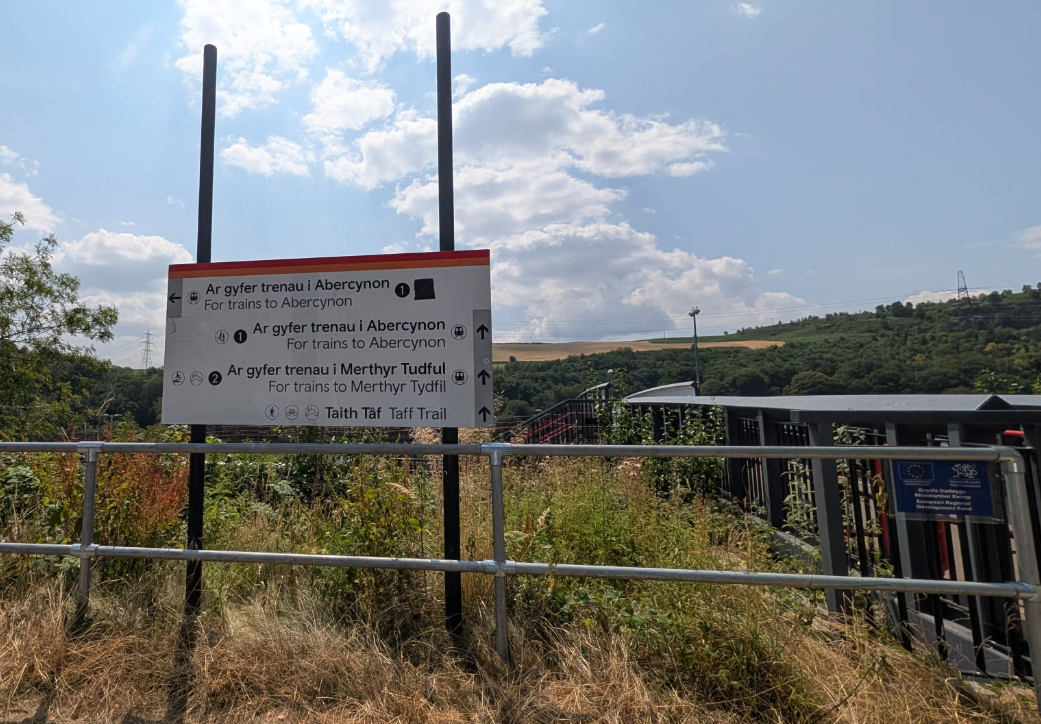
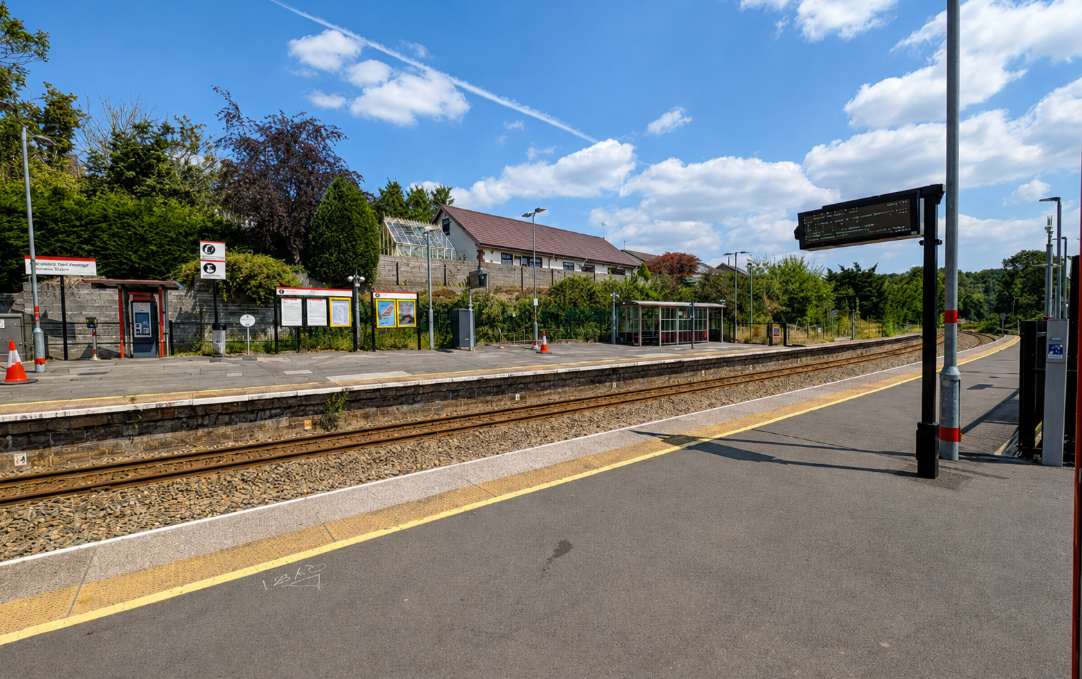
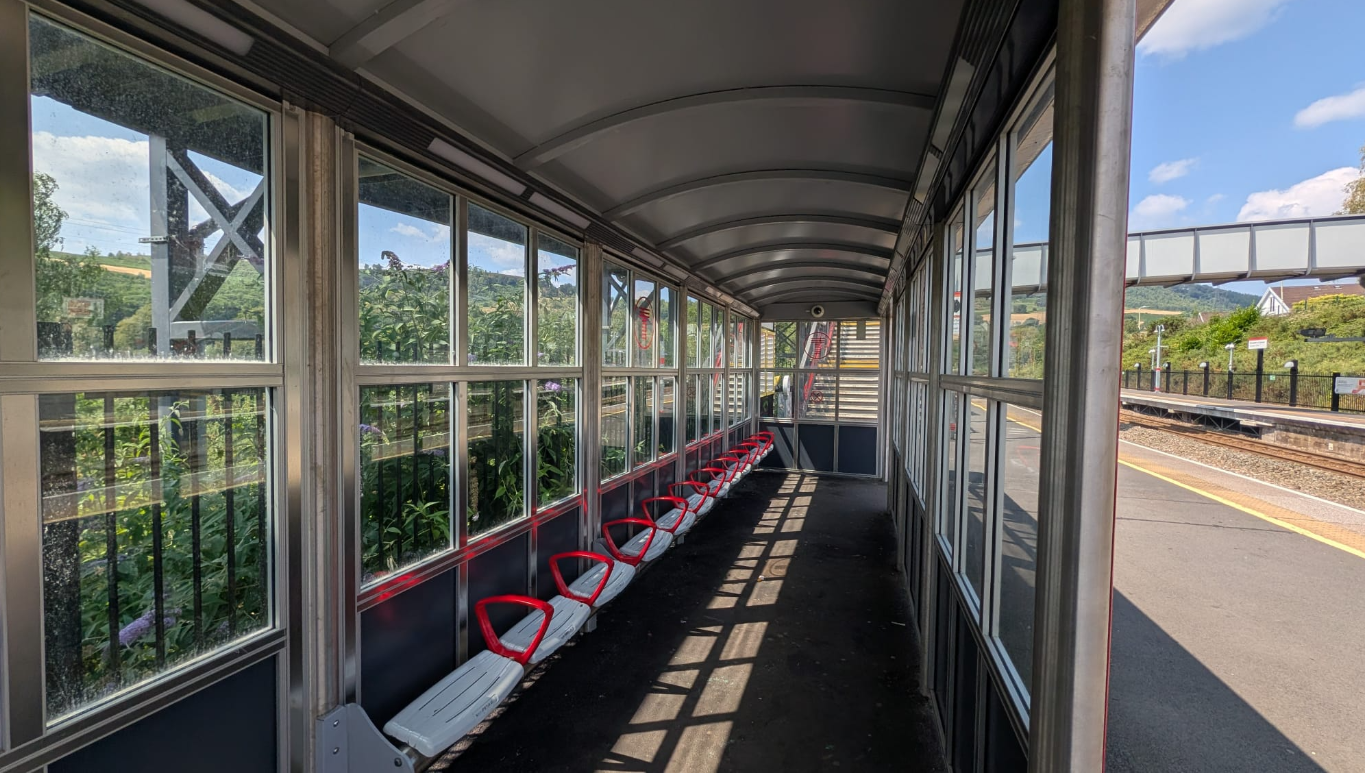
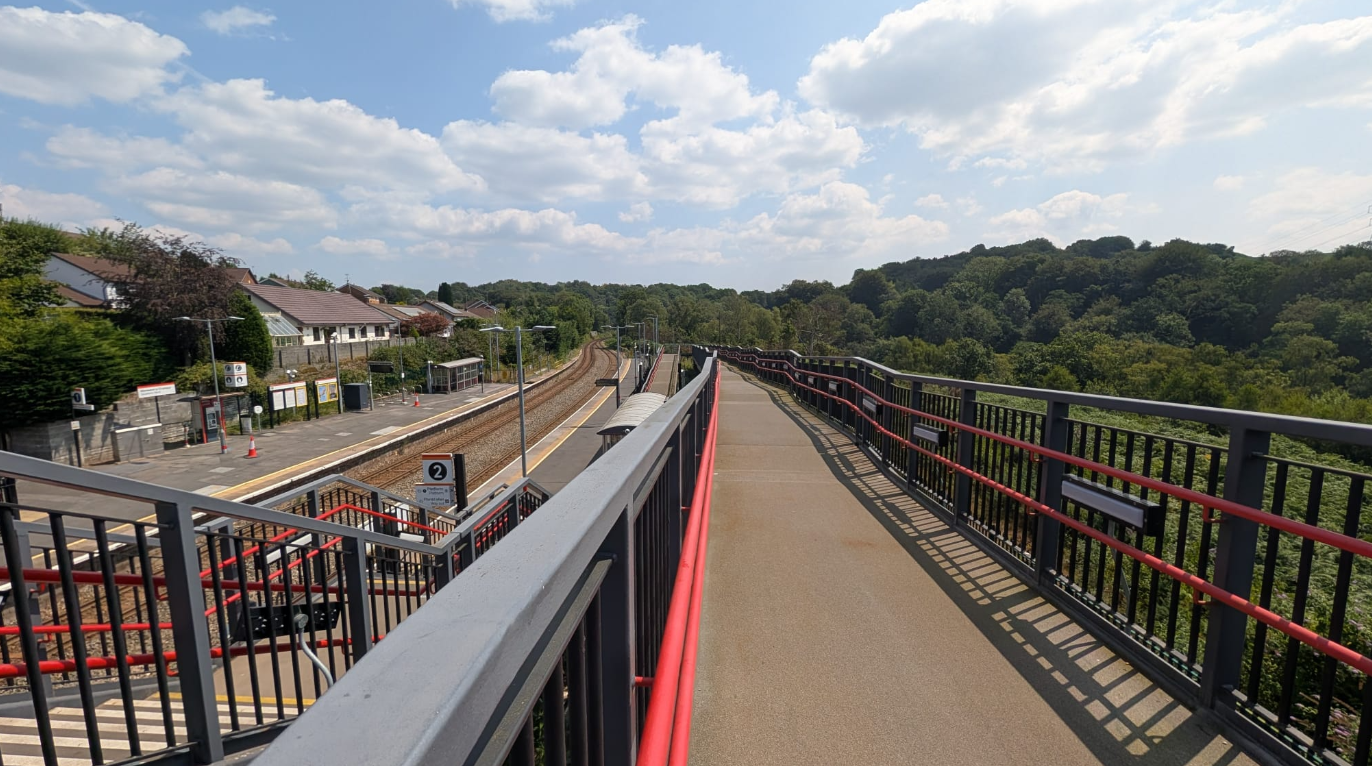
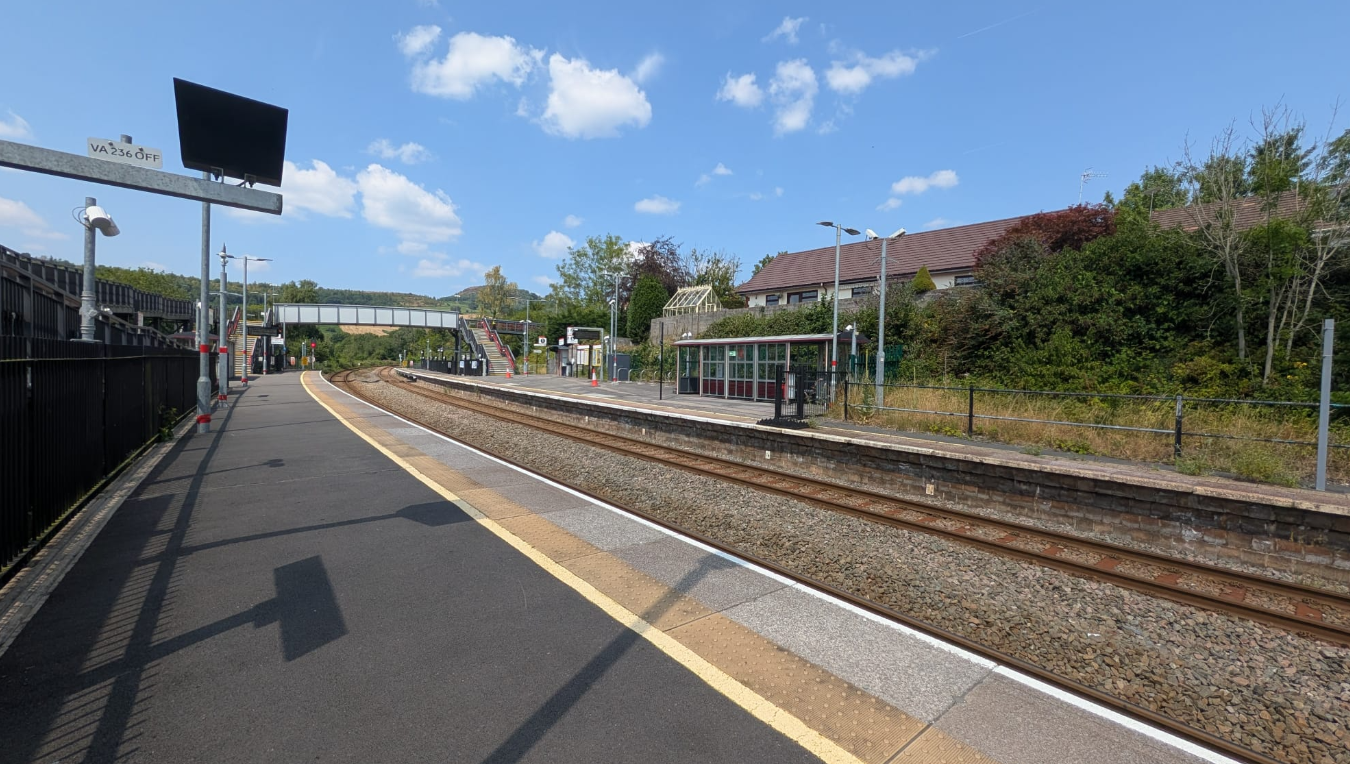
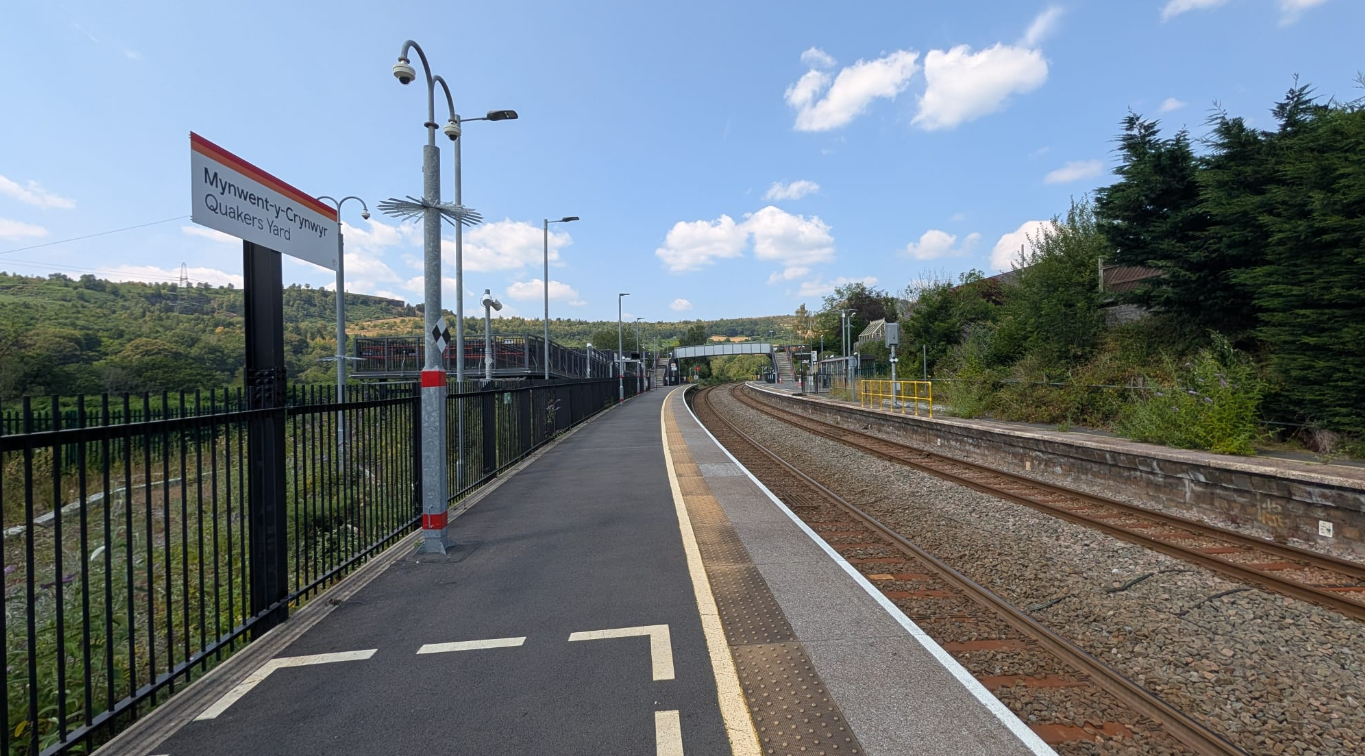
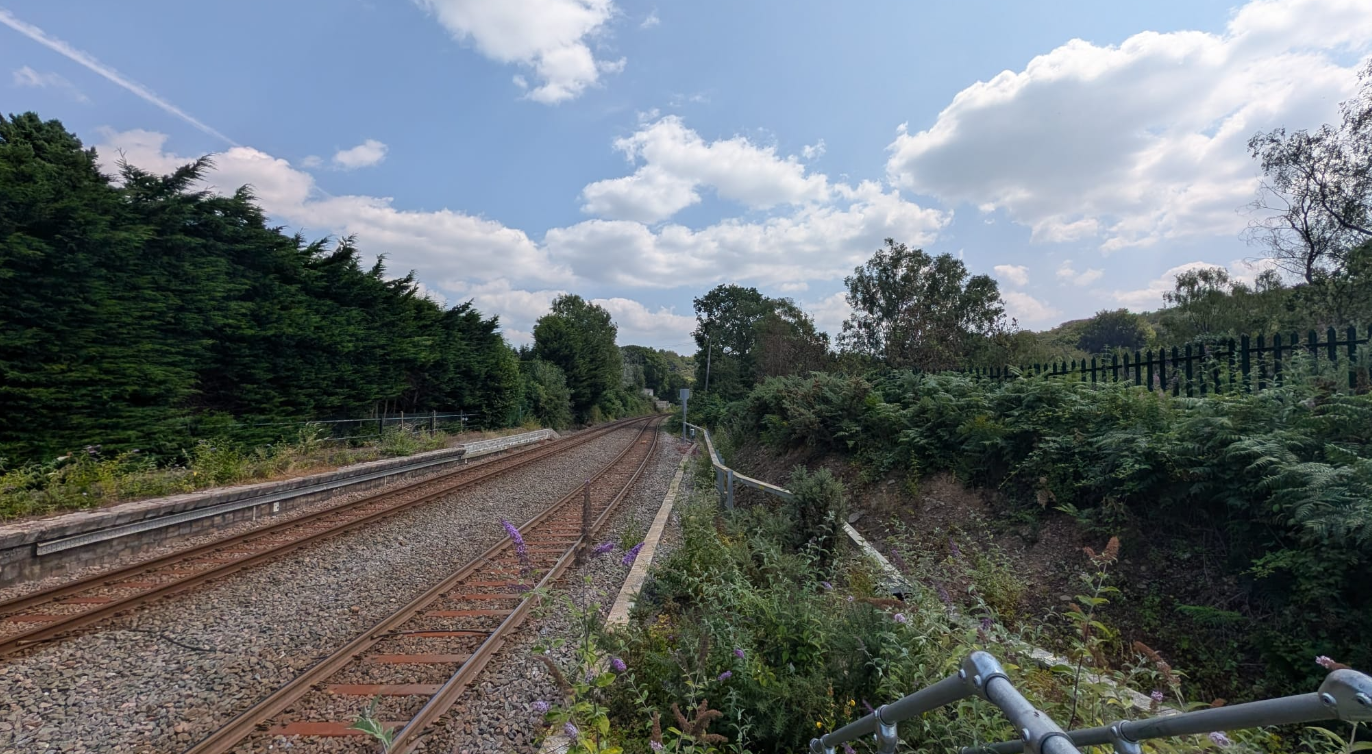
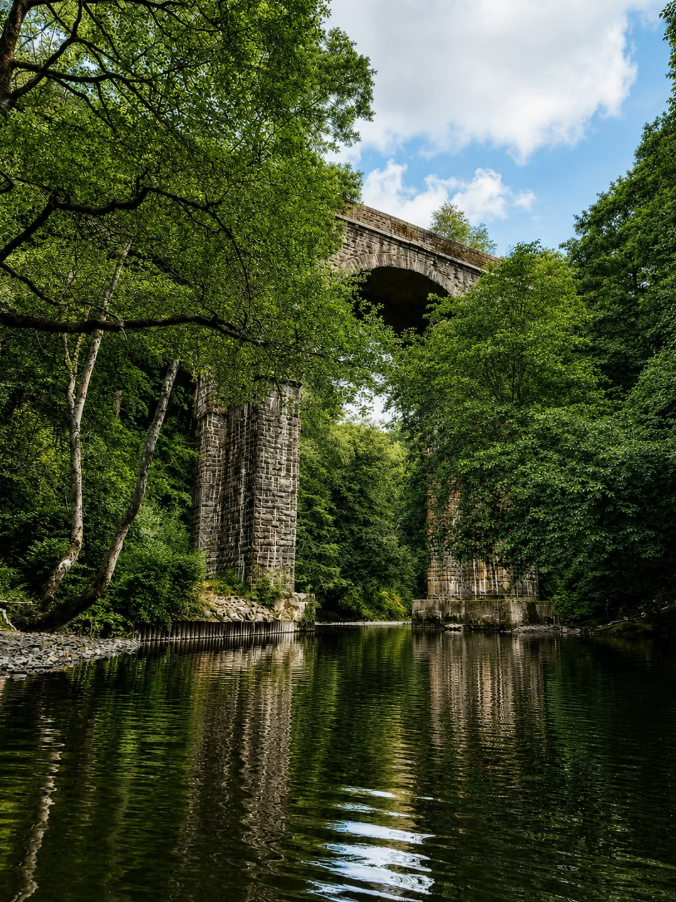
The three Viaducts at Quakers yard station Edwardsville
| Viaduct | Railway and purpose | Opened | Fate |
|---|---|---|---|
| Goitre Coed, or Brunel’s Quakers Yard Viaduct | Taff Vale Railway, Cardiff–Merthyr route | 1841 | Survives and remains in railway use |
| Taff Vale Extension/GWR high-level viaduct | Pontypool–Aberdare–Neath/Swansea cross-country route | 1864 | Closed 1964; demolished 1969 |
| Quakers Yard & Merthyr Joint viaduct | GWR/Rhymney Railway route to Merthyr along the west side of the Taff | 1886 | Taken out of through use in 1951; demolished 1969 |
1. The surviving Brunel viaduct
The southernmost structure is properly called Goitre Coed Viaduct, although it is usually known simply as Quakers Yard Viaduct. Isambard Kingdom Brunel designed it for the Taff Vale Railway’s line between Merthyr Tydfil and Cardiff docks. It opened in April 1841.
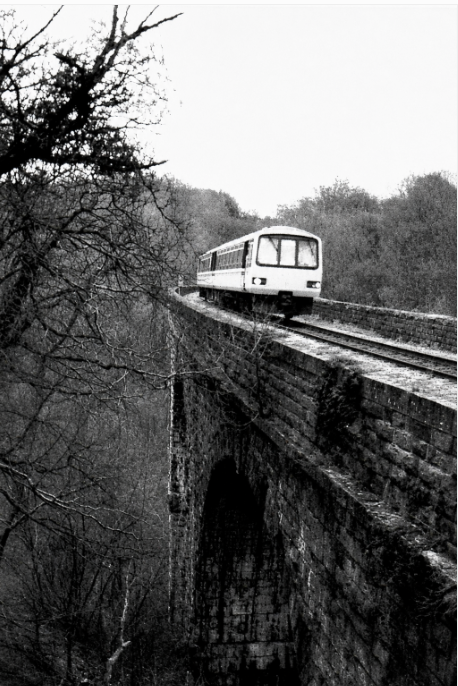
It is a slightly curving masonry viaduct about 32 metres high, consisting of six arches, each spanning approximately 15.2 metres or 50 feet. Brunel’s most distinctive feature was the use of tall, hollow, octagonal piers. The crossing is also on a skew to the River Taff, and Brunel oriented two sides of the piers parallel to the river rather than using a conventional skew-arch arrangement.
Originally it carried only one track. As traffic grew, the Taff Vale Railway widened the crossing during works undertaken between 1857 and 1862. Instead of substantially altering Brunel’s bridge, engineers constructed a second, simpler masonry viaduct immediately alongside it. The original upstream part has the elaborate octagonal piers and deeply chamfered arches; the later addition has more conventional piers and prominent keystones.
That creates an interesting counting problem: the surviving “first viaduct” is physically two parallel masonry structures joined together, but railway historians normally treat the combined crossing as one of the traditional “three Quakers Yard viaducts.”
Its western arch passes over the route of the Penydarren or Merthyr Tramroad, associated with Richard Trevithick’s pioneering locomotive experiments of 1804. That tramroad alignment is now part of the Taff Trail. The viaduct was designated Grade II* in 1988 as one of the most remarkable surviving Brunel bridges in Wales.
2. The high-level viaduct leading to Cefn Glas Tunnel
The second viaduct belonged to the Taff Vale Extension, an ambitious east–west railway intended to link the industrial valleys with Pontypool, the Midlands and ports farther west.
The extension first reached Quakers Yard from Pontypool in January 1858. Its continuation westward, from Quakers Yard to Middle Duffryn in the Cynon Valley, opened for goods in April 1864 and passengers in October 1864. By then the undertaking had passed through the West Midland Railway into the Great Western Railway.
From Quakers Yard High Level station, this viaduct crossed the Taff valley almost directly westward and entered the approximately 703-yard Cefn Glas Tunnel. Beyond the tunnel the line continued towards Penrhiwceiber and Aberdare, connecting with the Vale of Neath route to Neath and Swansea. In the opposite direction it ran through Nelson, Hengoed and Crumlin towards Pontypool. It was therefore part of a remarkable cross-country railway running across, rather than along, the South Wales valleys.
The viaduct and tunnel approach remained single-track even though much of the wider route was doubled. Passenger and remaining through traffic ceased in June 1964; Quakers Yard High Level formally closed on 15 June. The masonry viaduct remained standing for several years before being demolished in 1969.
3. The Quakers Yard & Merthyr Joint viaduct
The third viaduct was built for the Quakers Yard and Merthyr Joint Railway, jointly owned by the Great Western and Rhymney railways. Its line opened in 1886.
It diverged beside the 1864 route at the high-level station. For a short distance the two viaducts stood almost parallel, but the newer bridge then curved northward. Its railway continued along the western side of the Taff through Aberfan, Troedyrhiw and Abercanaid, eventually reaching Merthyr High Street station. The route gave the GWR and Rhymney Railway a more direct entry to Merthyr, challenging the Taff Vale Railway’s dominance of traffic from the town.
This was the longer of the two lost Edwardsville crossings, locally described as being about 200 metres long. It crossed both the River Taff and the old Penydarren Tramroad.
Its great weakness was not its original masonry construction but the ground beneath it. Coal workings associated particularly with Deep Navigation Colliery at Treharris caused substantial mining subsidence. Movement distorted and cracked the arches, and large frameworks of timber were inserted beneath them. The dramatic wooden latticework visible in old photographs was therefore later reinforcement—not temporary scaffolding left from construction. The neighbouring 1864 viaduct was affected as well.
By 1951 the joint-line viaduct was considered unsafe. Passenger trains on the Quakers Yard–Merthyr route ended on 12 February that year, with the threatened condition of the Edwardsville crossing being the immediate cause. The structure lingered, heavily shored, until it and the adjacent 1864 viaduct were demolished in 1969.
This single track viaduct led to a tunnel that allowed trains to travel between Quakers Yard and Abercynon, it was later decided to build a second viaduct to take another track, and the tunnel was demolished and there was a cutting created to take the two tracks.
Below are two photos of the construction and also a photograph of the completed single track Viaduct
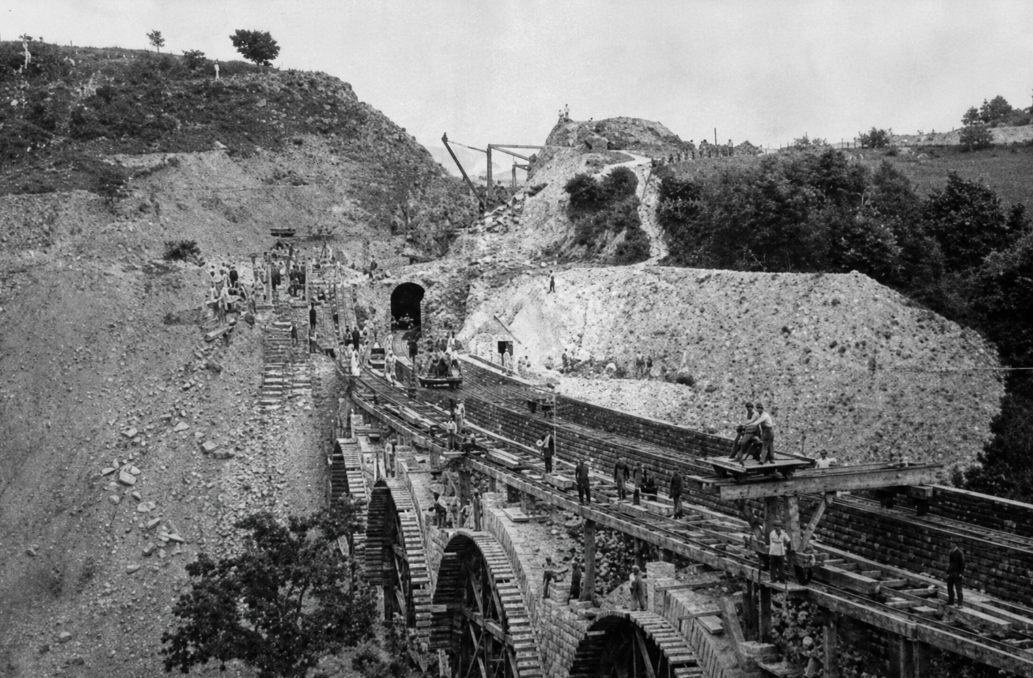
After the viaduct came the narrow passage through a tunnel to Abercynon, to enable two tracls this tunnel was removed and the area was widened.
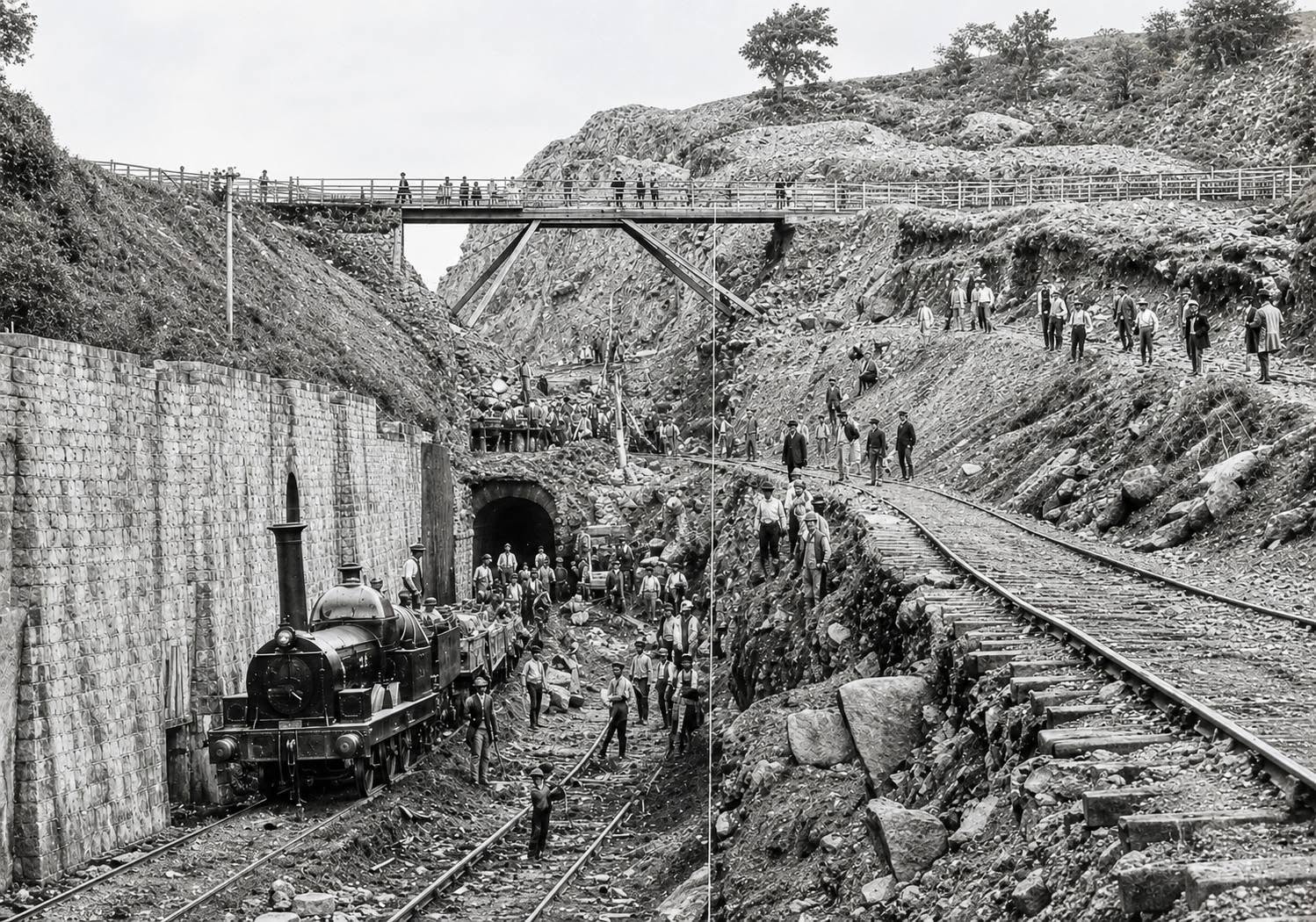
AI image of how it was.
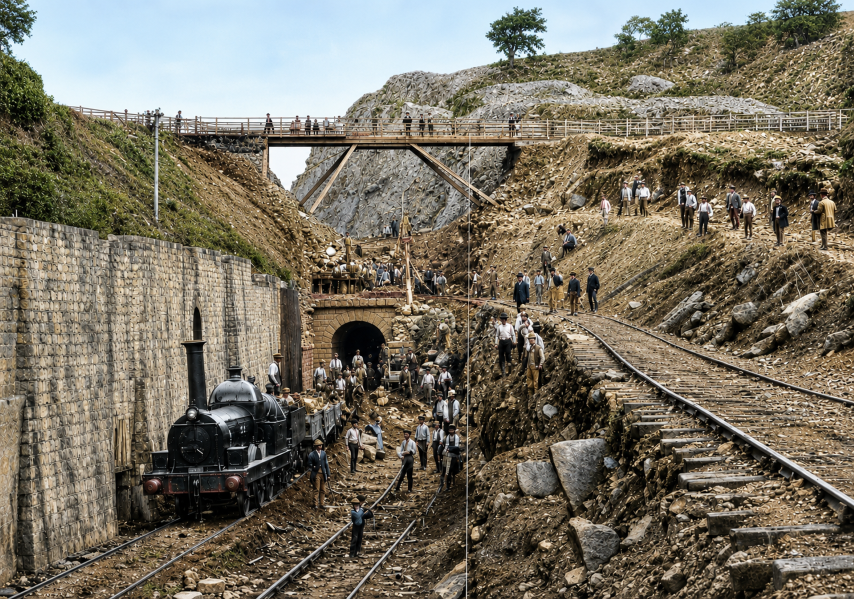
Below is how it looked many years later
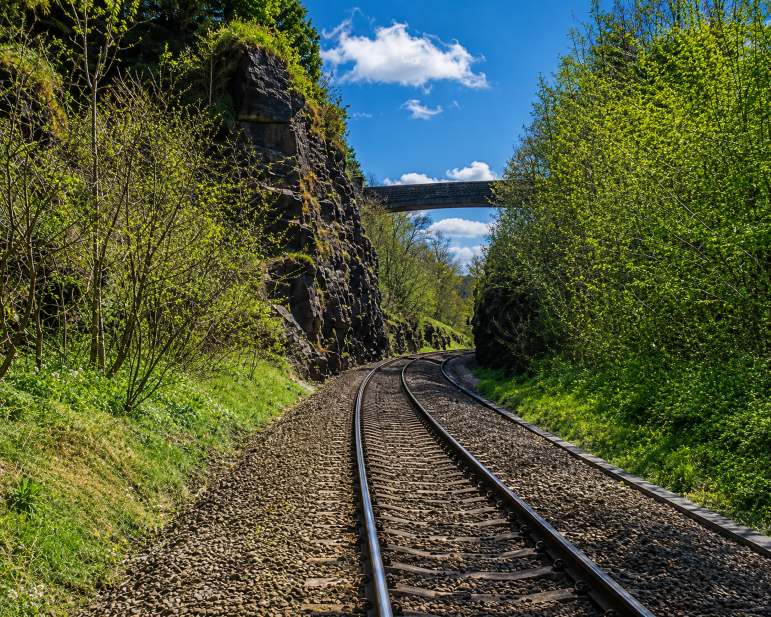
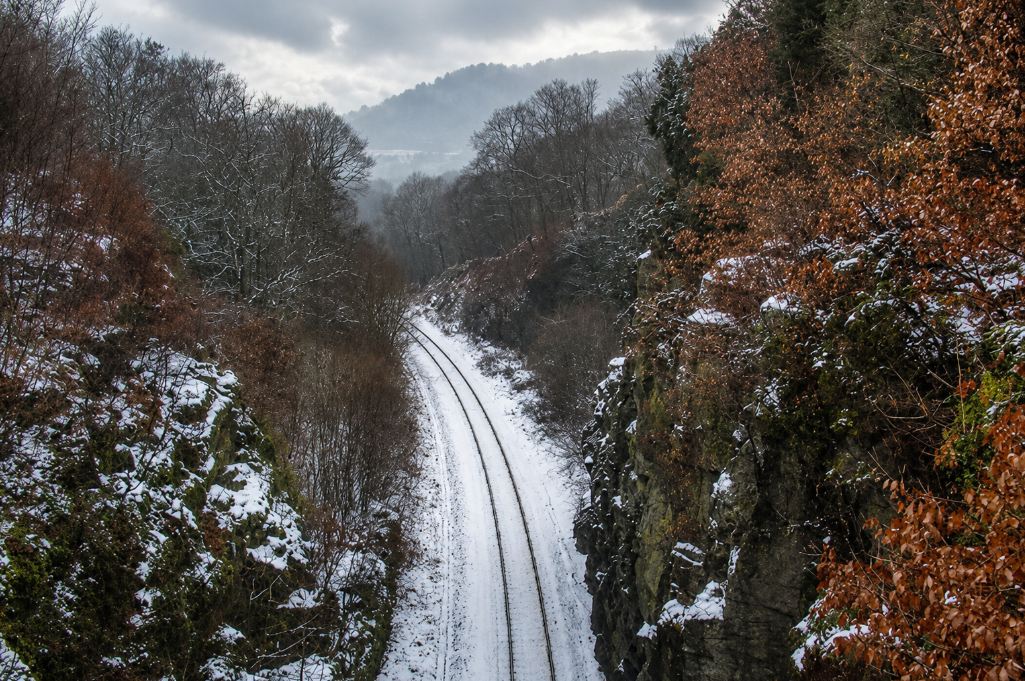
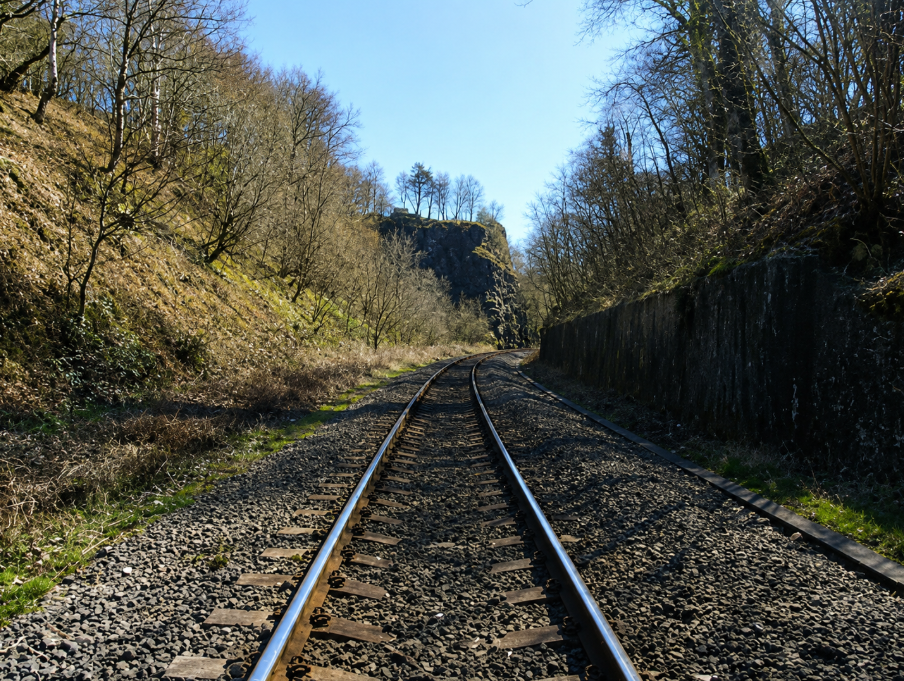
Looking up from below the viaduct
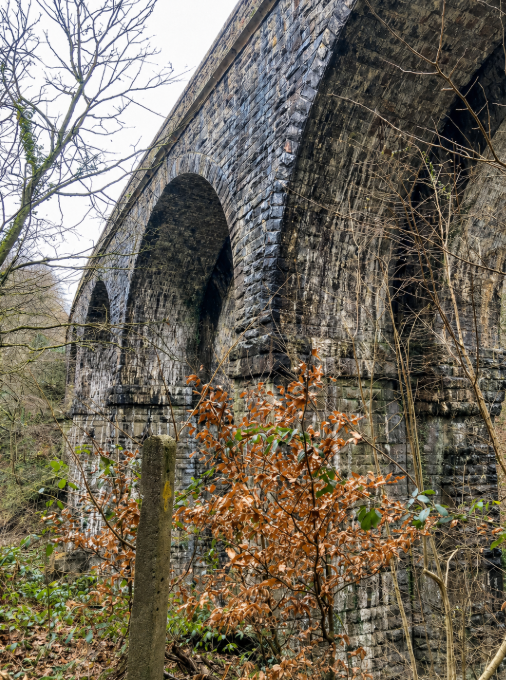
Below more views of the viaduct thanks to Graham Dale and Tony Evans
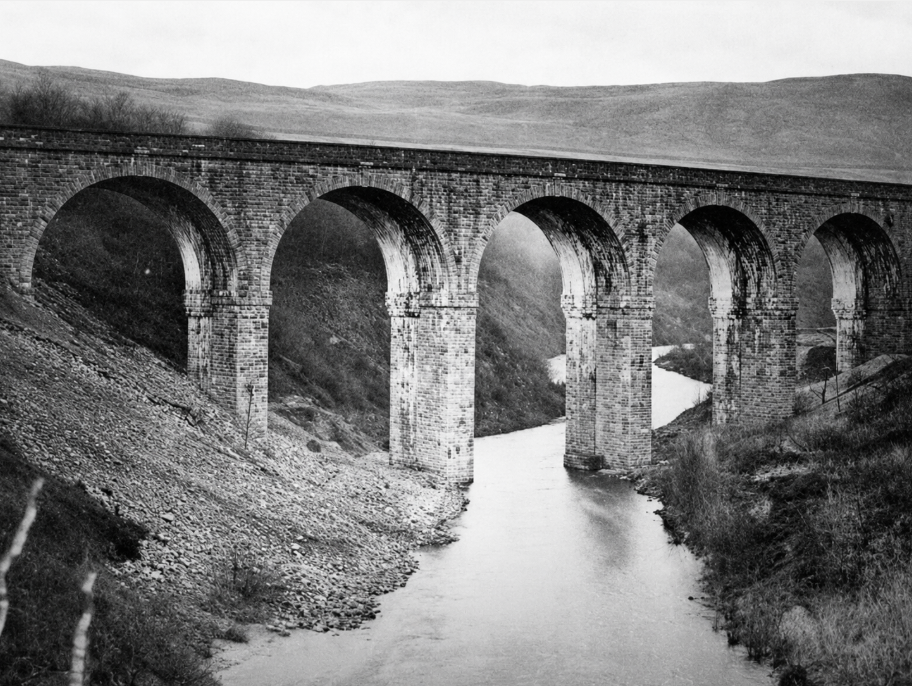
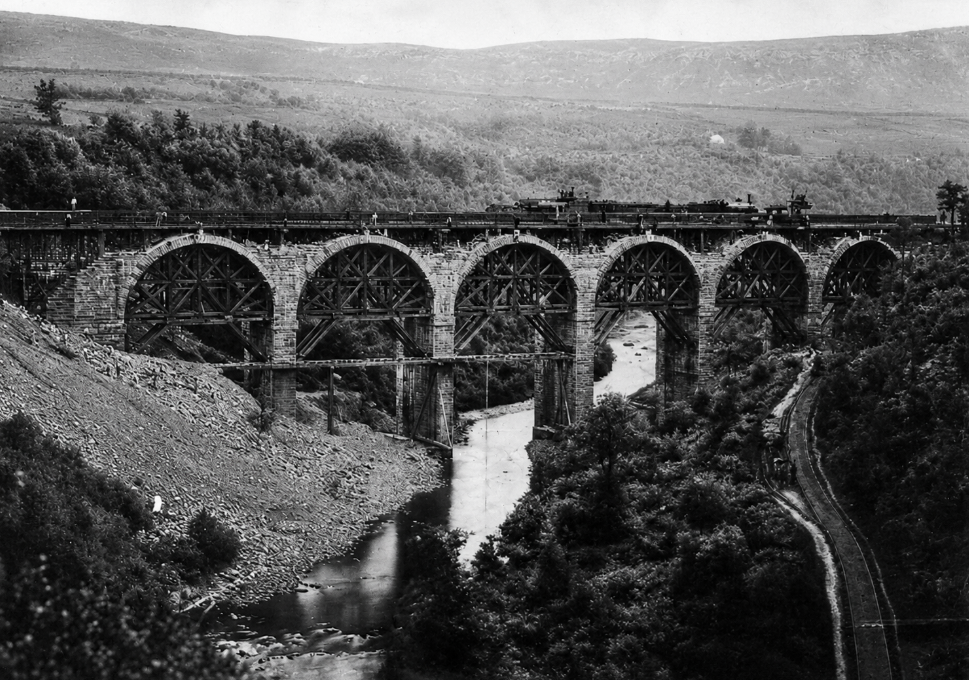
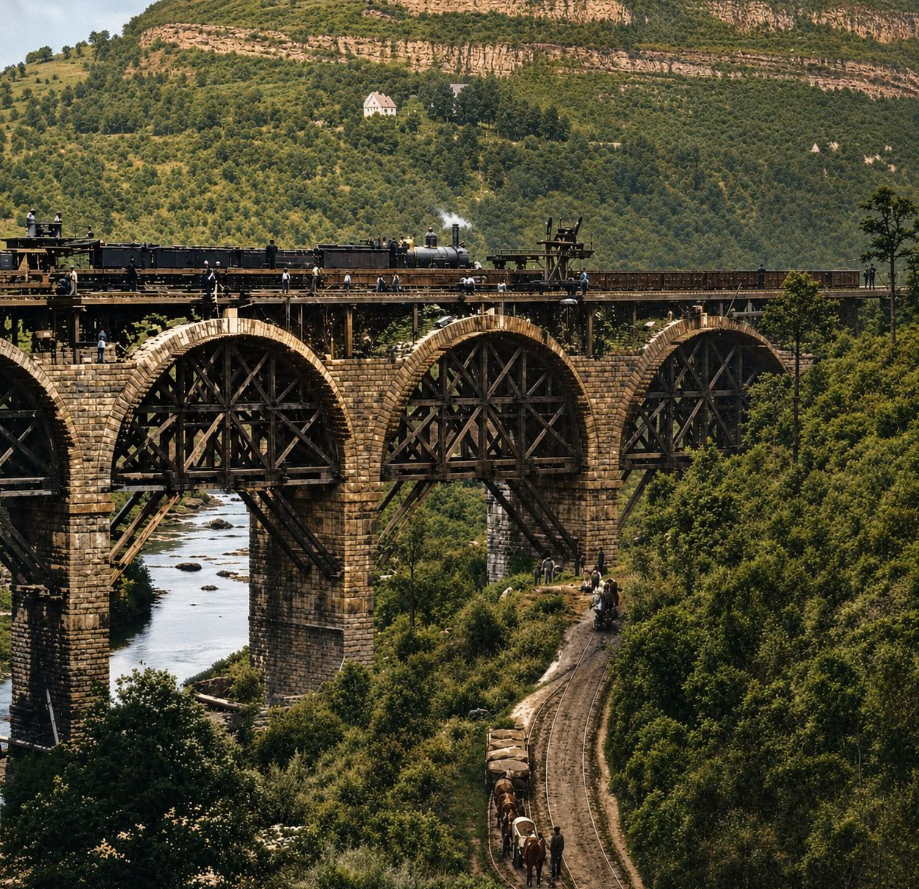
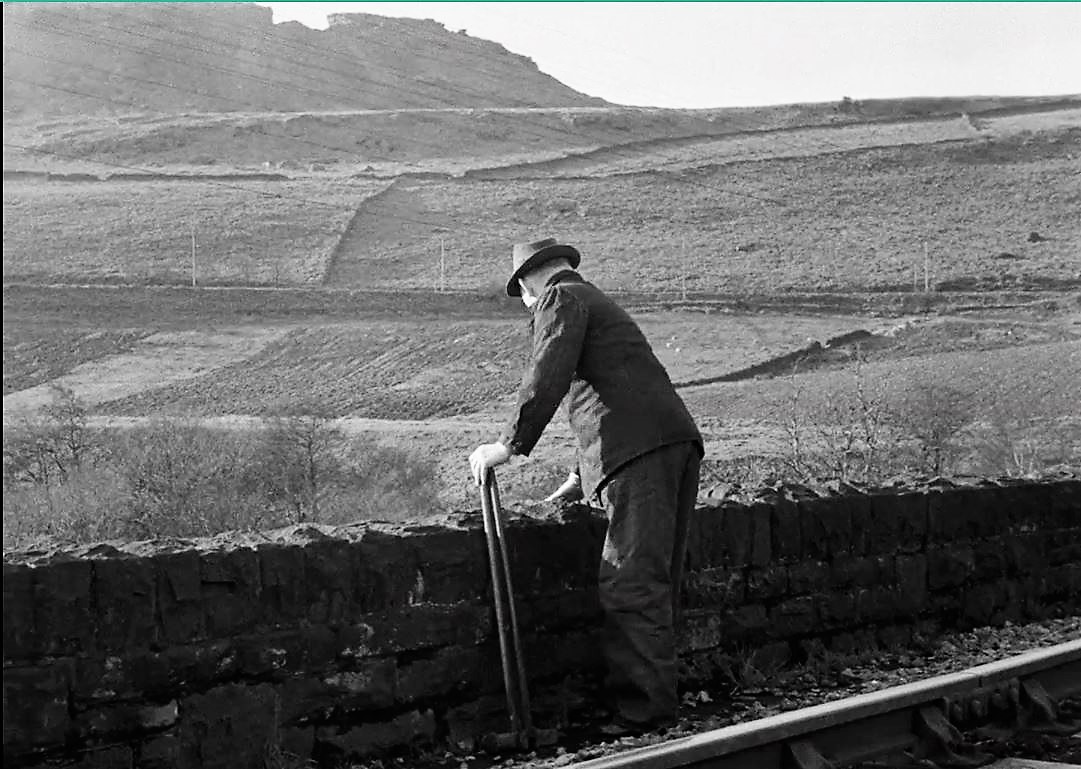
Here are some photographs thanks to Norman Peter Spencer who visited the site in the 1960’s, I have added originals and enhanced copies.
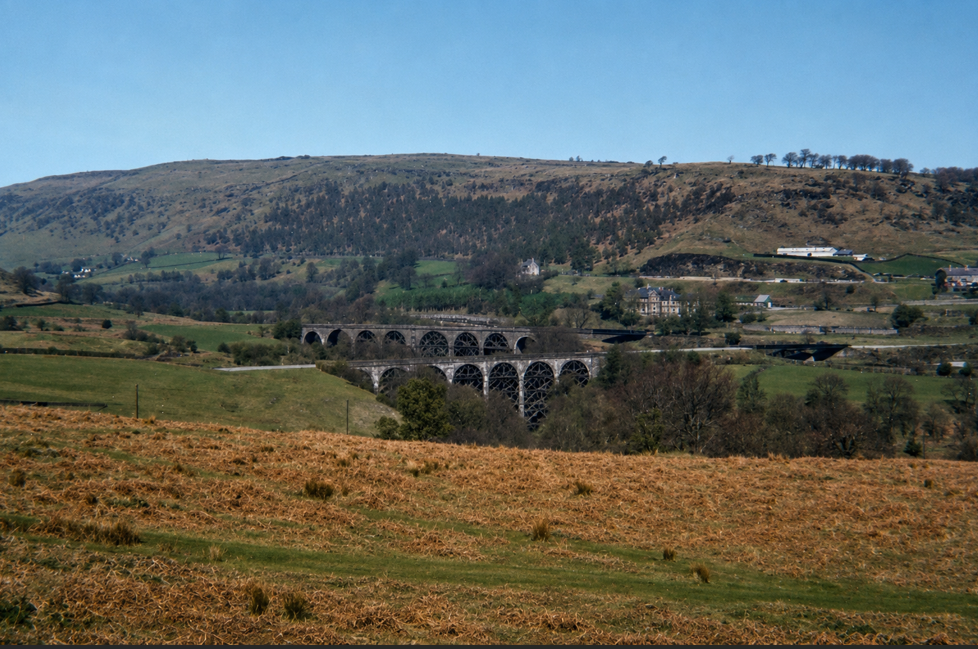
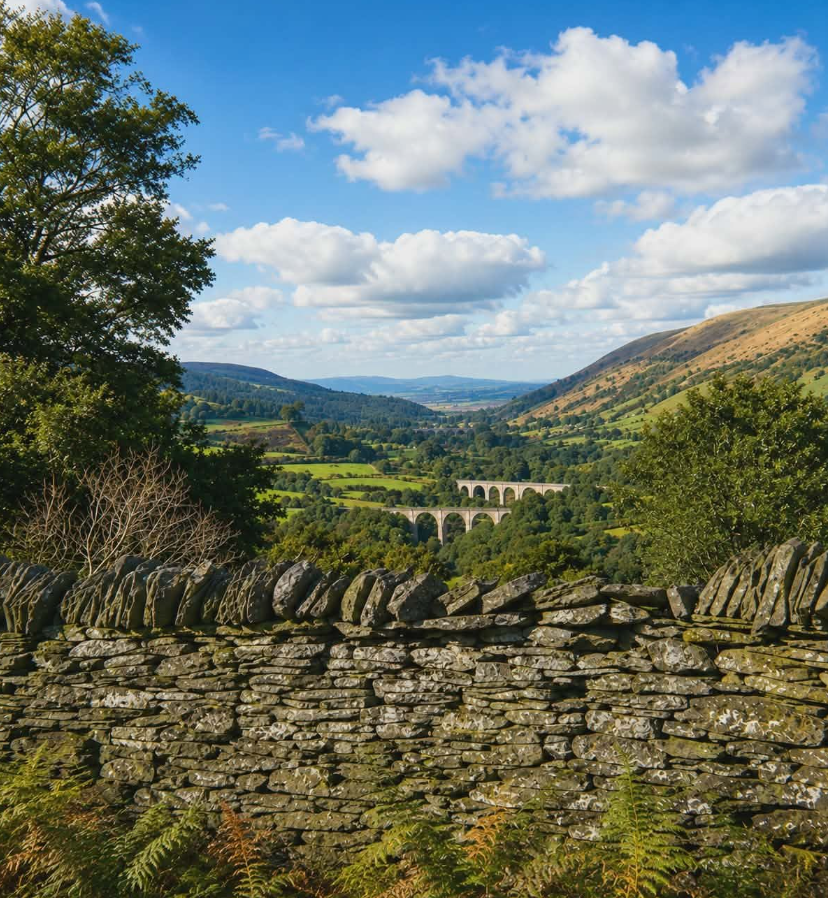
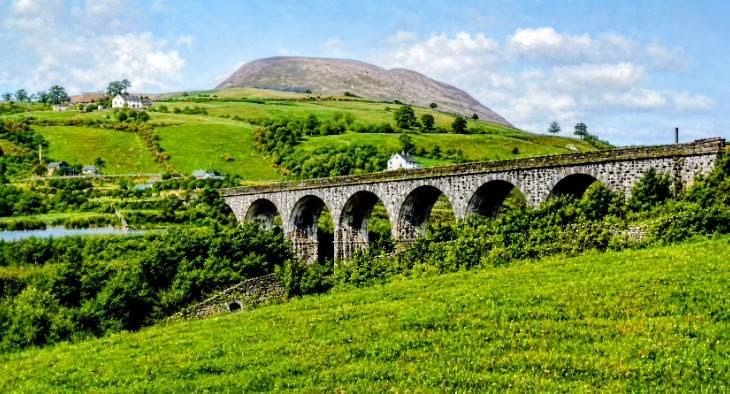
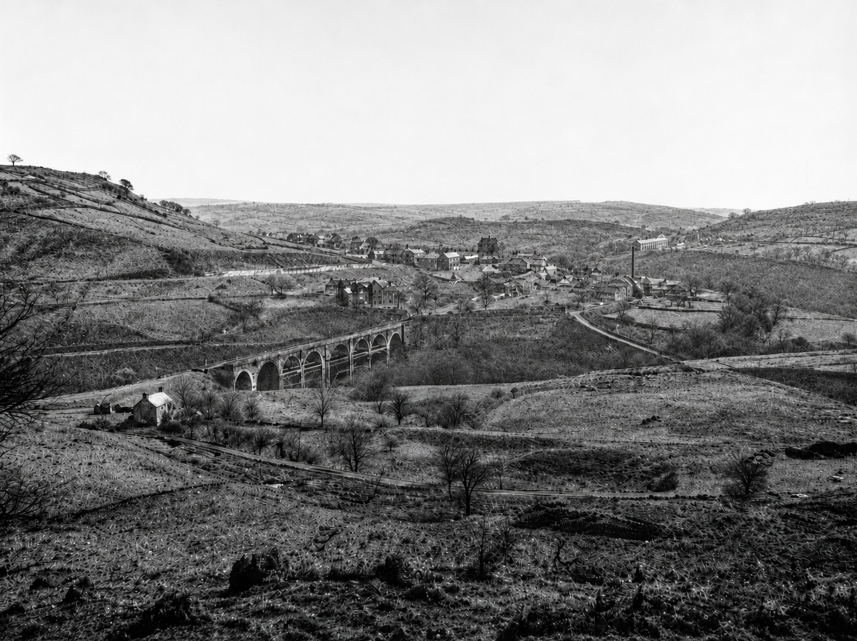
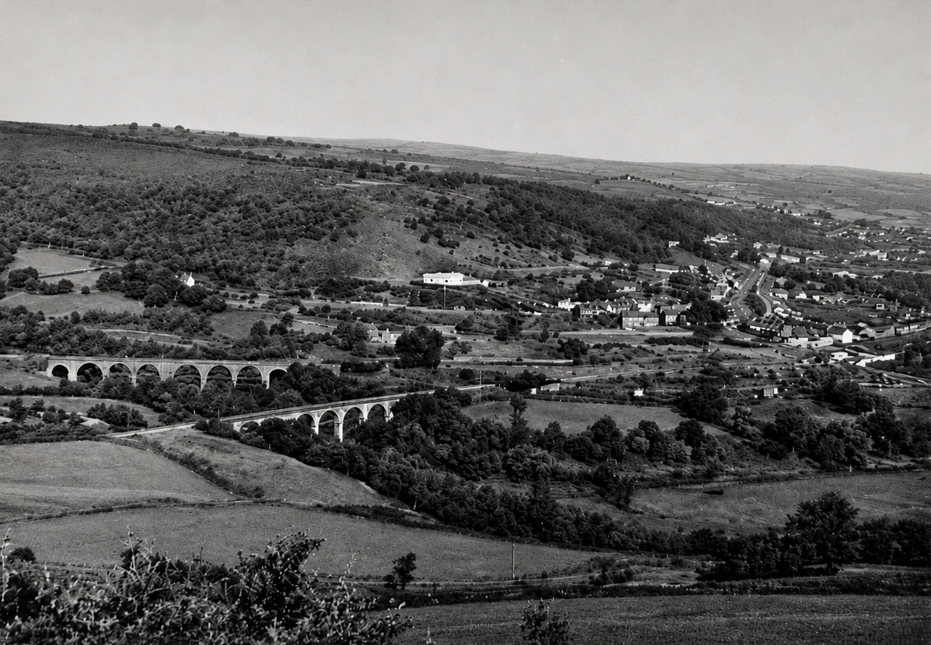
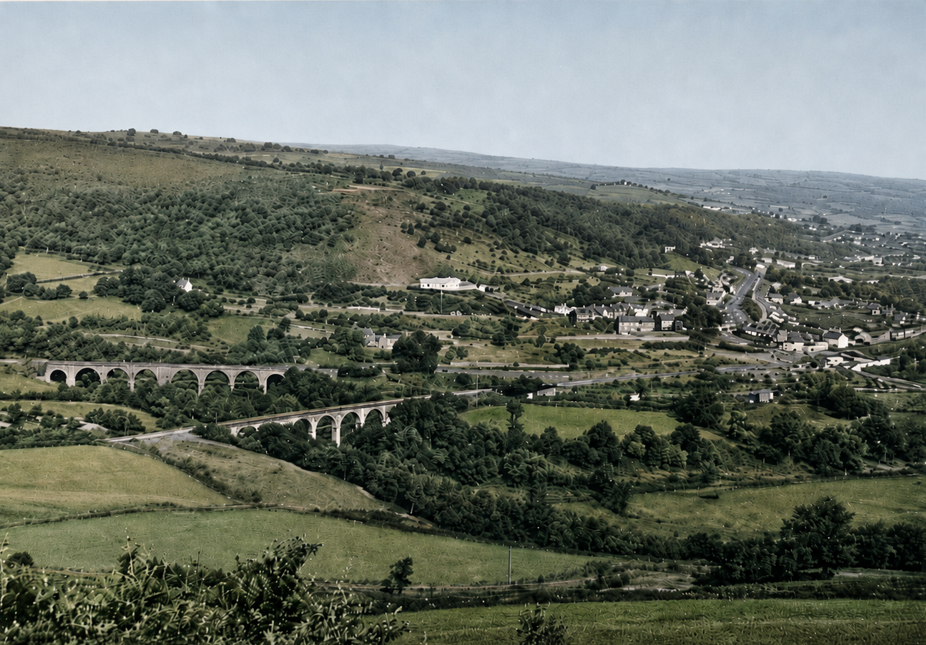
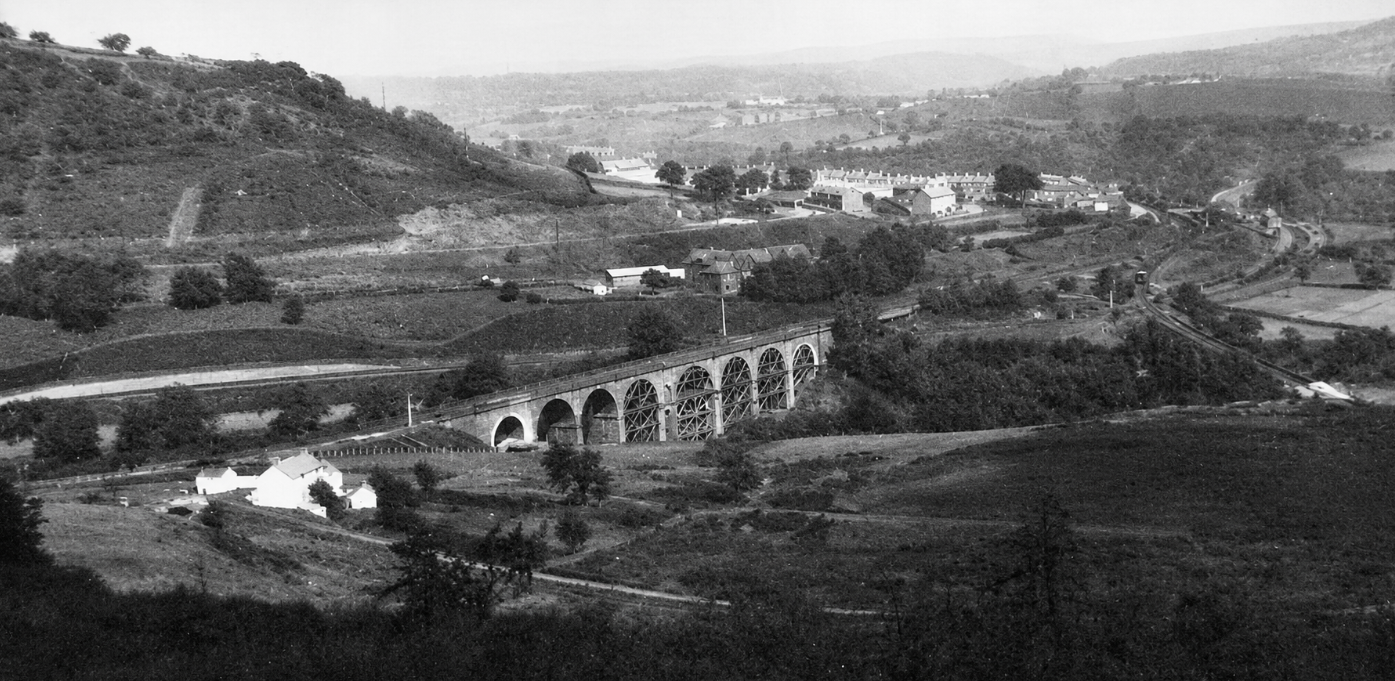
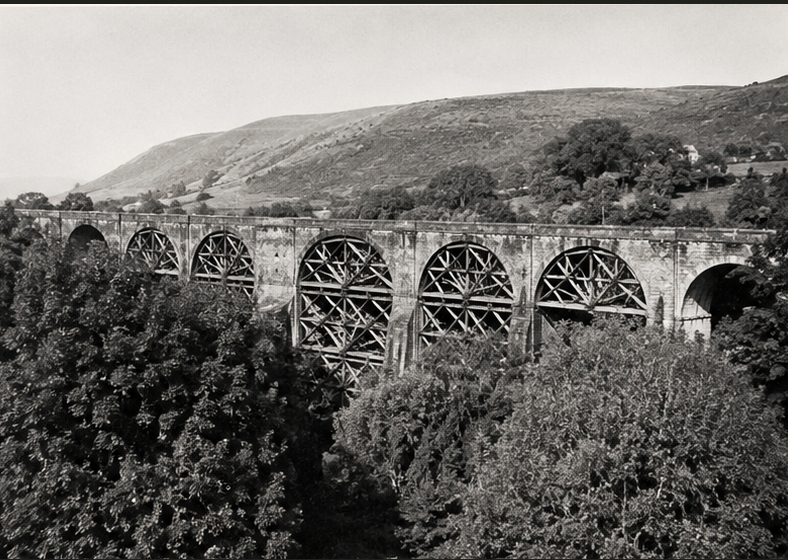
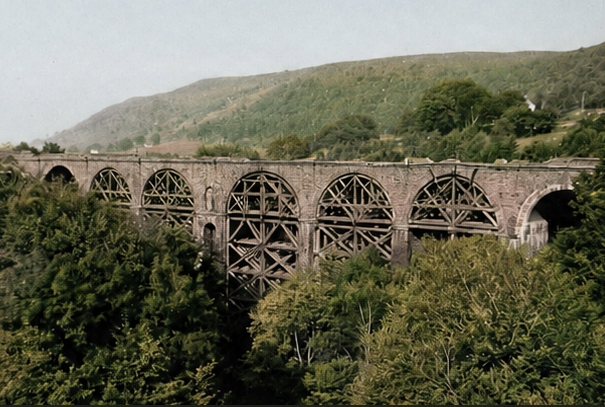
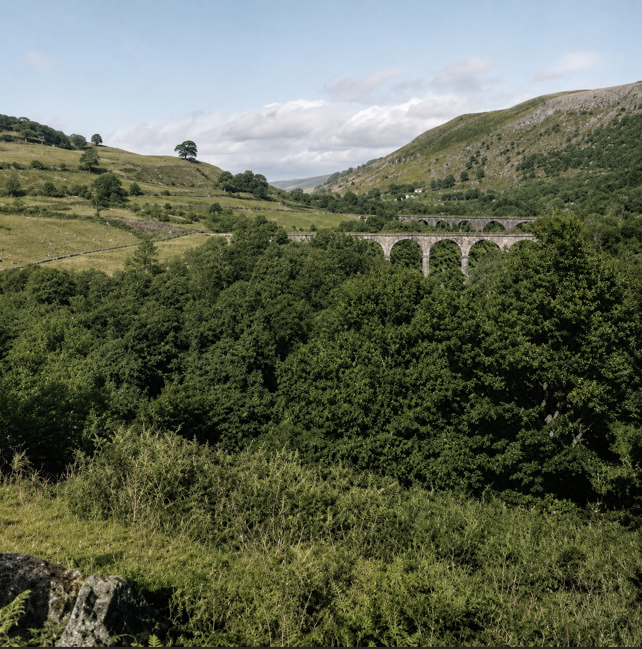
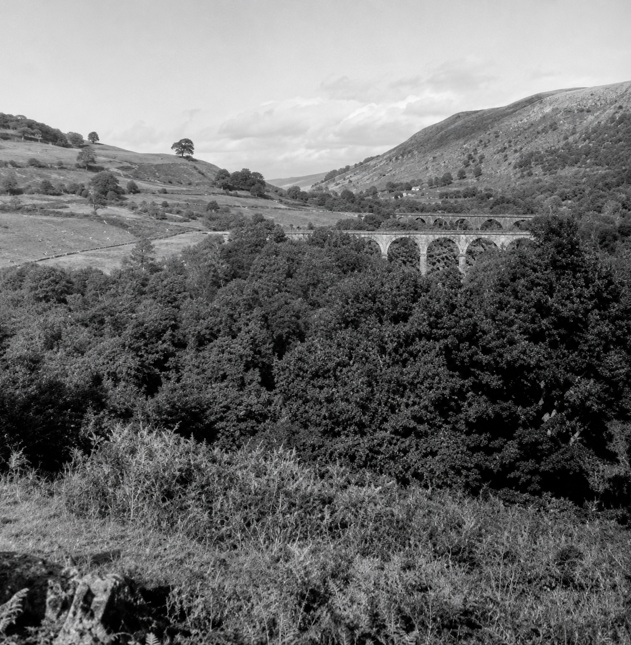
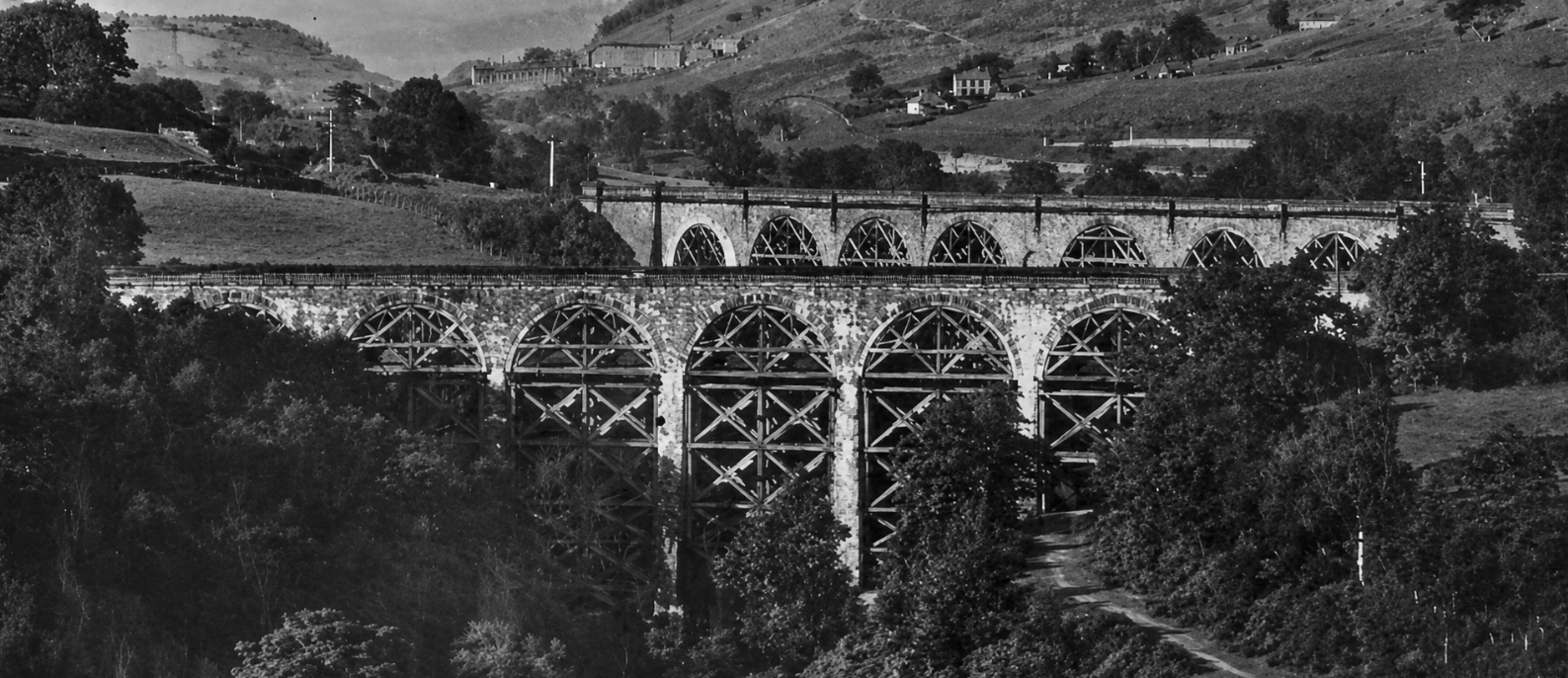

Checking the viaduct structure
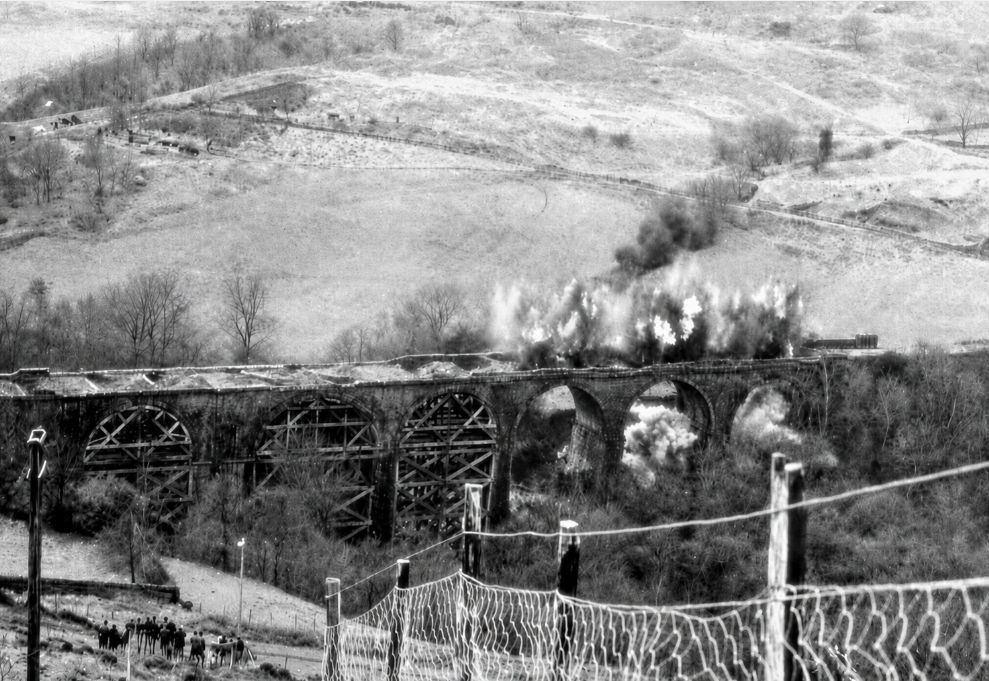
Below we see the remains of some of the three great viaducts (A Evans)
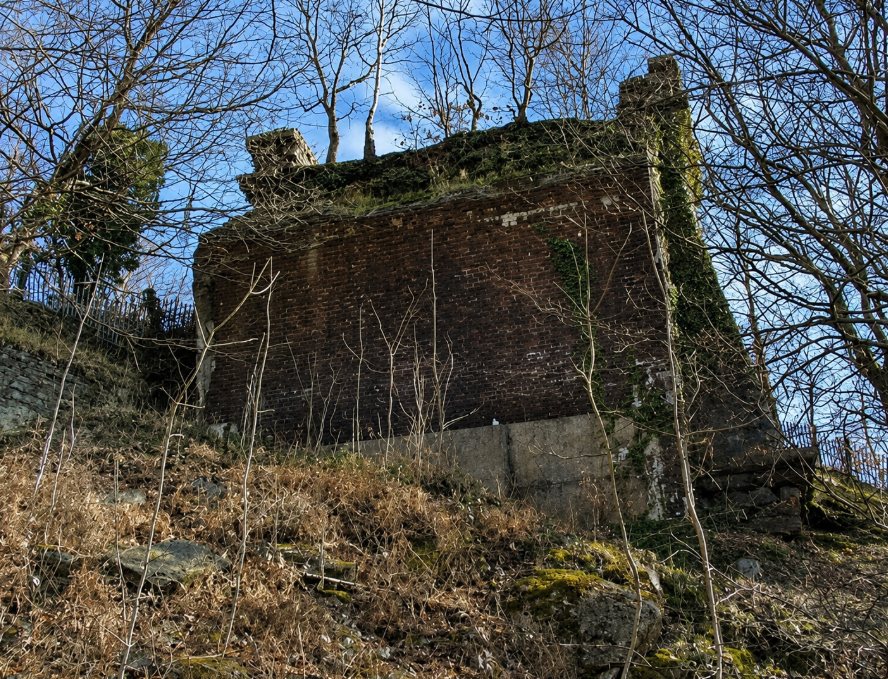
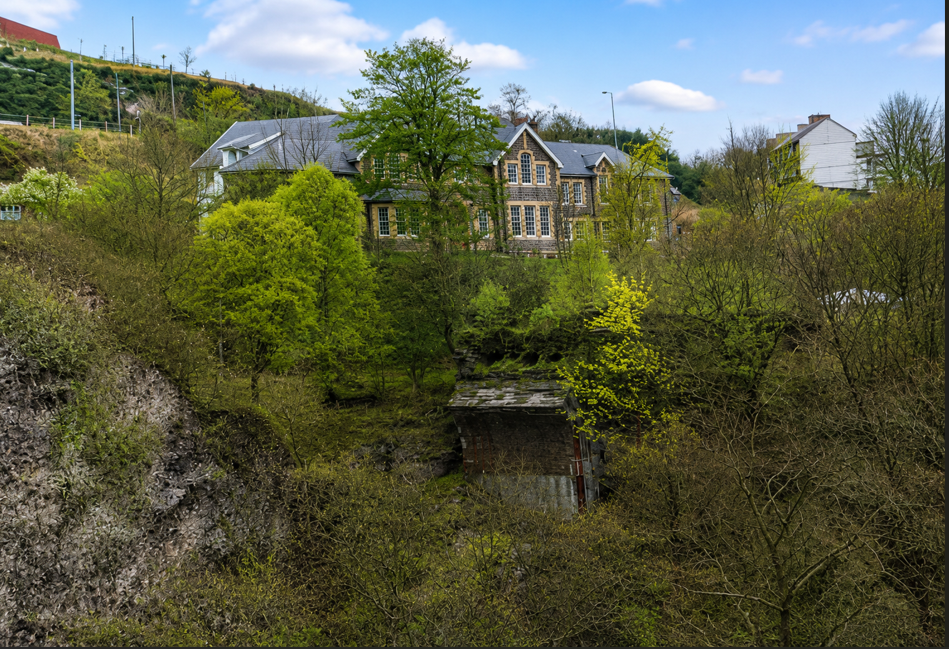
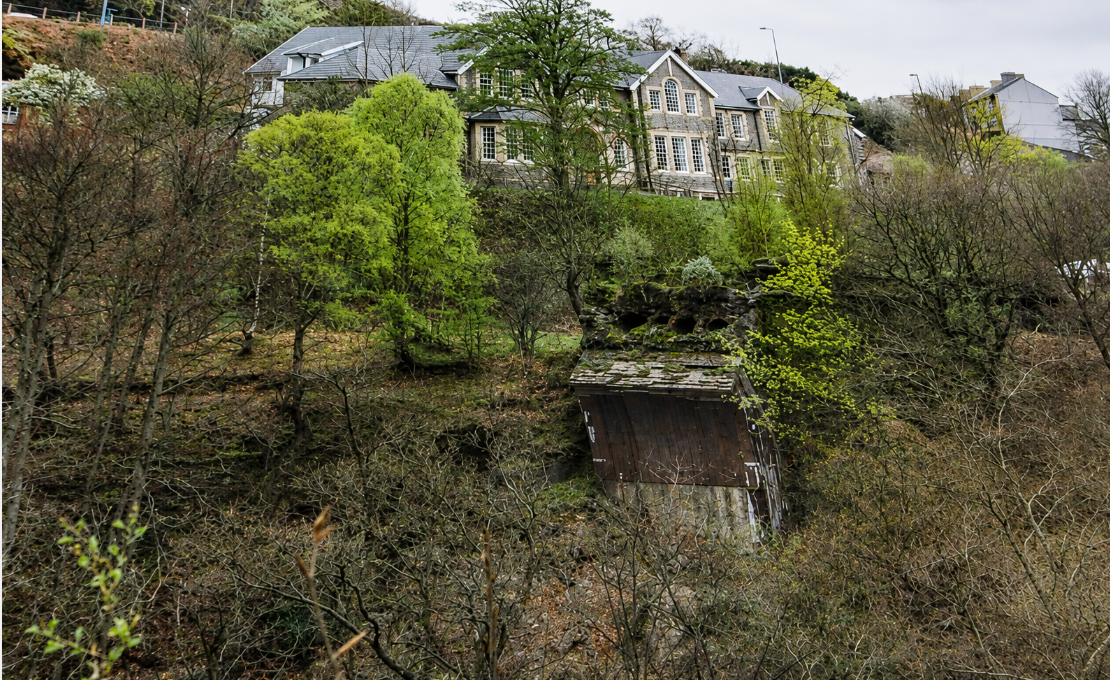
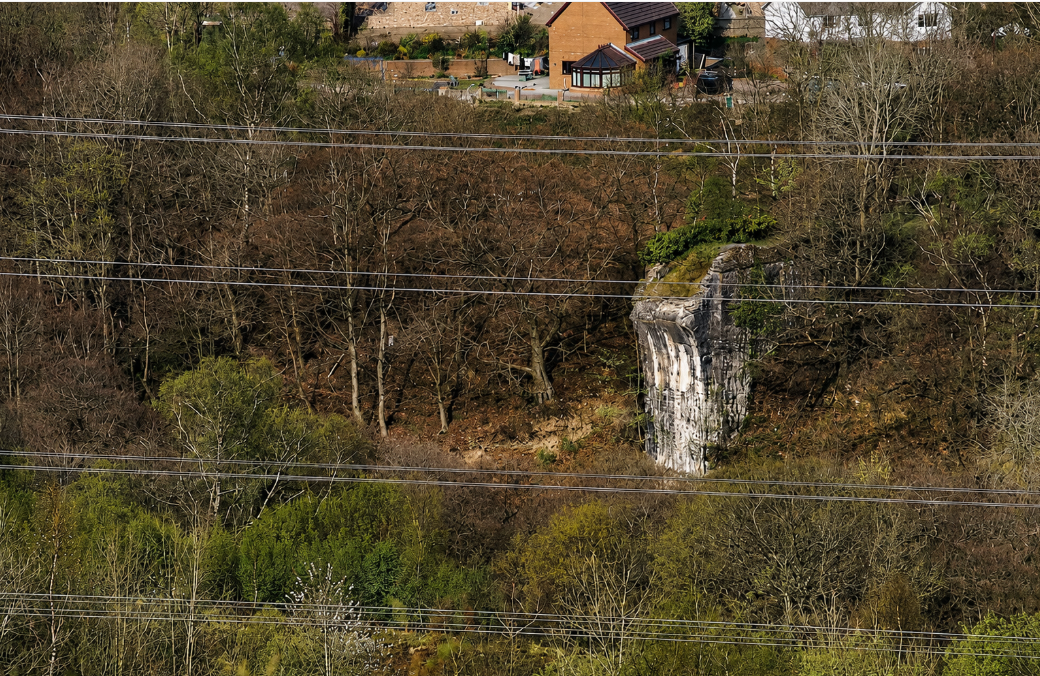
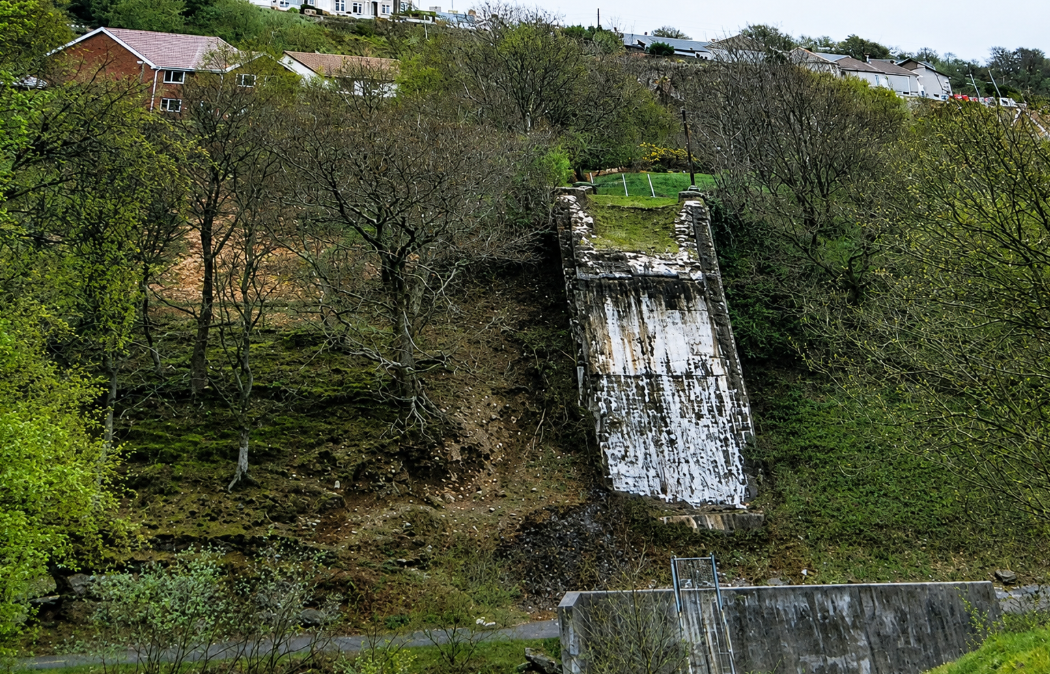
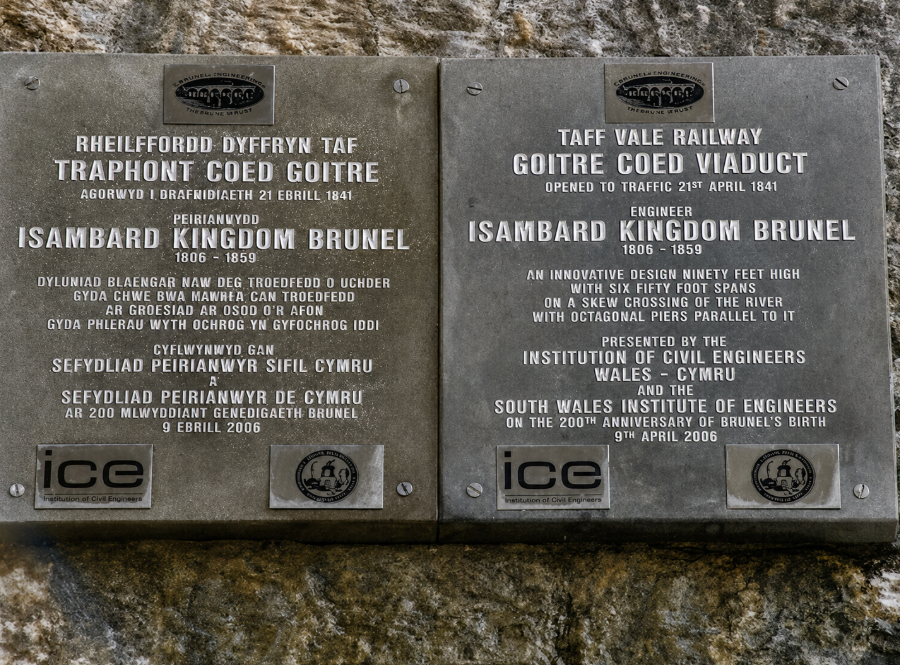
Memorial to Isambard Kingdom Brunel on the walls of one of the viaducts
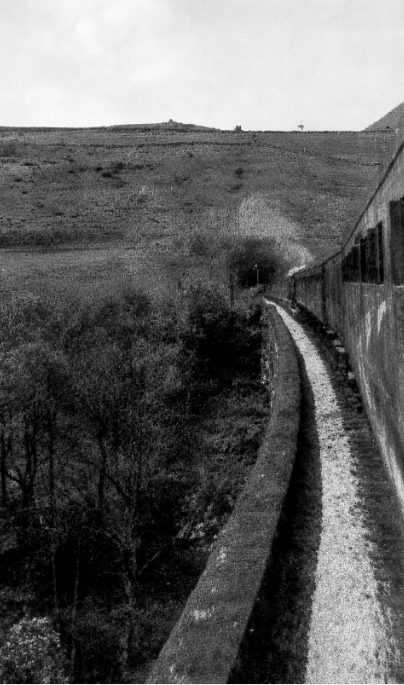
The track crossing the viaduct, its now two tracks heading to Abercynon

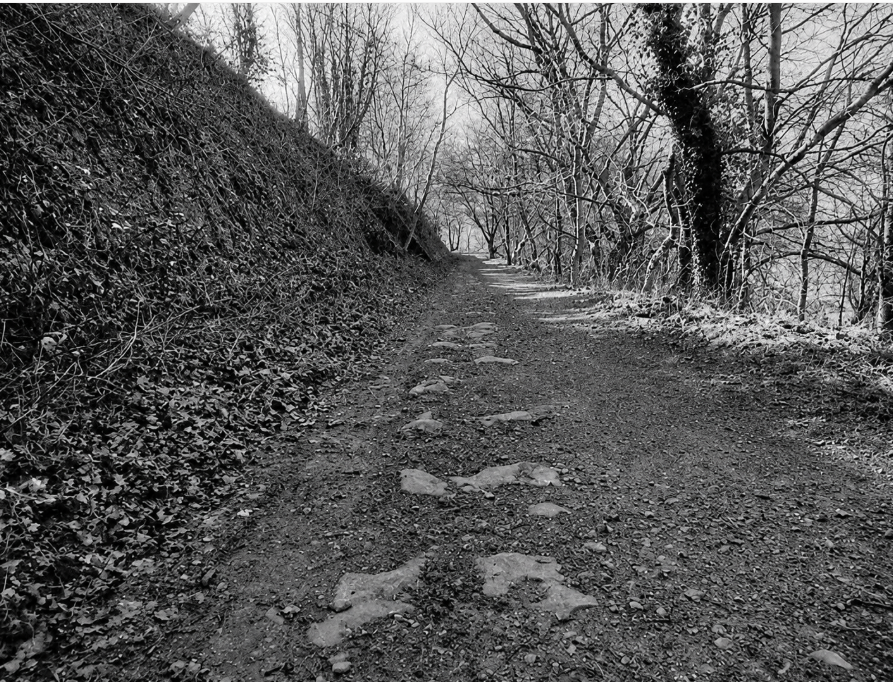
Some old sleeper beds used to be visible below Quakers Yard station at Edwardsville (A Evans)
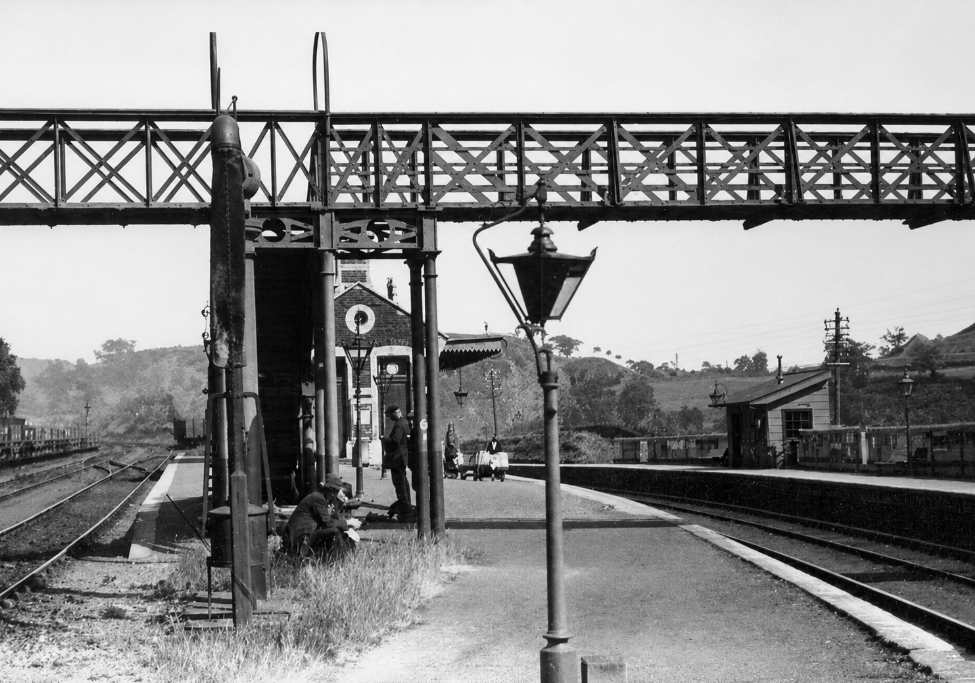
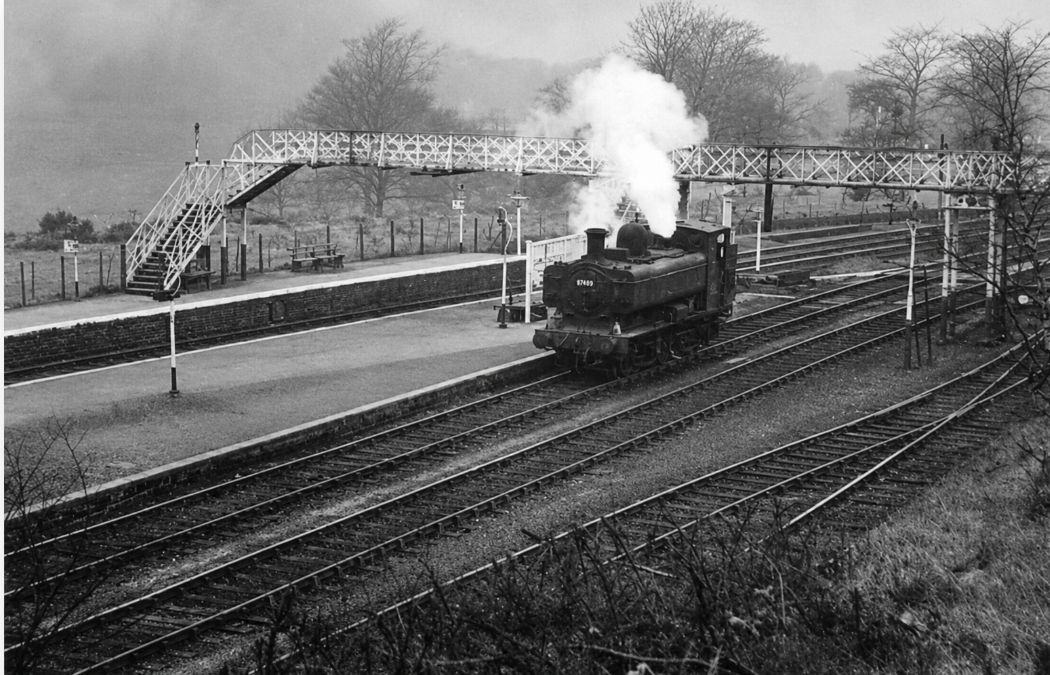
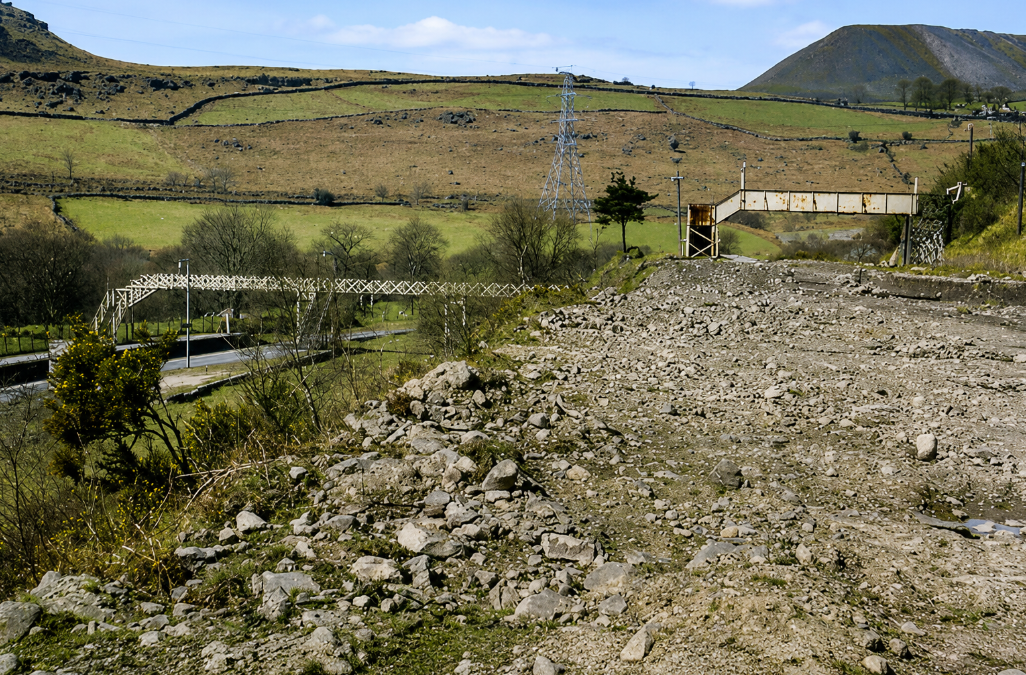
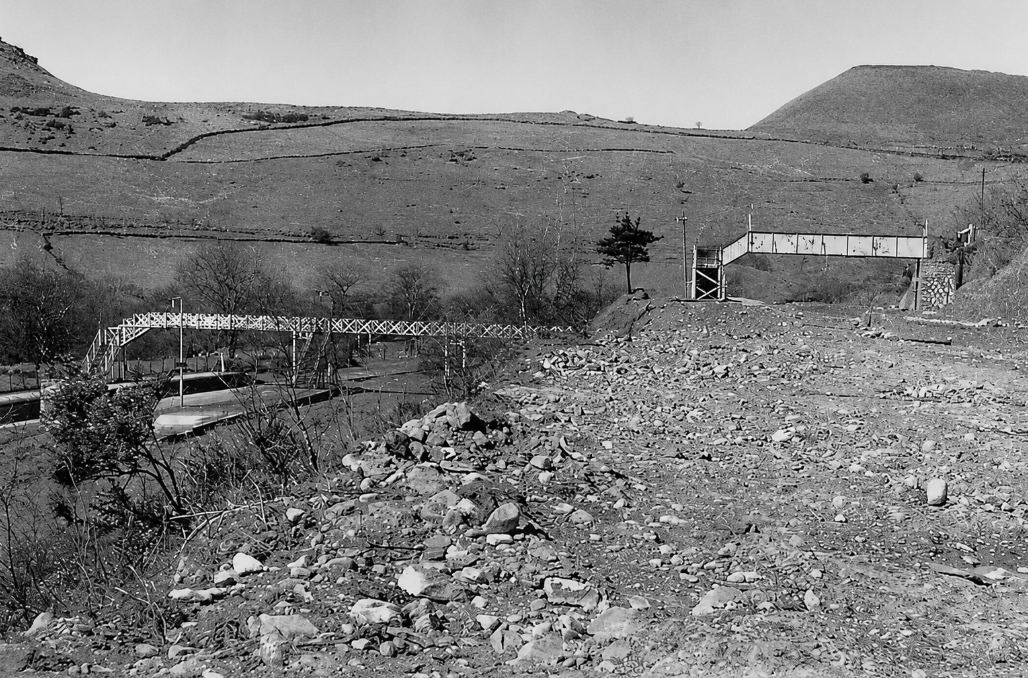
Quakers Yard station footbridges
The following are a series of photographs I have collected showing the footbridges that were at the station, unfortunaely they are mostly from the time when they were at the end of their use but still they are a reminder of what was once there at the station
For many years at the station, it was a long walk from the low level to the entrance of the station opposite the Western Hotel, it was not really accessible if you were disabled unlike the new modern station we are fortunate to have today thanks to the new refurbishments. The station was victim in the 1960’s to the “Beeching axe” and lost most of its routes leaving just the Cardiff to Merhyr route we have today.
The Beeching cuts were a major reduction of Britain’s railway network during the 1960s. They followed the 1963 report The Reshaping of British Railways, produced under Dr Richard Beeching, chairman of the British Railways Board.
Beeching argued that British Railways was losing too much money because it operated thousands of lightly used rural stations and branch lines. His report proposed closing approximately:
- 5,000 miles of railway
- 2,363 stations
- many goods yards and stopping services
The first closures began in 1963 and continued mainly through the late 1960s and early 1970s..
Blocked off old entrance from road
Cefn Glas Tunnel GWR
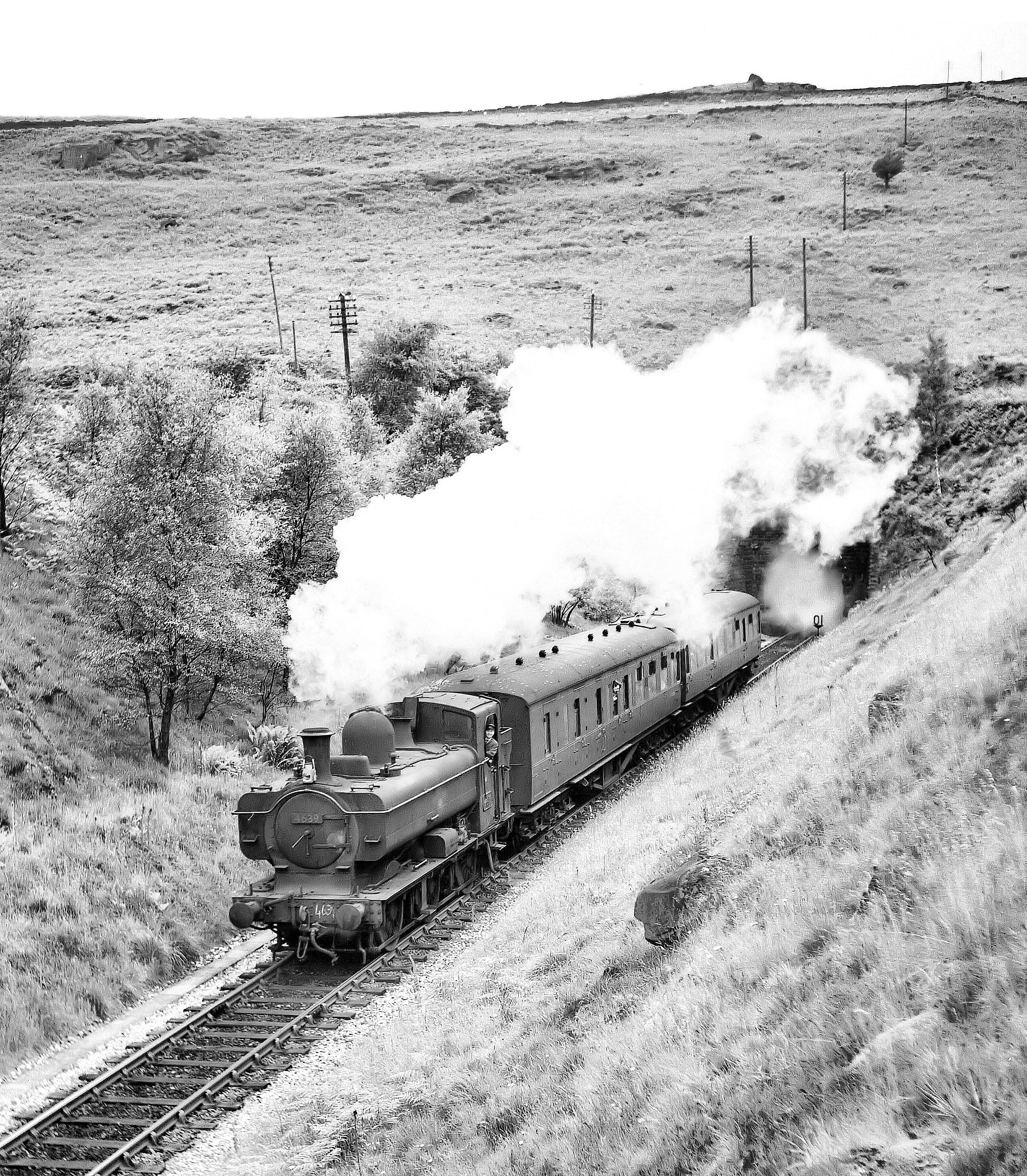
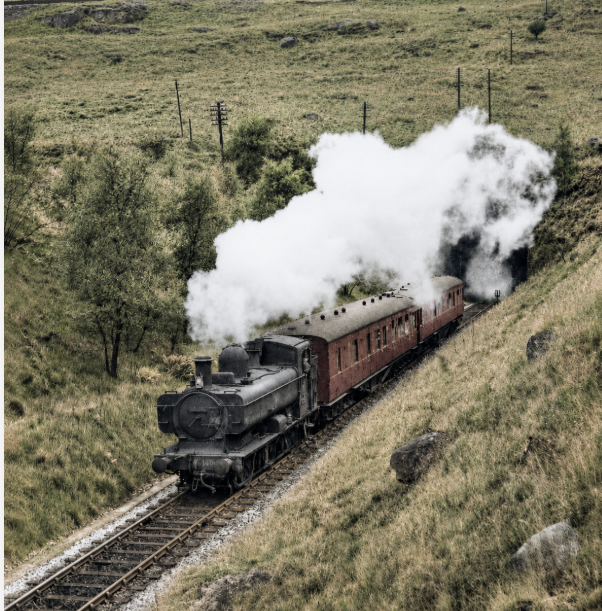
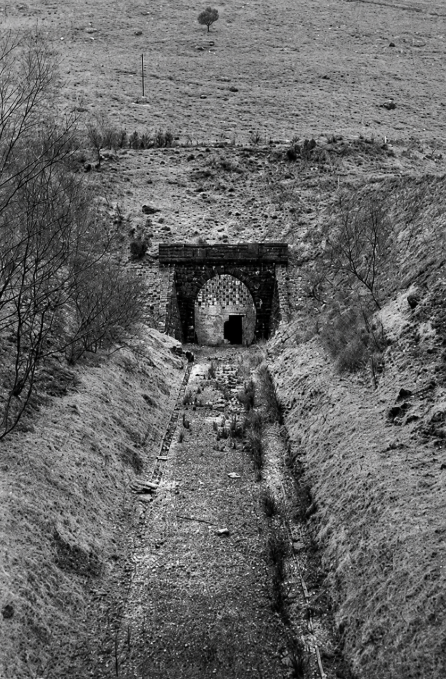
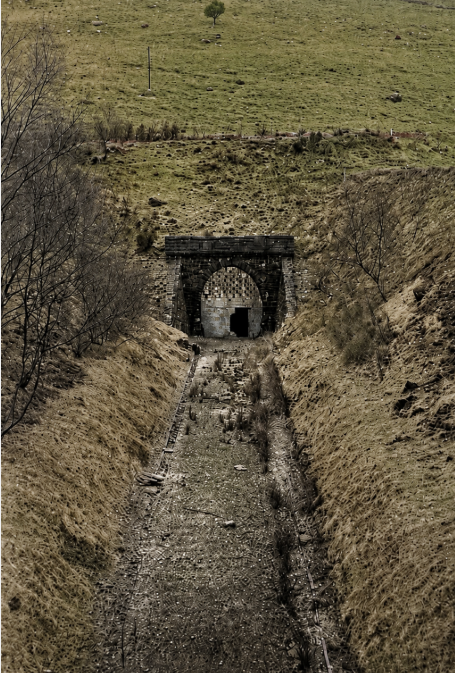
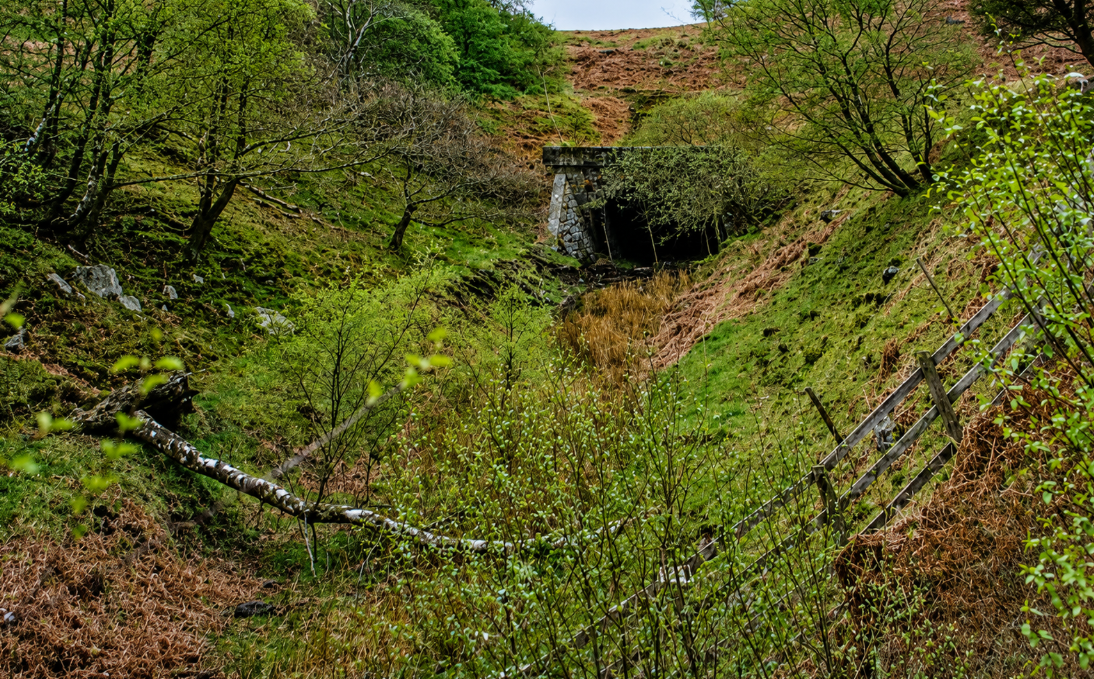
Below we can see some photographs taken by Adrian Evans who took the chance during the summer of 2010.
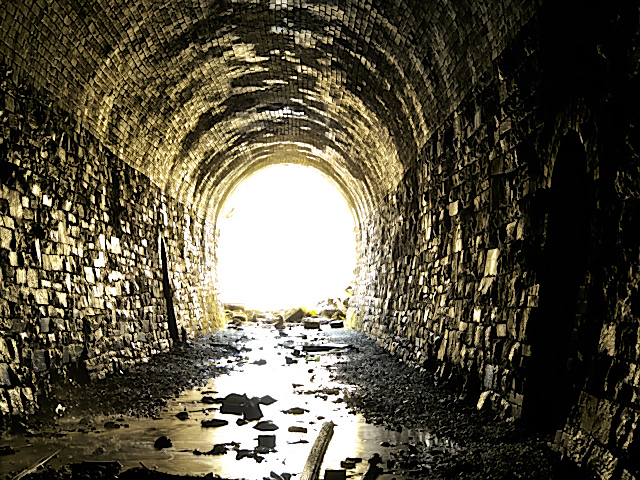


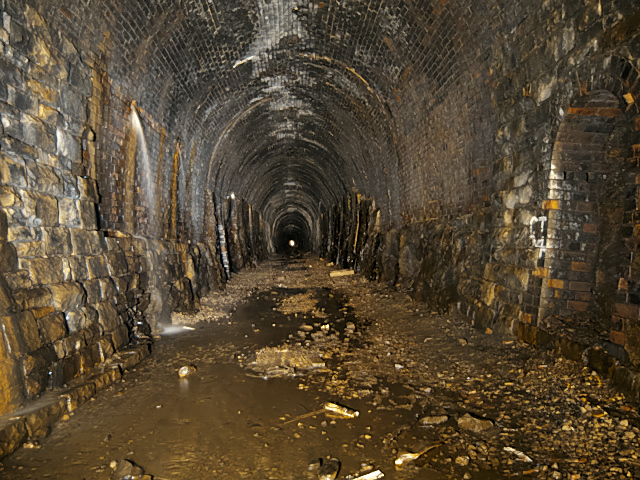
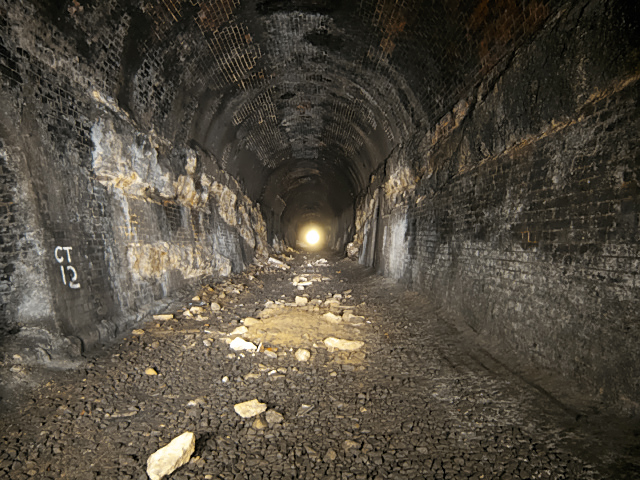
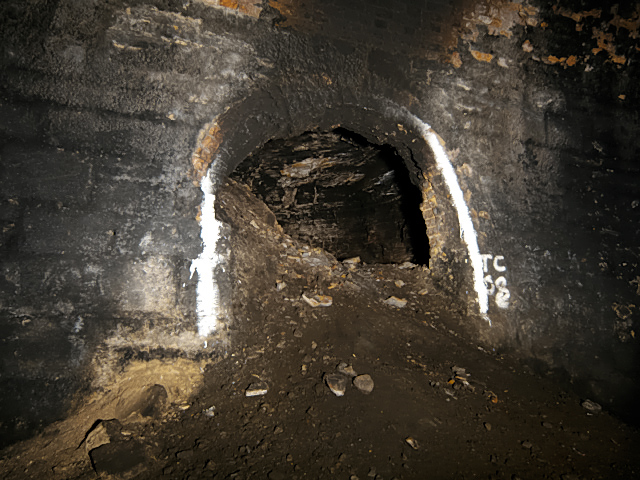
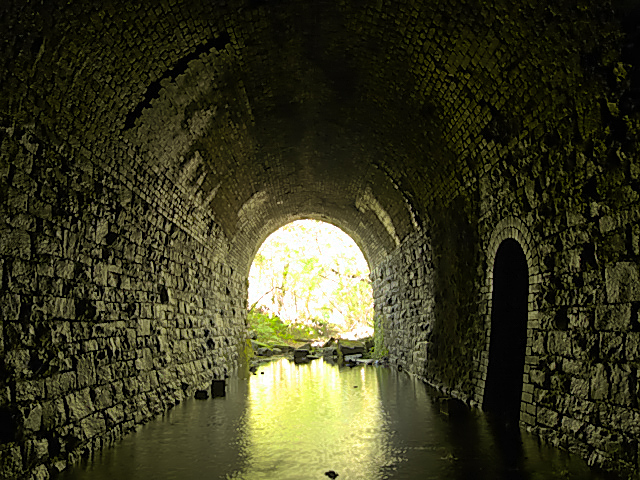


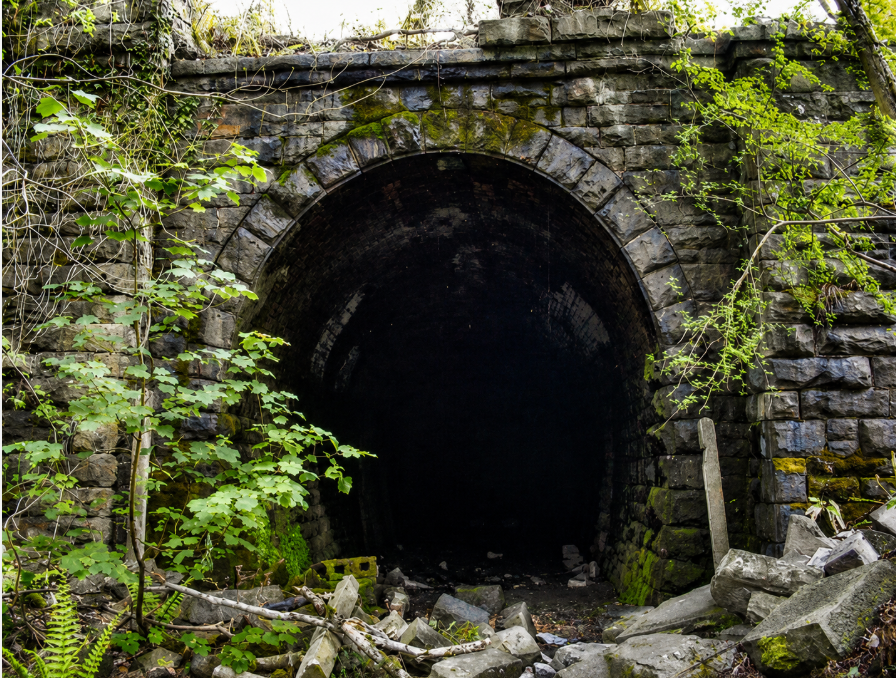

Adrian Evans emerging from the old tunnel